[/vc_column_text][vc_column_text responsive_align=”left”]The Publications Committee of the American Schools of Oriental Research announces a call for nominations (self-nominations are welcome) for the Editor of泭泭for a term to begin泭1 January 2019.泭 17勛圖Journal Editors serve a three-year term (eligible to be renewed twice).
Near Eastern Archaeology泭brings to life the ancient world from Mesopotamia to the wider Mediterranean with vibrant images and authoritative泭analyses.泭NEA泭( ISSN 1094-2076) is published four times each year (quarterly): March, June, September, and December.
The Editor of泭Near Eastern Archaeology泭receives a stipend. The Editor, working with an Editorial Board, the Publications Committee, and ASOR’s publishing partner, The University of Chicago Press, holds full editorial control of Near Eastern Archaeology.
Self-nominations are preferred and should include the following items: 1) a one-paragraph academic biography; 2) a brief statement describing why the candidate is interested in the position; and 3) contact information (including e-mail and phone).泭泭If a candidate is being nominated by another person, we seek the candidate���s name, a short academic history, a brief statement describing why the candidate would be appropriate for the position, contact information, and, most importantly, a statement from the candidate that she or he agrees to their name being placed into nomination.
Candidates are also encouraged to contact the current editor, Thomas Schneider (thomas.schneider@ubc.ca), for more information about the position and its responsibilities. Nominations for each position should be directed to the Chair of the Publications Committee (Charles Jones (cellwoodjones@gmail.com), with a copy to the Director of Membership and Publications, Inda Omerefendic (publications@asor.org).
Review of applications began on September 15, 2018, and will continue until the position is filled. The Publications Committee intends to recommend a candidate to the 17勛圖Executive Committee of the Board of Trustees and the full 17勛圖Board before the Annual Meeting in Denver in November 2018.[/vc_column_text][/vc_column][vc_column border_color=”rgba(170,170,170,0.01)” width=”1/6″ css=”.vc_custom_1496684098866{margin-right: 5px !important;margin-bottom: 20px !important;border-right-width: 2px !important;border-bottom-width: 2px !important;padding-top: 30px !important;padding-right: 10px !important;padding-left: 10px !important;background-color: #ffffff !important;border-right-color: rgba(227,228,228,0.75) !important;border-bottom-color: rgba(227,228,228,0.75) !important;}”][vc_wp_posts title=”BROWSE THE NEWS ARCHIVE” number=”4″][/vc_column][vc_column border_color=”rgba(170,170,170,0.01)” width=”1/6″ css=”.vc_custom_1496684008271{margin-right: 10px !important;margin-bottom: 30px !important;border-right-width: 2px !important;border-bottom-width: 2px !important;padding-top: 30px !important;padding-right: 20px !important;padding-left: 20px !important;background-color: #ffffff !important;border-right-color: rgba(227,228,228,0.75) !important;border-bottom-color: rgba(227,228,228,0.75) !important;}”][vc_column_text] [/vc_column_text][/vc_column][/vc_row]
Comics, Narrative and the Archaeology of the Ancient Near East
By John Swogger
Archaeologists have always embraced new ways of visually recording and representing the past and the work that they do. In the nineteenth and early-twentieth century, photography was enthusiastically adopted by archaeologists not only as a way of recording excavations and documenting sites, but also as a way of giving public audiences a better idea of what their work entailed.
Sir Flinders Petrie with his camera. (Petrie Museum archive PMF/WFP1/115/5/2)
In the middle of the twentieth-century, greater access to x-rays, aerial photography and microscopic photography changed once again the way in which archaeological work and the past was represented. Developments in scientific and statistical analysis of artefacts, soil samples and radiocarbon dates similarly resulted in new ways of viewing the past: through charts, graphs and histograms.
A ���battleship curve��� of frequency distribution. (
Throughout the history of the discipline, various forms of representational media have given greater visibility to the archaeological profession as well as to archaeological research.
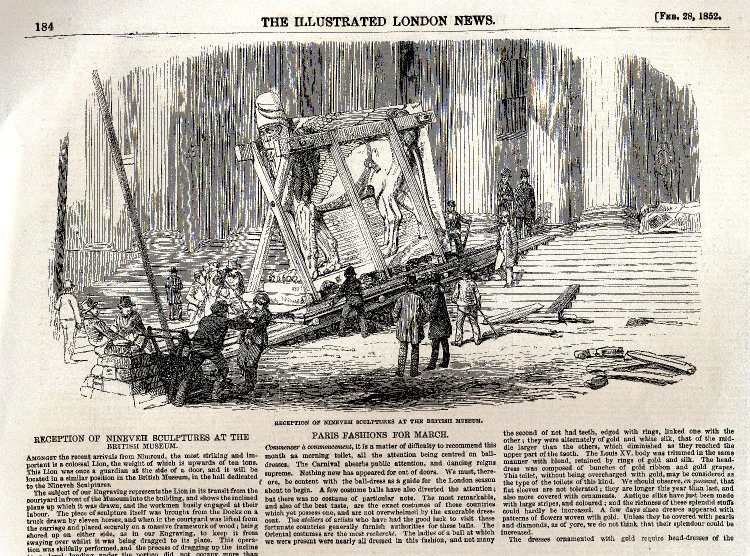
A new medium now also being used for the same reasons are comics. For most people, the term ���comics��� conjures up images of talking animals or superheroes in capes. But ���comics��� simply describes a very specific form of illustration in which image and text are closely inter-related. Comics and other forms of graphic narrative have been used for decades to tell non-fiction stories, too. In archaeology, this stretches back, arguably, to nineteenth-century reporting in the Illustrated London News.
Reception of Nineveh sculptures at the British Museum, Illustrated London News, 1852.
In the United States, non-fiction newspaper comic strips were used as early as 1926 to tell the history of the state of Texas. In Europe, factual comics were used from the 1960s to teach younger audiences about history and archaeology, through popular educational publications like the Look and Learn magazine.
The ability of comics to closely interrelate image and text within a coherent narrative makes them ideal for introducing an audience to an unfamiliar subject. The combination of explanation and visual context can convey significant amounts of information in an easy-to-digest format, meaning a comic can unpick a complex subject without ���dumbing it down���.
As an archaeological illustrator, I have used informational – or ���applied��� – comics for the past ten years to explain a wide range of aspects of archaeology: from excavations to landscape surveys, from site preservation to radiocarbon dating, from museum repatriations to community heritage. Comics speak to audiences unfamiliar with archaeology in an engaging and accessible way that makes them ideal for public outreach in a wide range of contexts.
Ceramics, Polity and Comics ��� Page from the 2015 article in Advances in Archaeological Practice illustrating the ���translation��� of an article from American Antiquity into a comic. Image courtesy of John Swogger.
Archaeology on Carriacou ��� Page from 2011-2014 comic series, published as a set of posters distributed on the island of Carriacou, WI. Image courtesy of John Swogger.
Journeys to Complete the Work ��� Page from an informational comic about NAGPRA (the Native American Graves Protection and Repatriation Act) aimed at both museums and Native communities explaining how the law works ��� or, sometimes, doesn’t. Image courtesy of John Swogger.
What is Heritage?, Oswestry and the Romans, Oswestry Castle Excavations, Ancient Routeways ��� Four strips from the series ���Oswestry Heritage Comics���, published in the Oswestry & Border Counties Advertizer and on Facebook, Sept. 2016 ��� June 2018. Project supported by the UK Heritage Lottery Fund. Images courtesy of John Swogger.
Aehtwelighu ��� Example of a graphic abstract illustrating discussion of cross-border relationships around Offa’s Dyke during the Anglo-Saxon period. Image courtesy of John Swogger.
I have created comics about research projects and excavations that have been put up as posters on community noticeboards and local businesses; I have created comics about prehistoric sites that have been used as educational hand-outs for school visits; and I have created comic strips about local heritage, history and archaeology that have been published in local newspapers. Significantly, in all these cases, I have been able to use comics to talk about archaeology in places like shops and supermarkets, schools and local papers – not just museums, visitor centres and archaeological sites. In other words, using comics for public outreach has genuinely allowed me to ���reach out��� to audiences that might not otherwise engage with archaeological research at all.
But public audiences are only half of the story. I have also used comics to talk to academic audiences and other archaeologists. The principles that make comics so useful for public outreach also make them useful for talking to audiences of one���s own peers. They can be used to quickly explain background concepts that guide research, communicate effectively with staff and students on fieldwork projects, and engage with interdisciplinary scholars. And I have used such comics to create graphic abstracts for academic papers, to report on the results of research projects, to de-complicate highly technical statistical and analytical approaches, and to illustrate multi-layered social and cultural interpretations. They can supply a much-needed narrative and contextual framework to data provided by excavation, lab analysis, and remote sensing – and even technological visualisation techniques such as 3D scanning and LIDAR. I made this argument in an article in the Society for American Archaeology���s journal a few years ago – in the form of a comic, of course!
Critical response to my argument has been positive, but still cautious. ���Narrative��� still suggests ���fiction��� to many; ���comics��� suggest something for children. But modern comics are a sophisticated, mature medium, capable of talking seriously about complex and even contentious issues. Authors like and have used comics to talk about the war in Bosnia and the Holocaust; graphic autobiographers such as have used comics to recount his diagnosis of Parkinson���s disease. Such narratives are not aimed at children – nor are they dependent upon gratuitous use of ���drama��� to make their point.
The growing realisation among archaeologists and anthropologists that comics are a sophisticated and nuanced medium for communicating complex information has resulted in a diverse range of follow-on projects and commissions undertaken for academic clients: comics about heritage and immigration in Scandinavia, comics about the repatriation of ancestral remains to Native American nations, comics used to recruit students to university research projects, and comics as graphical abstracts for academic papers. These are comics designed to meet the communication needs of archaeological scholars, demonstrating that – at least in some quarters – the medium���s unique potential for communication beyond public outreach is starting to be recognised.
Although I have worked as an archaeological illustrator all over the world, my background is in the archaeology of the ancient Near East: I was site illustrator for over a decade for the ��atalh繹y羹k Research Project in Anatolia, and have worked on material from G繹bekli Tepe, Jericho and have excavated in the Sudan. I am familiar with the issues that make communicating information about the ancient near east to both public and local audiences difficult: the complexity and great time-depth of the archaeology, the convoluted historical, contemporary and political contexts of sites, and the sometimes remote and unfamiliar nature of the way in which archaeological work is carried out.
But it seems to me, too, that the archaeology of the ancient Near East suffers from an additional problem in its public outreach: that of ���representational fatigue���. Audiences are perhaps now so used to seeing photographs, paintings, cutaway drawings and 3D models – even filmed reconstructions – of the ancient Near East that I wonder if they have stopped really ���seeing��� the information they contain. These ways of representing have become so familiar to people that they may think they already know all there is to know about the subject, making it harder to communicate the importance or impact of new research.
Perhaps those who work with this material – whether in the field, in the lab, in the academy or in the museum – could benefit from a new way of taking about their results, process and research? An unexpected way – a way that prompts audiences (both public and academic) to think again about what they think they know about the archaeology of the ancient Near East?
is a freelance archaeological illustrator, specialising in finds and reconstruction illustrations for excavation projects, museums and for publication. He was site illustrator for the泭��atalh繹y羹k Research Project泭in Turkey for almost ten years, and now works on sites in the Caribbean, the Pacific,泭and in Serbia.[/vc_column_text][/vc_column_inner][/vc_row_inner][/vc_column][/vc_row]
The American Schools of Oriental Research (ASOR) is the preeminent society for individuals interested in the archaeology of the eastern Mediterranean and the Biblical Lands. This blog is intended to facilitate ASOR���s泭mission泭���to initiate, encourage and support research into, and public understanding of, the cultures and history of the Near East from the earliest times.���[/vc_column_text][mk_divider thickness=”1″ margin_top=”10″][vc_row_inner][vc_column_inner][vc_column_text]
What���s in Your Dig Bag, Morag Kersel?
In our ���What���s in your dig bag?��� series, we asked working field archaeologists what they carry with them out in the field. We wanted to know what gear they love and what items might be unique to them.
[/vc_column_text][/vc_column_inner][/vc_row_inner][vc_single_image image=”39854″ img_size=”full” add_caption=”yes” alignment=”center” css=”.vc_custom_1537561897736{margin-top: 20px !important;}”][vc_single_image image=”39853″ img_size=”full” add_caption=”yes” alignment=”center” css=”.vc_custom_1537561918868{margin-top: 20px !important;}”][vc_column_text]Name:泭Morag M. Kersel Position:泭Assistant Professor, Anthropology Department, DePaul University Digging Since:泭1989 Current projects (survey and excavation):泭幛棗梭梭棗滄泭, Jordan and the Galilee Prehistory Project, Israel
What hat do you wear?
. I am famous for always wearing the same hat ��� a Tilley T3 but I add the bandana.
What trowel do you use?
WHS 4��� wooden-handle. I���ve had the same trowels for 25+years, although I recently misplaced it and this summer is my first field season without my trusty WHS.
What���s in your bag?
Inside my North Face backpack, I have a smaller ���bag of tricks��� ��� everything I need for digging and drawing: foldup ruler, tape measure, some dental picks, a few paintbrushes, a small泭, a泭, a plumb bob, clothes pegs,泭,泭Staedtler Mars Plastic Erasers, and a sharpener, an old Swiss Army Knife, a first aid kit, and a泭.
New to my bag for 2015?
泭��� the fossil hunter. The Special Edition ���Gold Collection��� ���Fossil Hunter��� Lottie doll is a collaboration with泭, an Anglo-American group of women archaeologists, palaeontologists and geologists. This summer Lottie is on an adventure in the Middle East you can follow her fun on Twitter at泭泭硃紳餃泭.[/vc_column_text][vc_single_image image=”39856″ img_size=”full” add_caption=”yes” alignment=”center” css=”.vc_custom_1537561968195{margin-top: 20px !important;}”][vc_column_text]泭���泭Even though I���ve been vigilant about sunscreen, water, and hats for decades this winter I had a tumor removed from my nose ��� the result of 20+ years of sun exposure. I never want another needle in my nose and I now have a Beko gear nose guard. Developed for extreme weather protection my nose will never be exposed to the sun again.
兜硃喧梗娶-娶梗莽勳莽喧硃紳喧,泭泭with an SPF of at least 15 ��� all day every day.
That���s Morag Kersel���s dig bag. What���s in yours? If you���re willing to share the contents of your dig bag, we want to know! Just email ASOR���s Digital Media Specialist,泭Kaitlynn Anderson.[/vc_column_text][/vc_column][/vc_row]
The American Schools of Oriental Research (ASOR) is the preeminent society for individuals interested in the archaeology of the eastern Mediterranean and the Biblical Lands. This blog is intended to facilitate ASOR���s泭mission泭���to initiate, encourage and support research into, and public understanding of, the cultures and history of the Near East from the earliest times.���[/vc_column_text][mk_divider thickness=”1″ margin_top=”10″][vc_row_inner][vc_column_inner][vc_column_text]
What���s in Your Dig Bag, James R. Strange?
In our ���What���s in your dig bag?��� series, we asked working field archaeologists what they carry with them out in the field. We wanted to know what gear they love and what items might be unique to them.
[/vc_column_text][/vc_column_inner][/vc_row_inner][vc_single_image image=”39843″ img_size=”full” add_caption=”yes” alignment=”center” css=”.vc_custom_1537561444205{margin-top: 20px !important;}”][vc_column_text]捧硃鳥梗:泭James Riley Strange 捩棗莽勳喧勳棗紳:泭Associate Professor of Religion, Howard College of Arts and Sciences, Samford University Digging Since:泭1992 Current Excavation:泭Shikhin Excavation Project
What hat do you wear?
Tilley T2. Disintegrating, discontinued, and no longer available in my size. Don���t know what I���ll be wearing next year.
What trowel do you use?
The original Marshalltown 5���, engraved with my name. It was a gift.
What is your Dig bag?
I use my daughter���s old green Jansport backpack from high school. Every year I think I���ll buy a new one, but they���re expensive, this one works just fine, and it has sentimental value.泭
What���s in your bag?
Hydro Flask 32 oz. water bottle
50 SPF sunscreen
Bug repellent
Imodium (you never know)
Ingalls archaeological handpick, engraved with my name. Also a gift.
Saunders plastic storage clipboard with lined paper, graph paper, photocopies of our site plan, a map of the area with Israeli trig points, 1:25 scale, and copies of our excavation licenses from the IAA and INPA.
My director���s notebook: black Moleskine notebook with graph paper
5 m steel tape
20 m cloth tape
survey flagging
work gloves
flashlight
On my belt:
Folding Buck knife for cutting string, tomatoes, and peaches, and for occasionally removing a sprinter
Leatherman tool for everything else
The 5 m steel tape that I bring out in my bag
That���s James R. Strange���s dig bag. What���s in yours? If you���re willing to share the contents of your dig bag, we want to know! Just email ASOR���s Digital Media Specialist,泭Kaitlynn Anderson.[/vc_column_text][/vc_column][/vc_row]
The American Schools of Oriental Research (ASOR) is the preeminent society for individuals interested in the archaeology of the eastern Mediterranean and the Biblical Lands. This blog is intended to facilitate ASOR���s泭mission泭���to initiate, encourage and support research into, and public understanding of, the cultures and history of the Near East from the earliest times.���[/vc_column_text][mk_divider thickness=”1″ margin_top=”10″][vc_row_inner][vc_column_inner][vc_column_text]
My Time at a Roman-Era Jewish Settlement
By Jill Marshall, 2016 William G. Dever Fellowship Recipient
Thanks to ASOR���s William G. Dever Fellowship for Biblical Scholars, in Summer 2016, I traveled to Israel to participate in the Shikhin Excavation Project and to conduct research at the Albright Institute in Jerusalem. Since my research is in New Testament and early Christianity, I chose Shikhin because it is a Roman-era Jewish settlement that gives scholars insight into the socio-economic landscape of the Galilee. Directed by James R. Strange of Samford University and Mordechai Aviam of Kinnaret Academic College, the excavation reveals interesting details about ceramic production and the interactions between cities (Sepphoris) and villages (Shikhin) in the Roman period.[/vc_column_text][vc_single_image image=”39834″ img_size=”full” add_caption=”yes”][vc_column_text]A newbie to archaeology, I arrived in Nazareth with the early crew so that I could get a crash course in excavation methods, stratigraphy, and record keeping. With the instruction of Dr. Strange and Randy O���Neill, the field supervisor, I soon was able to measure and string a square and identify changes in soil color, composition, and consistency.
The next week, we began on the main field of the site, on a hill overlooking the Beit Netofa Valley and with a clear view of that city on a hill Sepphoris (Tsipori). I was the area supervisor for Square 14, at the northeast corner of the field. We opened three other squares, and the crew got to work clearing, measuring squares, and digging. Most of the crew were college students from Samford University in Alabama.[/vc_column_text][vc_single_image image=”39837″ img_size=”full” add_caption=”yes”][vc_column_text]My square had been opened the previous year, and we could see the outline of stone walls, what seemed to be a pit, and a lot of tumble. As we cleared, the walls came into focus and seemed to be constructed at different times, with both large cut stones and small cobblestones. The ���pit��� provided many lamp fragments and whole lamps, consistent with the character of the site. The previous season yielded numerous whole lamps and lamp molds in a room that appeared to be a workshop. One square excavated this year, to the southeast of Square 14, had an interesting installation that appeared to be a potter���s wheel and work table, again reaffirming the hypothesis about pottery production. In addition to lamps, the site has yielded many ���wasters������pottery fragments that were damaged in production, whether misfired, cracked in firing, or with air bubbles baked into the piece. This is also good evidence that pottery production was occurring at the site, and Dr. Strange is working to classify and record the various forms of wasters at Shikhin. The production of pottery and lamps at the site leads to intriguing questions about trade: Where were these products traded? How were trade networks established and maintained? And, for my purposes, how was trade integrated with the spread of cultural and religious ideas?
[/vc_column_text][vc_single_image image=”39835″ img_size=”full” add_caption=”yes”][vc_single_image image=”39836″ img_size=”full” add_caption=”yes”][vc_column_text]As we excavated Square 14, we came upon a plaster floor in part of the area, which indicated that this section may have been indoors, or, more probably, given the floor���s poor construction, an outdoor workspace or courtyard. The plaster floor posed challenges for excavation: We scraped a lot of dirt off of dirt and became acquainted with the differences between plaster, dirt, dirty plaster, plastery dirt, limestone, limestone pretending to be plaster, and dirt that really wanted to be limestone. What we thought was a pit was in this section of the square, and it may actually be a cistern that continued into the area to the south and west of our square. Shikhin has several cisterns, two of which another team excavated this season. The cisterns that they excavated are located under what may be a synagogue���or at least a massive building with a monumental threshold, the only architectural part of the building that remains. The cistern team, with their hard hats, ladders, and pulleys, found many whole lamps, jugs, and other pottery, as well as Hellenistic silver coins.
Each day, we arrived at the site around 5:00 am, and���surprisingly, as I���m not a morning person���the mornings flew by: It was cool, and we had great energy to be productive. At 8:30 am, James F. Strange (���Abuna���) and Carolyn Strange joined the team and brought second breakfast, the best meal of the day. Abuna, who directed the University of South Florida excavations of Sepphoris until 2010, made the rounds and gave us insights from his years of excavation in the region. The Stranges fostered an encouraging and supportive community during our month in the field, which made a world of difference for the students. Such community-building led not only to a productive research season but also to a productive learning experience for the students and me. Samford is lucky to have a new crop of experts in reading pottery, soil, and artefacts, who are able to evaluate their findings and make conclusions about the culture and society of ancient Galilee.
All in all, this summer was a great introduction to archaeology in the Galilee. I am grateful to 17勛圖and the donors who made my work possible with the Dever Fellowship. I hope to return to Shikhin soon.
Jill Marshall received her PhD in Religion from Emory University. Her research focuses on women���s religious activities in early Christianity and the ancient Mediterranean world, particularly inspired speech, prophecy, divination, and prayer. She is currently working on a book on women���s prophecy in early Christian literature.
The American Schools of Oriental Research (ASOR) is the preeminent society for individuals interested in the archaeology of the eastern Mediterranean and the Biblical Lands. This blog is intended to facilitate ASOR���s泭mission泭���to initiate, encourage and support research into, and public understanding of, the cultures and history of the Near East from the earliest times.���[/vc_column_text][mk_divider thickness=”1″ margin_top=”10″][vc_row_inner][vc_column_inner][vc_column_text]
Digging Deep at Jezreel
By Andrea Creel, University of California, Berkeley, 2016泭Carol and Eric Meyers Excavation Fellowship Recipient
A lot of things happen on a dig. Most of time, these are things you never expect. This is all the more so when you���re digging from topsoil. This year, I had the privilege of returning to the field with the泭. As in previous seasons, we started excavating from topsoil with almost no idea of what we might find!
Team Jezreel! (Courtesy of the Jezreel Expedition)
Yet, there has been relatively little excavation at Jezreel, save for expeditions on the upper tel by archaeologists with the Israel Antiquities Authority in the late 1980s and archaeologists from Tel Aviv University and the British School of Archaeology in Jerusalem in the 1990s. These excavations uncovered the remains of a monumental fortification system from the 9th-8th泭centuries BCE, perhaps associated with the kings of ancient Israel. This, in and of itself, is an amazing find. However, very little is known about the greater area of Jezreel or its long settlement history.The Jezreel Expedition, sponsored by the University of Haifa and the University of Evansville (UE), explores the ancient settlement of Jezreel, 16 kilometers (about 10 miles) east of the well-known site of Megiddo. Jezreel lies near an ancient roadway that linked Egypt to Syria. This road served as a major trade and military route and the area became the site of settlements (and battles!) from antiquity to the modern era. The greater area of Jezreel includes an upper settlement on a natural hill (Tel Jezreel), a lower settlement near a natural spring (Tel Ein Jezreel), a possible settlement near the modern-day Kibbutz Yizreel, and various roads, caves, tombs, and agricultural installations. Many people may be familiar with Jezreel from the Hebrew Bible, where it is mentioned often (most notably in the story of Naboth���s Vineyard in I Kings 21). The site also appears in a later text from the 4th泭century CE as a major strategic waypoint and features the visible remains of a fortified tower built by the Crusaders.
Mulling over stone debris (Courtesy of the Jezreel Expedition)
In 2012, the Jezreel Expedition, co-directed by Norma Franklin and Jennie Ebeling, sought to rectify the situation and began exploring the great unknown that is Jezreel! Since the lower tel near the spring (Tel Ein Jezreel) had never been excavated, the Jezreel Expedition focuses most of its efforts on this area. These excavations are revealing an extensive settlement from the Early Bronze Age (ca. 3300���2300 BCE), as well as evidence for activity in the Neolithic Period, Iron Age, Roman, Byzantine, and Crusader Periods and continuing into modern times. I joined the team in 2014 when we began excavations near an ancient path that connected the spring to the upper tel. In the two seasons that we excavated on either side of this path, we started from topsoil and hit bedrock in only four weeks!
This year, we moved the main excavation further up the slope, hoping for some more depth and better preserved remains. Supervised by Noga Blockman and Field Director Ian Cipin, we opened five new 5 x 5 meter squares. I supervised a square on the northern edge of this area. My team shifted over the course of the excavation, but at one time or another included Kayla Carico, Robin La Rosa Hannig, Michael Koletsos, Isaac Rainey, and Jarrid Thelen. Our square featured part of an oval depression visible in the topsoil. We wondered if it might be a pit of some sort, maybe even a foxhole! However, once we began excavating, we did not see the edges of a pit. Rather, we found some very eroded walls around the depression and the materials from those walls slumped into the depression. It appears that the depression was formerly the corner of some sort of room. Unfortunately, these materials were so close to the surface that the elements as well as later human and animal activities make it unlikely that we���ll be able to say much more about these features.
Smoted by Elijah!
Our square also featured several robber trenches and a large amount of stone debris, likely from a possible wall visible in the southern baulk (side wall) of the square and an emerging ritual space southwest of my square! The finds from inside this space are currently contained in a square higher on the slope, supervised by UE alumna Katie Mickus. The exact arrangement of the ritual area is still unclear, but it likely dates from sometime in the Early Bronze Age. This square also initially featured a large amount of stone debris. However, once this debris was removed, Katie���s team began finding wall fragments, burnt mudbrick, caches of nearly-complete pottery, and artifacts associated with ritual activities. The most impressive of these finds so far is a finely worked basalt standing stone! Standing stones (also known as baetyls, pillars, or泭鳥硃廜�廜ㄠ藅�繫喧) are unworked or semi-worked medium to large stones that were set vertically into the ground, either singly or in groups. These artifacts likely represented gods or ancestors or something to house the gods or ancestors. Due to our short excavation season and the complexity of my square, my team joined Katie���s team in the final week of the excavation. This was especially meaningful for me since I specialize in ritual and religion in the ancient Southern Levant, but I���ve never had the opportunity to excavate an actual ritual space!
Fascinating things also began appearing in several other squares this season. The square immediately to the east of my square, supervised by UE alumnus and graduate student at East Carolina University, Tim Smith, featured a constructional fill of densely-packed pottery from the Neolithic to the Roman Periods. This fill was once contained within the robbed-out walls seen in several other squares, including mine. Another square, supervised by UE alumna Morgan Davidson, contained a thick deposit of fallen mudbrick debris from the Early Bronze Age.泭Meanwhile, Deborah Appler, Professor of Hebrew Bible at Moravian Theological Seminary, and Inbal Samet, doctoral candidate at the University of Haifa, supervised the ongoing excavations of a series of walls lower down the slope. One of these walls belongs to a late Roman/Byzantine building泭we excavated in 2015. This wall abuts an earlier wall (dating to sometime between the Middle Bronze Age and the Roman period) that may have been a perimeter wall at the possible entrance to the site. A rubbish pit cut into this wall contained sherds of some splendid Crusader Period pottery.
Meeting with the students (Courtesy of the Jezreel Expedition)
Uncovering the standing stone (Courtesy of the Jezreel Expedition)
I also had the privilege of acting as the Education Coordinator for the Jezreel Expedition���s field school. Students who were participating in the excavation for course credit through the University of Evansville were expected to keep field journals, complete an exam and paper, and attend field trips and a lecture series held during the excavation season. In my position, I monitored their field journals, answered questions, clarified concepts, and assisted in organizing the field trips and the lecture series. For the field trips, we visited an assortment of sites around the country, including the archaeological remains of the 1st泭century CE town of Magdala, the medieval Old City at Acre (modern Akko), and the Carmelite monastery at El-Muhraqa (the summit of Mount Carmel), the traditional site where the prophet Elijah is said to have challenged the prophets of Baal in a contest of dueling deities (I Kings 18). Note: It did not end well for the prophets of Baal. The lecture series featured a variety of guest speakers, such as Philippe Guillaume, Professor of Hebrew Bible at the University of Bern, Laura Wright, Visiting Assistant Professor of Religion at Luther College, and Karen Covello-Paran of the Israel Antiquities Authority. Topics included Jezreel in the Hebrew Bible, Egyptian and Egyptian-style seals, and ancient wineries in the Jezreel Valley.
My time with the Jezreel Expedition has been an incredible experience, one that would not have been possible this year without the Carol and Eric Meyers Excavation Fellowship. I am deeply grateful to Carol and Eric Meyers for their generous donation to my professional development. I look forward to future excavation seasons and participating in the publication of this remarkable site!
Andrea Creel is a doctoral candidate in the Near Eastern Studies department at the University of California, Berkeley. Her research interests include ritual and religion, materiality, memory, landscape, embodiment, gender, and identity in the Bronze & Iron Age Southern Levant. Her dissertation, ���Connectivity on the Edge of Empire: Movement, Liminality, and Ritual in the Southern Levantine Drylands,��� will be completed in Spring 2017.
The American Schools of Oriental Research (ASOR) is the preeminent society for individuals interested in the archaeology of the eastern Mediterranean and the Biblical Lands. This blog was intended to facilitate ASOR���s泭mission泭���to initiate, encourage and support research into, and public understanding of, the cultures and history of the Near East from the earliest times.���[/vc_column_text][mk_divider thickness=”1″ margin_top=”10″][vc_column_text responsive_align=”left”]
Free 17勛圖eBooks
Get your free copy of泭The Ancient Near East Today: Vol. V, No. 11!
The Ancient Near East Today泭features contributions from diverse academics, a forum featuring debates of current developments from the field, and links to news and resources.泭The ANE Today泭covers the entire Near East, and each issue presents discussions ranging from the state of biblical archaeology to archaeology after the Arab Spring.
Articles in this issue include:
���Beyond the Texts: An Archaeological Portrait of Ancient Israel and Judah��� by泭William Dever
���An Affair of Herbal Medicine? The ���Special��� Kitchen in the Royal Palace of Ebla��� by泭Agnese Vacca, Luca Peyronel, and Claudia Wachter-Sarkady
���The Bible as Tool for Learning to Evaluate Competing Voices in an Age of ���Fake ��� by泭Brendon Benz
���Not Just for the Birds: Pigeons in the Roman and Byzantine Near East��� by Jennifer Ramsay
泭to download this e-book for free![/vc_column_text][mk_divider thickness=”1″ margin_top=”10″ margin_bottom=”0″][vc_column_text responsive_align=”left”]
Get your free copy of泭The Ancient Near East Today: Vol. V, No. 10!
The Ancient Near East Today泭features contributions from diverse academics, a forum featuring debates of current developments from the field, and links to news and resources.泭The ANE Today泭covers the entire Near East, and each issue presents discussions ranging from the state of biblical archaeology to archaeology after the Arab Spring.
Articles in this issue include:
���Making Amulets Christian: Artefact, Scribes, and Contexts��� by泭Theodore de Bruyn
���Revolutionary Biblical Discoveries and the Need for Historical Amnesia��� by泭Philip Jenkins
���The Antikythera Device ��� A Working Model of the Cosmos��� by泭Alexander Jones
���Fighting Over the Bible: Jewish Interpretation, Sectarianism and Polemic from Temple to Talmud and Beyond��� by Isaac Kalimi
泭to download this e-book for free![/vc_column_text][mk_divider thickness=”1″ margin_top=”10″ margin_bottom=”0″][vc_column_text responsive_align=”left”]
Get your free copy of泭The Ancient Near East Today: Vol. V, No. 9!
The Ancient Near East Today泭features contributions from diverse academics, a forum featuring debates of current developments from the field, and links to news and resources.泭The ANE Today泭covers the entire Near East, and each issue presents discussions ranging from the state of biblical archaeology to archaeology after the Arab Spring.
Articles in this issue include:
���The Pharaoh���s Magic ��� Imagery and Diplomacy in the Late Bronze Age��� by Flora Brooke Anthony
���The Exodus in Archaeology and Text��� by Richard Elliott Friedman
���Rebuilding Eden in the Land of Eridu��� by Marco Ramazzotti
���The Grammar of Messianism��� by Matthew V. Novenson
���The Christian Monks Who Saved Jewish History��� by Malka Simkovich
泭to download this e-book for free![/vc_column_text][mk_divider thickness=”1″ margin_top=”10″ margin_bottom=”0″][vc_column_text responsive_align=”left”]
Get your free copy of泭The Ancient Near East Today: Vol. V, No. 8!
The Ancient Near East Today泭features contributions from diverse academics, a forum featuring debates of current developments from the field, and links to news and resources.泭The ANE Today泭covers the entire Near East, and each issue presents discussions ranging from the state of biblical archaeology to archaeology after the Arab Spring.
Articles in this issue include:
���Rescuing Syriac Manuscripts in Iraq��� by Amir Harrak
���The Invention of Judaism: Torah and Jewish Identity from Deuteronomy to Paul��� by John Collins
���Were YHWH and Dionysus Once the Same God?��� by Nissim Amzallag
���Sunlight and Shade in the First Cities ��� A Sensory Archaeology of Early Iraq��� by Mary Shepperson
泭to download this e-book for free![/vc_column_text][mk_divider thickness=”1″ margin_top=”10″ margin_bottom=”0″][vc_column_text responsive_align=”left”]
Get your free copy of泭The Ancient Near East Today: Vol. V, No. 7!
The Ancient Near East Today泭features contributions from diverse academics, a forum featuring debates of current developments from the field, and links to news and resources.泭The ANE Today泭covers the entire Near East, and each issue presents discussions ranging from the state of biblical archaeology to archaeology after the Arab Spring.
Articles in this issue include:
���San Miceli in Sicily: Excavation of an early Christian Basilica and Village��� by Randall W. Younker and ��lisabeth Lesnes
���The Big Bad Wolves of the Ancient Near East Speak: Royal Apologetic in Context��� by Andrew Knapp
���G繹bekli Tepe: Neolithic Gathering and Feasting at the Beginning of Food Production��� by Jens Notroff & Oliver Dietrich
���Silk Textiles in the Southern Levant��� by Orit Shamir and Alisa Baginski
泭to download this e-book for free![/vc_column_text][mk_divider thickness=”1″ margin_top=”10″ margin_bottom=”0″][vc_column_text responsive_align=”left”]
Get your free copy of泭The Ancient Near East Today: Vol. V, No. 6!
The Ancient Near East Today泭features contributions from diverse academics, a forum featuring debates of current developments from the field, and links to news and resources.泭The ANE Today泭covers the entire Near East, and each issue presents discussions ranging from the state of biblical archaeology to archaeology after the Arab Spring.
Articles in this issue include:
���Discovering Genesis��� by Iain Provan
���Sumerian Art and Modern Art from Gudea to Mir籀��� by Pedro Azara
���The Land before the Kingdom of Israel: Asking New Questions of Old Data��� by Brendon C. Benz
���The VALUE project: Video Games and Archaeology at Leiden University��� by Aris Politopoulos
泭to download this e-book for free![/vc_column_text][mk_divider thickness=”1″ margin_top=”10″ margin_bottom=”0″][vc_column_text responsive_align=”left”]
Get your free copy of泭The Ancient Near East Today: Vol. V, No. 5!
The Ancient Near East Today泭features contributions from diverse academics, a forum featuring debates of current developments from the field, and links to news and resources.泭The ANE Today泭covers the entire Near East, and each issue presents discussions ranging from the state of biblical archaeology to archaeology after the Arab Spring.
泭to download this e-book for free![/vc_column_text][mk_divider thickness=”1″ margin_top=”10″ margin_bottom=”0″][vc_column_text responsive_align=”left”]
Get your free copy of泭The Ancient Near East Today: Vol. V, No. 4!
The Ancient Near East Today泭features contributions from diverse academics, a forum featuring debates of current developments from the field, and links to news and resources.泭The ANE Today泭covers the entire Near East, and each issue presents discussions ranging from the state of biblical archaeology to archaeology after the Arab Spring.
泭to download this e-book for free![/vc_column_text][mk_divider thickness=”1″ margin_top=”10″ margin_bottom=”0″][vc_column_text responsive_align=”left”]
Get your free copy of泭The Ancient Near East Today: Vol. V, No. 3!
The Ancient Near East Today泭features contributions from diverse academics, a forum featuring debates of current developments from the field, and links to news and resources.泭The ANE Today泭covers the entire Near East, and each issue presents discussions ranging from the state of biblical archaeology to archaeology after the Arab Spring.
Get your free copy of泭The Ancient Near East Today: Vol. V, No. 2!
The Ancient Near East Today泭features contributions from diverse academics, a forum featuring debates of current developments from the field, and links to news and resources.泭The ANE Today泭covers the entire Near East, and each issue presents discussions ranging from the state of biblical archaeology to archaeology after the Arab Spring.
Get your free copy of泭The Ancient Near East Today: Vol. V, No. 1!
The Ancient Near East Today泭features contributions from diverse academics, a forum featuring debates of current developments from the field, and links to news and resources.泭The ANE Today泭covers the entire Near East, and each issue presents discussions ranging from the state of biblical archaeology to archaeology after the Arab Spring.
Get your free copy of the 5 Most Popular Biblical Archaeology Articles From泭The Ancient Near East Today!
���One of the most remarkable things about Biblical archaeology in the 21stcentury is that it exists all. Thirty years ago, many scholars and laypeople were confidently predicting Biblical archaeology���s demise but today it is still going strong.��� ��� Alex Joffe, Ancient Near East Today Editor
Get your free copy of泭The Ancient Near East Today泭special edition, ���Passover as Jesus Knew It.���
We���re happy to offer this泭special edition泭Ancient Near East Today泭e-book with the theme of ���Passover as Jesus Knew It.��� Leading scholars James Strange, Eric Meyers, Helen Bond, James Charlesworth, and Adela Yarbro Collins discuss different aspects of Passover in Jesus���s time, from the rituals he would have celebrated, to the political environment he encountered in Jerusalem.
泭to download this e-book for free![/vc_column_text][vc_column_text responsive_align=”left”]
Get your free copy of泭The Ancient Near East Today:泭Vol. IV, No. 12!
The Ancient Near East Today泭features contributions from diverse academics, a forum featuring debates of current developments from the field, and links to news and resources. The泭ANE Today泭covers the entire Near East, and each issue presents discussions ranging from the state of biblical archaeology to archaeology after the Arab Spring.
泭to download the issue for free![/vc_column_text][vc_column_text responsive_align=”left”]
Get your free copy of the complete 2014 issue of泭The Ancient Near East Today泭e-book!
We���re happy to offer the complete泭The Ancient Near East Today泭Volume II.泭The泭ANE Today泭appears on the third Tuesday of each month, and we���ve gathered every issue from 2014 into this eBook. It features contributions from diverse academics泭and links to news and resources. The泭ANE Today泭covers the entire Near East, and each issue presents discussions ranging from the state of biblical archaeology to archaeology after the Arab Spring.[/vc_column_text][mk_divider thickness=”1″ margin_top=”10″ margin_bottom=”0″][/vc_column][/vc_row]
Come have a drink and learn about archaeology with us!泭Archaeology on Tap is an informal event designed to allow people to discuss interesting archaeological topics while socializing. The evening will consist of a short presentation followed by some Q&A with time to socialize.
Archaeology on Tap: Mesopotamian Beer
When:泭Wednesday, April 6th at 8:00pm Where:泭Cornwall���s Pub, 654 Beacon St, Boston, MA 02215
Long before Harpoon and Samuel Adams opened their taps, the people of ancient Mesopotamia were using barley to brew beer.
Our speaker will be Dr. Tate Paulette, Mesopotamian archaeologist and Postdoctoral Fellow at the Joukowsky Institute for Archaeology and the Ancient World at Brown University. Dr. Paulette is part of an ongoing, collaborative effort to recreate Sumerian beer with the Oriental Institute of the University of Chicago and Great Lakes Brewing Company. He has conducted archaeological fieldwork in Syria, Egypt, Turkey, Cyprus, Scotland, and the United States.
The American Schools of Oriental Research (ASOR) is the preeminent society for individuals interested in the archaeology of the eastern Mediterranean and the Biblical Lands. This blog is intended to facilitate ASOR���s泭mission泭���to initiate, encourage and support research into, and public understanding of, the cultures and history of the Near East from the earliest times.���[/vc_column_text][mk_divider thickness=”1″ margin_top=”10″][vc_column_text responsive_align=”left”]
The 17勛圖Blog is presently not accepting submissions.
Submit an article for泭The Ancient Near East Today
The Ancient Near East Today is our weekly e-newsletter designed to deliver short articles on topical ideas, insights, and discoveries to the public through our Friends of ASOR initiative. Articles are pushed out to almost 13,000 subscribers.
The Ancient Near East Today泭is always looking for new contributing authors.泭Articles should be 800 ��� 1,200 words in length, be written at an accessible, non-technical level, and include at least two relevant images with captions. If you have something to say about a recent excavation or research project, wrote or reviewed a recent publication related to the ancient Near East, have some scholarly insights on related current events, or just have an idea for an engaging and interesting article ��� let us know!
Anyone interested in submitting an article should contact泭Ancient Near East Today泭Editor,泭Jessica Nitschke.
The Ancient Near East Today泭has published articles on topics ranging from prehistoric Jordan to Apocryphal literature, site destruction in Egypt to new digital archaeology methods, and from Mediterranean tsunamis to the politics of archaeology in Iran. Our contributions have ranged geographically from Afghanistan to North Africa. We have a particular interest in highlighting the impact of contemporary conflicts, including site destruction, looting and antiquities trading, in addition to archaeological, historical, and textual studies. We have also been pleased to feature contributions from established scholars and advanced graduate students alike. On occasion we even preview pieces from the journal泭Near Eastern Archaeology.
The American Schools of Oriental Research (ASOR) is the preeminent society for individuals interested in the archaeology of the eastern Mediterranean and the Biblical Lands. This blog is intended to facilitate ASOR���s泭mission泭���to initiate, encourage and support research into, and public understanding of, the cultures and history of the Near East from the earliest times.��� *17勛圖Blog is currently not accepting advertising pitches.[/vc_column_text][mk_divider thickness=”1″ margin_top=”10″][vc_column_text responsive_align=”left”]
Advertise on the 17勛圖Blog (not currently available)
Advertising with the 17勛圖Blog is monthly. If you are interested in advertising with us, please contact our Publications Manager by泭email. All ads on the 17勛圖Blog require a minimum resolution of 100 pixels. Ad space is limited to availability.
Example of how a 125��125 shared ad slot will look. To see other examples, click the ad dimensions.
SHARED AD SPACE: SIDE BAR
泭��� $250
泭��� $250
泭��� $250
泭��� $200
泭��� $200
SINGLE AD SPACE: SIDE BAR
泭��� $375
泭��� $375
泭��� $375
SINGLE AD SPACE: BOTTOM POST BANNER ���泭includes complimentary single ad space (side bar)
泭��� $800
*17勛圖reserves the right to deny advertising. Contacting 17勛圖does not guarantee acceptance of advert.

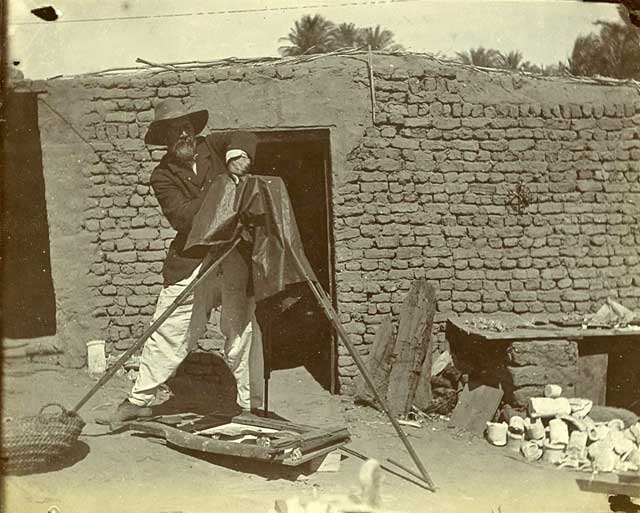 Sir Flinders Petrie with his camera. (Petrie Museum archive PMF/WFP1/115/5/2)
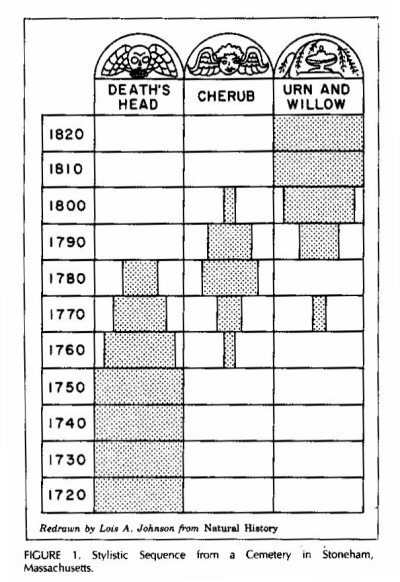 A ���battleship curve��� of frequency distribution. (
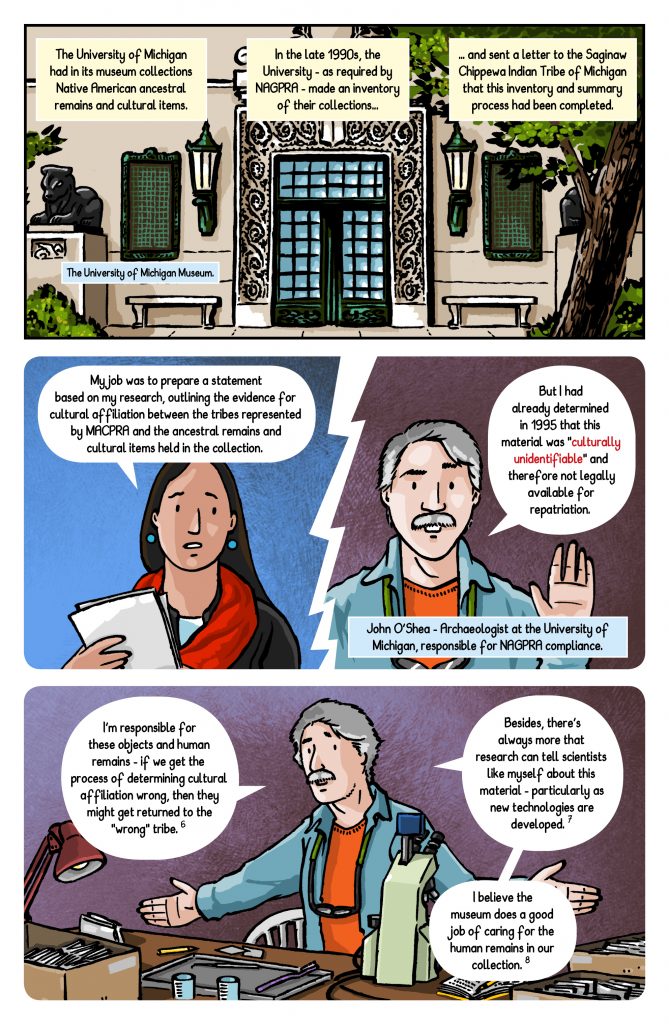 Journeys to Complete the Work ��� Page from an informational comic about NAGPRA (the Native American Graves Protection and Repatriation Act) aimed at both museums and Native communities explaining how the law works ��� or, sometimes, doesn’t. Image courtesy of John Swogger.
 Aehtwelighu ��� Example of a graphic abstract illustrating discussion of cross-border relationships around Offa’s Dyke during the Anglo-Saxon period. Image courtesy of John Swogger.
 WELCOME TO THE 17勛圖BLOG


 Get your free copy of泭The Ancient Near East Today: Vol. V, No. 11!
 Get your free copy of the 5 Most Popular Biblical Archaeology Articles From泭The Ancient Near East Today!
 When:泭Wednesday, April 6th at 8:00pm
