
Category Archives: Uncategorized
2019 POSTER SESSION ABSTRACTS
[vc_row fullwidth=”true” css=”.vc_custom_1490224714943{padding-top: 0px !important;padding-right: 0px !important;padding-bottom: 0px !important;padding-left: 0px !important;}”][vc_column][vc_single_image image=”53030″ img_size=”full”][/vc_column][/vc_row][vc_row][vc_column][vc_column_text][/vc_column_text][/vc_column][/vc_row][vc_row fullwidth=”true” css=”.vc_custom_1490225468623{padding-top: 0px !important;padding-right: 0px !important;padding-bottom: 0px !important;padding-left: 0px !important;}”][vc_column width=”1/12″ css=”.vc_custom_1490225195470{margin-right: 10px !important;}” offset=”vc_hidden-sm vc_hidden-xs”][vc_column_text]
泭 SHARE
[/vc_column_text][mk_image src=”http://www.asortest.org/wp-content/uploads/2017/01/social-fb-icon4.jpg” image_width=”42″ image_height=”42″ hover=”false” custom_url=”https://www.facebook.com/ASOResearch/” margin_bottom=”0″][mk_image src=”http://www.asortest.org/wp-content/uploads/2017/01/social-tw-icon4.jpg” image_width=”42″ image_height=”42″ hover=”false” custom_url=”https://twitter.com/ASOResearch?ref_src=twsrc%5Egoogle%7Ctwcamp%5Eserp%7Ctwgr%5Eauthor” margin_bottom=”0″][mk_image src=”http://www.asortest.org/wp-content/uploads/2017/01/social-in-icon4.jpg” image_width=”42″ image_height=”42″ hover=”false” custom_url=”https://www.linkedin.com/company/american-schools-of-oriental-research” margin_bottom=”0″][mk_image src=”http://www.asortest.org/wp-content/uploads/2017/01/social-ml-icon_7.jpg” image_width=”42″ image_height=”42″ hover=”false” custom_url=”mailto:info@asor.org” margin_bottom=”0″][mk_image src=”http://www.asortest.org/wp-content/uploads/2017/01/blog-icon3.jpg” image_width=”42″ image_height=”42″ hover=”false” custom_url=”http://asor.org/blog” margin_bottom=”0″][/vc_column][vc_column border_color=”rgba(255,255,255,0.01)” width=”1/6″ css=”.vc_custom_1490365673198{margin-right: 20px !important;border-left-width: 2px !important;padding-right: 20px !important;padding-left: 20px !important;border-left-color: #99422f !important;}” el_class=”sticky-sidenav”][mk_divider divider_color=”rgba(255,255,255,0.01)” thickness=”1″ margin_top=”3″ margin_bottom=”3″][vc_widget_sidebar sidebar_id=”ca-sidebar-38526″ el_class=”.widget { overflow: hidden; margin-bottom: 0; }”][/vc_column][vc_column border_color=”rgba(170,170,170,0.01)” width=”1/2″ css=”.vc_custom_1490225606852{margin-right: 10px !important;margin-bottom: 30px !important;border-right-width: 2px !important;border-bottom-width: 2px !important;padding-top: 30px !important;padding-right: 30px !important;padding-left: 20px !important;background-color: #ffffff !important;border-right-color: rgba(227,228,228,0.75) !important;border-bottom-color: rgba(227,228,228,0.75) !important;}”][vc_column_text responsive_align=”left”]2019 POSTER ABSTRACTS
Posters are listed alphabetically by the presenter���s last name.泭
CHAIR: Jennifer Ramsay (The College at Brockport, State University of New York)
- Aaron Greener (W. F. Albright Institute of Archaeological Research), Matthew J. Adams (W. F. Albright Institute of Archaeological Research), and Conn Herriott (The Hebrew University of Jerusalem), ���A Bowl of Bulls: EB IVessel with Bovine Symbolism from Tel Megiddo East���
The EB I (ca. 3300���3000 B.C.E.) site of Tel Megiddo East���situated in the heart of the Jezreel Valley in northern Israel���was excavated by the Jezreel Valley Regional Project from 2010���2013. A unique large platter with three interior protrusions, resembling bull horns, was found at the site, along with fragments of additional similar vessels. The restoration of this vessel led to the discernment of previously unidentified pottery stumps which were discovered at contemporaneous sites such as Qiryat Ata and Yaqush.
In this poster we present the vessel and analyze the relationship between the bovine motif and the vessel���s physical and social context. Bull symbolism and cult were popular during the EB I in the southern Levant and beyond. For example, cattle are the most commonly represented animals in the zoomorphic figurine repertoire. Within the general body of cattle symbolism, a particular emphasis on heads and horns is apparent. It is possible that horns were distinctive visual shorthand for complete crania, whole animals, or particular ceremonies.
The EB I settlement at Tel Megiddo East and the temples on Tel Megiddo provide new evidence for significant developments in monumental architecture, centralized planning, and remarkable control of resources that presage the ���urban��� societies of the EB II/III. In such a context, utilitarian objects of symbolic importance may have been fashioned by craft specialists who functioned under the auspices of the temple.
- Donovan Adams (University of Nevada, Reno) and Marin Pilloud (University of Nevada, Reno), ���Investigating Kinship of Early Neolithic Communities in Anatolia���
The social organization of early Neolithic communities is not well understood. The Neolithization process was comprised not only of an adoption of new subsistence and technological strategies, but also of changes in social structure and the demographic composition of Anatolian populations. Previous research has indicated increased fluidity in how people organized themselves, with mortuary treatment of individuals being based along social, rather than biological, ties (Pilloud and Larsen, 2011). The present research serves to investigate how four communities dating from the Early to the Late Neolithic period in central and northwestern Anatolia were organized. These samples offer an opportunity to assess kinship construction throughout the Neolithic and the Anatolian peninsula. Dental morphological and metric data on permanent dentition were collected on samples from ��atalh繹y羹k, A��覺kl覺 H繹y羹k, Boncuklu, and Barc覺n H繹y羹k. Gower���s coefficient of similarity was used to analyze phenotypic similarities between individuals as this technique accommodates both types of data. Results indicate a changing relationship with biological affinity over time as the process of Neolithization progressed.
- Rami Arav (University of Nebraska Omaha) and Ann Haverkost (University of Nebraska Omaha), ���A New Iconic Stele and High Place at Bethsaida���
The 2019 season at Bethsaida focused on exposing more of the Area A Stratum VI city gate complex, dating to the 11th to the 10th centuries B.C.E., where a new iconic stele and high place were discovered. The iconic stele and high place were located on the corner of what was probably the southeast tower of the courtyard ���between the two gates.��� Made of basalt, the stele is reminiscent of the one found at Bethsaida in 1997, only smaller and in a more rudimentary form and gives us an idea of how the image of the god evolved during the Iron Age.
It is the sixth and oldest stele ever found of this image and the second at Bethsaida. Three stelae were found in southern Syria and one in Gaziantep in southern Turkey. The icon has been identified as the moon-god of Haran, but, according to some scholars, it has similarities to storm god Haddad of Damascus. The moon god was the focus of a major cult for the Aramaeans, and it seems that the Arameans of the Kingdom of Geshur and Bethsaida, its capital city, followed the Arameans to the north and the Chaldean dynasty of Babylon. This major find adds further evidence for the ancient site���s links to the north. It clearly shows that, despite the differences and gaps in occupation between Stratum VI and V (ca. 850 B.C.E.���732 B.C.E.), the population of Bethsaida still remained the same.
- Jaime Bennett (La Sierra University), ���Conservation Process of Loom Weights Found at Khirbat al-Balu���a���
Loom weights were found during the 2017 season at Khirbat al-Balu���a and during the 2019 season as well within a casemate room in an Iron Age phase of the fortification wall. Typological and comparative study of the loom weights from Khirbat al-Balu���a will reveal information about the textiles produced which, given the context of the loom weights in the casemate room, may indicate specific economic activity. The poster will show the conservation process of these loom weights both in the field in situ this summer and in the lab as well from the 2017 season.
- Katherine Burge (University of Pennsylvania) and Petra Creamer (University of Pennsylvania), ���Modeling Mud Brick Construction Practices at Kurd Qaburstan���
Kurd Qaburstan is a 109 ha urban site in northern Mesopotamia, southwest of Erbil in the Kurdistan Region of Iraq, currently excavated under the direction of Professor Glenn Schwartz of Johns Hopkins University. It has tentatively been identified as ancient Qabra, a large kingdom known from textual sources from the first half of the second millennium B.C.E. The 2017 excavation season revealed a Middle Bronze Age monumental building on the central mound, the collapse layers of which contained a number of painted Halaf-ware sherds, suggesting that the bricks were made on or near Halaf occupation somewhere in the vicinity of the site.
Our study uses GIS applications to model potential brickmaking locations around Kurd Qaburstan, by setting up a series of conditions for what a brick-making site requires based on ethnographic examples (e.g., water source, surface area, obstructed river bank). We cross-reference these results with Halaf-period sites mapped by the Erbil Plain Archaeological Survey (directed by Jason Ur of Harvard University). Using cost-path analysis to determine efficiency of transport from these locations to the central mound, we identify probable brick making sites used in this monumental building project. In addition, we calculate rates of labor for every step of the construction process. In examining and modeling mud brick building practices at the site, we aim to shed light on some of the organizational mechanisms related to the overall process of urbanization in Middle Bronze Age northern Mesopotamia and consider some of the underlying socioeconomic realities that are otherwise difficult to perceive.
- Scott Coleman (University of Calgary), ���The Multifaceted Evolution of Byzantine ��ad覺r H繹y羹k���s Socio-Economic Environment: A Case Study of the Numismatic Evidence���
Historically, Byzantine studies have focused on urban centers, overlooking the remote rural villages and towns of central Anatolia. Though modern scholarship has shifted its focus and recognized the importance of such secluded settlements, evidence clarifying how rural agrarian life operated in Byzantine central Anatolia continues to be limited. The Byzantine settlement at ��ad覺r H繹y羹k, located in central Anatolia, Turkey, is the focus for this case study. The objective of this study is to present and discuss the extensive numismatic evidence which helps explain ��ad覺r H繹y羹k���s economic status and function during the Byzantine period. The discipline of numismatics continues to be a specialized field of study that often isolates coins from their depositional contexts for an independent analysis. The utilization of coins for dating archaeological contexts oversimplifies their relationships with other material remains. For ��ad覺r H繹y羹k, the relationships between numismatic and physical evidence not only demonstrate a continual occupation period from the mid-fourth century to the end of the eleventh century but also suggest the settlement���s ever-evolving utility over the centuries. An interdisciplinary approach allows for a deeper understanding of the relationships between the numismatic evidence and other material remains recovered at ��ad覺r H繹y羹k. This methodology presents scholars with the opportunity to further elaborate on the social relationships that existed both within the settlement and externally. The study���s conclusions will demonstrate the multifaceted and changing economic environment and social relationships as the populations changed at ��ad覺r H繹y羹k.
- Christopher Davey (Australian Institute of Archaeology; University of Melbourne), Luis Siddall (Australian Institute of Archaeology), Carla Raymond (Macquarie University), and Joseph Bevitt (Australian Nuclear Science and Technology Organization), ���Hidden Text: Imaging and Reading an Ancient Tablet Encased in an Envelope���
A tablet from Nimrud, which is encased in an inscribed clay envelope IA5.074 (ND 3430; Postgate 1976), was imaged at the Australian Synchrotron Imaging Medical Beamline. This confirmed that there was a cuneiform tablet inside the envelope, the text of which could be read. The poster provides the details of the imaging, describes the tomography, offers a reading of the enclosed tablet, and comments on the variation between the text on the envelope and that on the tablet and the significance of this for Assyrian contract law.
- Victoria Doran (Queen���s University), ���A Study of Christian Symbolism at the Site of Humayma, Jordan���
This project focuses on the documentation and analysis of Christian symbols found throughout the archaeological site of Humayma���a town in southern Jordan that transitioned from a Nabataean caravan stop and Roman military fort into a prominent Christian settlement during the Byzantine period. Overall, the aim of this study is to contextualize the presence of Christianity within the multi-cultural framework of Humayma, and to highlight the role of symbolism in Christianity, as a means of protection, identification, and communication between diverse peoples, the environment, and the supernatural. As part of this poster, I consider symbols from two different areas of Humayma; the Eastern Cascading Plateau of the Jebel Qalkha and Field D128, an area west of the Roman military fort. First, I suggest that a petroglyph carved into the Eastern Cascading Plateau is a monogram of Saint Michael the archangel. This is a particularly significant finding, because the Plateau, an area with a long history of Nabataean, Roman, and Islamic use, has never before been associated with Christianity. Next, I demonstrate that D128 may contain a Christian cemetery and/or church, based on the high concentration of Christian symbols found on spolia in that particular field.
- Jacob Finegan (University of Central Florida) and Tiffany Earley-Spadoni (University of Central Florida), ���The Rise and Fall of Urartu: Observations on the Temporal and Spatial Distribution of Inscriptions from the Corpus dei Testi Urartei ���
泭Tracing the expansion, decline, and ultimate demise of Urartu (ca. 900���700 B.C.E.) is critical to understanding the dynamics of that ancient state as well as its relationship to the Neo-Assyrian empire. Previous scholarship sought to define Urartian borders by using the distribution of pottery or metalwork as proxy indicators of presence. However, these techniques utilize gross chronological markers which flatten key historical developments as well as prompt legitimate debates about the material correlation of sovereignty. Instead, the described research seeks to understand the extent of Urartu���a network empire���using in-situ rock-cut inscriptions as a proxy. Due to the inscriptions��� association with individual rulers, we argue that the CTU (Corpus dei Testi Urartei) data allow Urartu to be examined on a finer timescale. The project complements contemporary scholarship which views Urartu as a network empire: a non-territorial polity that is centered around fortified nodes of influence. The findings, furthermore, challenge the plausibility of defining ���borders��� in certain ancient Near Eastern states like Urartu.
- Catherine Foster (U.S. Department of State), ���Protecting and Preserving Archaeological Sites and Objects through International Agreements���
In 1983, the United States became a State Party to the Convention on the Means of Prohibiting and Preventing the Illicit Import, Export and Transfer of Ownership of Cultural Property (UNESCO 1970). Since that time, implementing legislation has allowed the United States to enter into bilateral cultural property agreements with 18 countries including some in North Africa and the eastern Mediterranean. These agreements promote stability, economic development, and good governance in other countries, while denying critical financing to terrorist organizations and other criminal networks that engage in illicit trade. Not only have these agreements helped to staunch the pillage and trafficking of cultural property by establishing U.S. import restrictions, they have provided a framework by which countries���through governments and cultural institutions including universities and museums���collaborate on activities of mutual interest. These include archaeological excavations, exhibition and research loans, educational training and professionalization, and preservation of archaeological and historical sites. Despite these positive and impactful outcomes, these binding international agreements are unknown to or a source of confusion for many scholars. This poster will explain clearly how agreements are forged and maintained, and how they can support best practices for the benefit of all stakeholders.
泭
- Katharina Frankson (University of British Columbia), ���Engaging Gardens: A Visual and Spatial Analysis of the Gardens at Herod���s Third Palace���
Herod the Great���s Third Palace at Jericho was one of his most elaborate palaces. My research examines how Herod and his architect used the design of the palace to control a guest���s experience and encourage certain activities within and around the palace���s green spaces. This palace complex contains two interior gardens housed within peristyle courtyards as well as the largest exterior garden of those associated with any of his palaces. I use a visual and spatial analysis of these gardens to examine how physically and visually accessible they were to their owner and his guests. My work takes into consideration the specific context of each garden in order to understand how it was meant to be experienced. I investigate how the design of the palace controls the way visitors and occupants engaged with these gardens.
My analysis indicates that each of the three gardens has a different relationship with its surroundings and that each is meant to be interacted with in multiple ways from various vantage points. I explore their unique features and placement within the palace, to investigate how they complement and encourage specific palace activities. By contextualizing the role of the gardens within the palace complex, I am able to emphasize the range of possible activities that took place around the gardens and highlight their importance to Herod. This poster represents a portion of my larger MA thesis which looks at how this palace facilitates social interaction through its design and decoration.
- Amanda Gaggioli (Stanford University), ���Earthquake Destruction at Antiochia ad Cragum and Blaudos in Western Turkey: A Perspective from Soil Micromorphology���
The subfield of archaeoseismology uses archaeological data to establish deeper time perspectives on the relationships between sociocultural development and recurring earthquake hazards. Previous studies in the eastern Mediterranean have focused on architectural remains and their destruction types in order to identify and interpret past earthquake events and their sociocultural consequences. Since not all architectural destruction types can be conclusively attributed to earthquakes, this project advocates for an interdisciplinary approach that analyzes sediments together with architectural remains in archaeoseismic excavations. I demonstrate the advantages of using the geoarchaeological method of soil micromorphology in two archaeoseismic cases in western Turkey: the Roman site of Antiochia ad Cragum and Byzantine site of Blaundos. Seismic activity has an impact on soil formation, and techniques in soil micromorphology have the potential to aid in establishing temporal and spatial linkages between observed material destruction and earthquake events. My project analyzes evidence for seismic activity in soils from the stratigraphic levels associated with the foundations of damaged structures. Evidence for past earthquakes in soil formation includes various types of liquid escape microfeatures and soft-sediment microstructures. The presence of seismically induced soil features in the stratigraphy at level with building destruction provides more conclusive evidence for the association between earthquakes and remains of building destruction. This project advances the use of soil micromorphology for studies of seismic phenomena at archaeological sites and contributes to more sophisticated understandings of the relationship between human communities and seismic environments in the ancient eastern Mediterranean.
- Caroline Gerkis (Independent Scholar), ���Fluidity of Ptolemaic Funerary Architecture���
The concept of the final resting place is manifested in funerary architecture, an important belief that resonated throughout all ancient cultures. Upon the death of Alexander the Great, his Successors (the Diadochi) fought one another to possess his body, to use it as a symbol of legitimacy to control his empire. The man who successfully accomplished this was Ptolemy Lagides���who seized Egypt soon after his death in 323 B.C.E.���by hijacking Alexander���s corpse, which was taken to Egypt and eventually interred in the Sema (the royal mausoleum) at Alexandria. Consequently, Ptolemy I Soter reigned as the first Ptolemaic king (305���4 B.C.E.) over this ancient Pharaonic land until the death of Cleopatra VII (30 B.C.E.), illustrating the power of funerary architecture and its significance both as a cultural tradition and as an expression of this originative society.
This poster displays the distinctive architectural identity that was created and associated with the Ptolemaic dynasty and how it is demonstrative of their fluidity as rulers of this ancient land. The amalgamation of Ptolemaic funerary structures that integrated local cultures with Macedonian traditions, ranging from innovative tombs built at Alexandria and hybrid-structures at the Tuna el-Gebel necropolis, to acclimating local customs, such as mud brick tombs at the Assasif cemetery on the Theban necropolis, exhibits the sovereignty of the Ptolemies.
泭
- Madaline Harris-Schober (University of Melbourne and Ludwig-Maximilians-Universit瓣t M羹nchen), Gemma Lee (University of Melbourne), Lily Nash (University of Melbourne), and Thomas Keep (University of Melbourne), ���Positive Organizational Psychology in Archaeological Field Work: A Preliminary Approach���
The past ten years have seen a rise in positive organizational psychology in a variety of workplaces, most prominently schools and large corporations. The study of positive psychology and positive organizational psychology is the science of positive subjective experience, individual traits, and positive institutions (Donaldson 2011). We believe the application of these new approaches to archaeological field schools and/or fieldwork programs would increase staff and student fulfillment and overall individual and group flourishing while lowering negativity that can be caused by high-intensity fieldwork environments. Historically, archaeology is an ���old world��� profession and institution analogous with travel and hard physical labor. The archaeological dig is a unique form of institution and workplace which requires a universal set of guidelines to help those in leadership positions apply positive organizational techniques. While ASOR���s CAP (Committee on Archaeological Research and Policy) guidelines exist, they tend to focus on gender-based violence/harassment and how to deal with situations once they have occurred. The aim of this research is to expand on issues brought to light during the 2018 17勛圖session, ���Talking 17勛圖: How to Make Fieldwork Safe from Gender-Based Violence, Harassment, and Discrimination��� from a ground-up approach, utilizing new positive organizational psychological and behavioral methods which have proven beneficial in large organizations, such as ACR (Active Constructive Responding), autonomy supportive leadership, and PPIs (Positive Psychology Interventions). Moreover, we aim to implement an archaeologically specific study in order to promote and encourage positive excavation environments that foster group and individual flourishing rather than guidelines for damage control.
泭
- Hidemasa Hashimoto (Tenri University), Hidetoshi Tsumoto (Ancient Orient Museum, Tokyo) and Hisao Kuwabara (Tenri University), ���Chemical Composition of Bronze Artifacts from Tel Rekhesh���
Tel Rekhesh is an archaeological site located in Lower Galilee, Israel. Its ancient name is suspected to have been Anaharath, according to the provenance study of Amarna Letters. As a result of several seasons of excavations by Japanese-Israeli excavation team, it has been elucidated that settlement of the site has a long, continuous history from the Early Bronze Age to the Roman period (except the Hellenistic period).
In this poster, the authors present unpublished results of XRF (X-ray fluorescence) analysis conducted on the bronze artifacts unearthed during the 2006���2010 excavations. Thirteen bronze items, from the Late Bronze Age to the Roman period), were analyzed in total. The results of XRF analysis of the bronze objects revealed that some items, such as a chisel, stunning bolt, bronze pin, and bronze pin head do not include lead (Pb) among their components. The authors suggest the possibility that the absence of lead in certain bronze objects is the result of the intentional choice of metal workers, rather than time differences of items or a historical development. The reason for this choice might relate to manufacturing techniques used or the characteristics of end products. For example, the absence of lead in a chisel could be understood from the necessity of hardness as a metal tool used for engraving or cutting. In order to verify the suggestion by the authors, published data on the chemical composition of bronze artifacts from other sites are also examined.
- Blair Heidkamp (The University of Texas at Austin) and Yorke Rowan (University of Chicago), ���A Spatial Analysis of Ground Stone Tools from W80 at Wisad Pools, Jordan���
One of the study areas for the Eastern Badia Archaeological Project is Wisad Pools, located in the Black Desert of the panhandle of eastern Jordan. The pools, which fill with the annual rains, are surrounded by hundreds of stone-built structures, presumably from the Late Neolithic. Excavation of one structure, W80, revealed complex stratigraphy with occupational deposits spanning 1000 years. Throughout the intermittent periods of use, a pattern became apparent in which most hand stones were deposited up against the interior walls of the structure. The particular positioning of these tools implies that the placement was in fact intentional, possibly while the structure was occupied and during periods of abandonment. Previous interpretations of the area have argued that the structures at Wisad Pools were occupied seasonally to take advantage of gazelle herd migrations (Rollefson et al. 2014, 2018; Rowan et al. 2017). Securing the ground stone tool���s position indicates an intent to return to the same region and the same structures again. By investigating the spatial distribution of the various ground stone tools found at W80 we hope to gain further insight on the cyclical process of humans interacting with the region.
- Ian Hill (Heritage and Archaeological Research Practice), ���Archaeological Field Schools in a Changing World: Exploring a New Model for Training���
With over a decade of funding cuts in the UK, particularly real-term funding cuts to the arts, culture, and environment, coupled with a shift from government funding to higher university tuition fees, traditionally funded archaeological research excavations may become a thing of the past. Archaeological field schools and volunteer-driven community outreach projects are becoming more prevalent than ever before. But do their standards, outputs, and research questions compare to traditional research excavations and commercially or developer-funded archaeological works?
Using the case study of Kissonerga-Skalia in Cyprus, this poster will explore the project���s move from a university-run field school to an international field school operated by two not-for-profit organizations. The poster will examine the advantages and disadvantages of field schools principally aimed at university students, early career archaeologists, and archaeological enthusiasts. These advantages and disadvantages will be compared to traditional research excavations run by a university or museum, and developer-funded archaeological excavations run by a commercial archaeological contractor.
This poster will also develop ideas and approaches in how to run a successful field school that can provide a suitable balance between appropriate training for students, achievable research aims and targets, and the impact on the local area both economically and culturally.
- Julian Hirsch (Oberlin College), ���The Oberlin Near East Study Collection (ONESC): Revitalizing an Archaeological Collection through Student Collaboration���
Housed in Oberlin College���s Religion department, the Oberlin Near East Study Collection encompasses a wide variety of archaeological material from the southern Levant. Collected from the 1930s���1980s, the roughly 650 artifacts cover a vast time span from the Epipaleolithic to the Modern period. As a teaching collection within Oberlin���s School of Theology and later in the College���s Department of Religion, professors of biblical studies used the objects to vivify biblical texts for generations of students. Starting in the 1980s, the collection fell into disuse. In Spring 2018, a student-led initiative was founded to digitize and revitalize this collection. This initiative has seen great success with numerous student volunteers contributing their time to record hundreds of artifacts. Participants have gained important skills in object photography, curation, and both archival and archaeological research. Our work has led to an improvement in the collection���s storage environment, laid the groundwork for its digitization, and has led to its increased use in class and club programming.
泭
- Matthew Howland (University of California, San Diego), Brady Liss (University of California, San Diego), and Mohammed Najjar (University of California, San Diego), ���Archaeological Storytelling and Community Engagement via Story Maps���
Archaeology is 1) a fundamentally spatial field, 2) well-adapted to tell stories about the past and the people who lived in it, and 3) a field that often requires the development of close collaboration with the present-day inhabitants of regions around the world. As such, any given archaeological project should be uniquely suited to tell the stories of the past in four dimensions: the three dimensions of space, along with a fourth dimension of time that narrates the past and brings it into the present. The StoryMaps application, produced by ESRI, is a free service that allows for the generation of multimedia stories that visualize the kind of spatial data that archaeological projects regularly produce. While the app has potential as a scientific dissemination platform, it is perhaps best suited for narrating a story that explains past societies in a way that is not only comprehensible but also entertaining to the general public. Good archaeological practice in the 21st century would also suggest that this kind of public storytelling be aimed at engaging not only academics and their social circles but also the communities whose cultural heritage is the basis of the stories being told. To that end, this poster presents a StoryMap application telling the story of Iron Age copper production and social complexity in Faynan, Jordan, with the objective of sharing the story with the public in general but more specifically with the local communities of Faynan via installation of the StoryMap in Arabic into the newly-established Faynan Museum.
- Stuart Ibrahim (University of Melbourne), ���And He Took the Fortified Cities of Judah���: Third Intermediate Period/Iron Age I���II Raphia and Egypt���s Response to the Changed Political Spectrum in the Levant���
Since 2017, I have analyzed the Bubastis Portal (a Third Intermediate Period Egyptian temple relief at Karnak) and the history of the New Kingdom Egyptian sites in the southern Levant/North Sinai border region, using an in-depth timeline to provide an alternative perspective. This analysis addresses what became of these sites (in relation to the contemporaneous political situation), in order to provide more insight regarding how things changed in the Sinai/Levantine region before Assyria emerged.
Despite the limited textual and archaeological evidence, the Medinet Habu battle relief and Papyrus Harris I (dating to the reigns of Ramesses III and IV in Dynasty 20) show that the Ways of Horus fortress chain (along the North Sinai coast, ending at Gaza) lasted until after Ramesses IV. Papyrus Golenischeff (Dynasty 21) and the archaeological evidence in the Eastern Nile Delta and southern Levant, though, confirm that two to four sites in the former region survived, while other groups resettled those in the latter (including Rafa) which were not abandoned.
After consolidating his power, the first Libyan king of Egypt (Dynasty 22), Shoshenq I, captured the remaining Ways of Horus sites (including Rafa). He then launched a three-pronged attack in the region of Israel, Judah, the Transjordan, and even the Negev (based on my analysis of the Bubastis Portal) to impose vassalage on the region. This briefly revived the Egyptian empire but also paved the way for later superpowers.
- Sanae Ito (Sophia University), ���A Network Analysis of the Chief Scribe and the Palace Scribe in the Assyrian Empire���
The chief scribe and the palace scribe were the most important palace officials in the Assyrian Empire. Their duties included not only scribal work such as preparing royal inscriptions and writing royal letters, but also maintaining the royal archives and consulting scholarly literature. They occupied a crucial role as a secretary or an adviser of the Assyrian king. However, much uncertainty still exists about their relationship with other scribes, scholars, and palace officials. Thus, this poster examines their social network and seeks to explain how the chief scribe and the palace scribe carried out their work with or without the cooperation of other people. The research data in this poster are drawn from the texts published in State Archives of Assyria. The study offers some important insights into the duties, authorities, origins, and rivalry of the chief scribe and the palace scribe.
- Yiliang Li (University of Haifa) and Michal Artzy (University of Haifa), ���Rethinking the Significance of East African Coasts in the Medieval Indian Ocean Maritime Trade System: An Archaeological Perspective���
The East African coast, known as the Swahili Coast, flourished along with the increasing maritime commercial contacts in the western Indian Ocean in the 9th���15th centuries before the coming of the Portuguese. The aim of this paper is to assess the status of the Swahili Coast in context by exploring the distribution of archaeological remains including ceramics, glass beads, and architecture.
Distinct imported commodities uncovered from the sites on the East African coast and islands, such as Chinese ceramics and Indian wound glass beads, imply that the Swahili Coast was involved in the frequently commercial interactions in the western Indian Ocean. Contacts are indicated by the distribution of East African plain wares from the littoral sites in the Arabian Peninsula as well. Nevertheless, timber and stone architecture, especially medieval mosques, developed from the mid-eighth century, while Islamic activities occurred on the East African coast.
Based on the quantitative and identifying study of archaeological data, it is assumed that East Africa coastal sites developed in the context of increasing Indian Ocean maritime trade from the ninth century onward, and that this activity was principally promoted by the merchant communities from the Islamic world. Lastly, the Swahili Coast was not the appendage of the monsoon trade network, but a significant bartering segment in the system.
- Brady Liss (University of California, San Diego), Matthew Howland (University of California, San Diego), Anthony T. Tamberino (University of California, San Diego), Scott McAvoy (University of California, San Diego), and Thomas Levy (University of California, San Diego), ���Everything Old is New Again: Using Archived Photography to 3D Model Previous Excavations in Faynan, Jordan���
Archaeological research has recently embraced 3D modeling of sites/excavations using digital photogrammetry, but using photography to generally document excavations is a longstanding practice. While these excavation photos were not previously intended for photogrammetry, the rigorous digital photography strategies used by modern excavations afford an opportunity to potentially repurpose these archival data for 3D modeling. Moreover, these photos can return an excavation to its original state, before any damages of time. This poster explores the possibility based on archival photographs from excavations at Khirbat en-Nahas (KEN), an Iron Age copper smelting center in Faynan, Jordan. KEN was excavated by the Edom Lowlands Regional Archaeology Project between 2002 and 2009, and one excavation area, a large probe into a slag mound (Area M), has since collapsed. Due to its depth (ca. 6.5 m), the edges of the sounding eroded, filling the excavation and partially destroying the stratigraphic sections. However, the excavation was thoroughly photographed at its completion, providing a dataset to digitally reconstruct the area. Moreover, by combining the model of the slag mound with a new site-wide model of KEN created in 2014, the Area M excavation could be situated within the larger context of the site in 3D for the first time. This poster presents the methods and results of this process along with one method for sharing these data using virtual reality. In doing so, it provides a case study of combining new and archived photography to produce 3D models for the preservation and dissemination of archaeological sites/excavations.
泭
- Leilani Lucas (College of Southern Nevada; University of Nevada, Las Vegas), ���Shifting Harvests: Archaeobotanical Contributions to Our Understanding of the Cypriot Chalcolithic���Bronze Age Transition���
Current archaeobotanical research in Cyprus demonstrates a deviation from the mainland trajectory highlighting a prolonged period of mixed-subsistence economy of small-scale intensive garden cultivation and hunting to one that is reliant on crop-agriculture and intensive livestock herding. There is evidence for the spread of intensive mixed farming regimes from the mainland Levant by the end of the ninth millennium B.C.; however, Cyprus appears to pull back from this by the Late Neolithic. The data presented here argue for more flexible subsistence practices during the Neolithic and Chalcolithic with a shifting of strategies only in the Bronze Age. This paper summarizes the available archaeobotanical evidence from the Cypriot Chalcolithic���Bronze Age transition, and together with new data from Kissonerga-Skalia the rise of the Cypriot Bronze Age economy is explored.
- Thomas E. Levy (University of California, San Diego) and Mohammad Najjar (University of California, San Diego), ���At-Risk World Heritage and the Digital Humanities���Recent Destruction at Khirbat en-Nahas, Jordan���
Cultural resources, like natural resources, are finite. Every country has cultural resources that reflect local history and prehistory and are vital both economically for tourism and socially as a foundation of cultural identity. This material cultural record is part of world heritage, something recognized by UNESCO since 1972 (http://whc.unesco.org). As archaeological and historical sites occur in relatively restricted areas, they are a limited resource that should be cared for, curated, and preserved for local, national, and international communities. Unfortunately, over the past seven years, more than any other region on the planet, archaeological heritage sites in the eastern Mediterranean and Middle East have suffered destruction at an alarming rate. Political instability, war, extreme ideologies, economic downturns, development, and other factors have led to the wanton destruction of heritage sites. The recent University of California Office of the President Catalyst grant (+ $1 million) enabled four UC Campuses to collaborate on using the methodology of cyber-archaeology (data capture, curation, analyses, and dissemination) to help address issues concerning the destruction of archaeological sites in this region. Here we discuss the recent (July 2019) destruction at Khirbat en-Nahas located within the protected Dana Biosphere Reserve of the Royal Society for the Conservation of Nature in Jordan, and how cyberarchaeology has recorded the site, created virtual reality models for the public, and contributes to monitoring damage at the site.
- Susan Penacho (17勛圖Cultural Heritage Initiatives), ���A Systematic Survey of Looting Pits at Khirbet al-Balu���a, Jordan���
The site of Balu���a has been and continues to be disturbed by looters over the course of many years. These disturbances fall into two categories: deep looting pits often dug along visible architectural features, and small shallow pits possibly dug after the use of a metal detector. During the 2019 season, a systematic GPS survey was undertaken to map identified disturbed areas within the Iron Age city walls. The survey���s goal was to create a baseline of previous looting in order to monitor new disturbances. A total of 201 disturbances were noted: 113 looting pits and 88 metal detector pits. These are described based on relative size ranging from extra-small to extra-large. Looting is an ongoing problem as we witnessed first-hand, with two looting events taking place overnight during the excavation season. This brazen looting of the site while excavations were ongoing illustrates the gravity of this issue. By monitoring both past and present looting, the project team aims to highlight the scale of the ongoing problem and brainstorm ways to combat future looting events at Balu���a.
- Steven Porson (University of North Carolina at Charlotte), Patricia Fall (University of North Carolian at Charlotte), and Steve Falconer (University of North Carolina at Charlotte), ���Early to Middle Bronze Age Paleoecological Analysis of Urban Collapse in the Southern Levant���
Our study involves an archaeobotanical and stable isotope analysis of seeds from ancient cultivated crops to test hypotheses for the collapse of Early to Middle Bronze Age cities in the Middle East. Preliminary analysis of seeds excavated from Early and Middle Bronze Age settlements in Jordan (ca. 2500���1600 cal B.C.) show signs of relatively decreased water availability correlating with increased temperatures during the latter stages of the Early Bronze Age collapse and improved conditions during the Middle Bronze Age urban redevelopment. Isotope results also seem to indicate the potential for a two-stage punctuated aridification event during EB IV abandonment. More detailed dissertation analysis will test the specific hypothesis that there were two periods of diminished environmental conditions at the end of the EB III and middle of the EB IV by incorporating new sites and proxies for a more thorough investigation of Near Eastern sites.
- Alexandra Ratzlaff (Brandeis University), Erin Brantmayer (The University of Texas at Austin), Ian Roy (Brandeis University), Tim Herbert (Brandeis University) and Helen Wong (University of Cambridge), ���New Approaches in Digital Imaging���
Through a partnership between Brandeis University and the Autodesk Boston Technology Center, the Brandeis Ancient Insights/Modern Innovations Team aims to create new technological approaches in digital imaging through the development of equipment and more specialized methodologies, using practical applications in the lab and field environments. Current in situ and artifact digital imaging allows for too much variation in data collection during the process of photogrammetry. One approach to this problem was to engineer and fabricate a Single Camera Automated Photogrammetry Platform to collect measured datasets at specified angles to reduce the processing error in modeling. The SCAPP BETA version incorporates a horizontal circular track in cut aluminum with two opposing carriages (3D printed in PLA filament and carbon fiber) that supports an arch with another carriage attached as a camera rig. The camera can then be adjusted at any vertical angle and the number of photos set to be collected on the horizontal plane. Adjustments in the vertical and horizontal planes allow for optimal data collection. The data sets collected with the SCAPP are run through multiple processing platforms. The advantage of this approach is that it provides modeling through programs designed for various specific needs such as lab-based applications vs. adaptability for the field. By processing in these different platforms, we can maximize the best methods approach in rendering 3D models. Our 17勛圖poster will highlight the advantages of the AIMI team���s partnership with Autodesk as well as results of the SCAPP BETA testing.
- Jackson T. Reece (University of California, San Diego), Anthony T. Tamberino (University of California, San Diego), Assaf Yasur-Landau (University of Haifa), and Thomas E. Levy (University of California, San Diego), ���Roman Piscinae and Sea Level Reconstruction in the Southern Levant: Reexamining a Rock-Cut Installation at Tel Dor, Israel Using Aerial Photography and Ground-Level Photogrammetry���
Roman fish ponds, or piscinae, have experienced a resurgence in recent publications on Mediterranean coastal archaeology, especially in Roman Italy and the central Mediterranean, as these installations can be useful proxies for estimating historical local sea levels. However, this renewed interest has highlighted a paucity of data on the common forms and uses of Roman aquaculture installations in the eastern Mediterranean, limiting our ability to conduct similar studies in the region. Rock-cut installations at Tel Dor, located on the southern Levantine coast (modern-day Israel), exhibits many of the characteristics common to Roman piscinae complexes and can provide a case-study for comparing piscinae along the eastern Mediterranean coast with more extensively documented piscinae in the central and western regions. The present study uses aerial photography and ground-level Structure from Motion (SfM) photogrammetry to document and visualize the Tel Dor piscinae in 3D and to situate the complex in its spatial context with the sea and immediately adjacent architectural features. A georeferenced orthomosaic and a digital elevation model (DEM) were created to precisely measure the dimensions of the structure for an accurate top plan and to analyze the circulation of water through the system. This project expands our knowledge of Roman coastal architecture in the eastern Mediterranean and improves our ability to reconstruct local sea levels in the southern Levant by identifying useful architectural proxies like piscinae that can supplement existing sedimentological and oceanographic datasets.
- Gilad Shtienberg (University of California, San Diego), Richard Norris (University of California, San Diego), Assaf Yassur-Landau (University of Haifa), Dafna Langgut (Tel Aviv University), Tammy Rittenour (Utah State University), Michael Lazar (University of Haifa), Katrina Cantu (University of California, San Diego), and Thomas E. Levy (University of California, San Diego), ���The Kabara Marsh: An Opportunity to Unravel the Mystery of Holocene Natural and Anthropogenic Induced Environmental Change from the Carmel Coast, Israel���
The Holocene (ca. 12,000 BP���present) is characterized by ongoing environmental changes that have shaped the landscape leading to its present-day morphology. The overarching objective of this research is to investigate the complex human-environmental interactions while also gaining a unique prospective of social vulnerability to climate and environmental change along the coast of Israel over the Holocene. This investigation will be achieved by assessment of geochemical indicators, floral remains, and micromorphological markers that are found in the sedimentary profile. The Kabara marsh, located along Israel���s Carmel coast (full of habitation in both prehistoric and historic periods), consists of organic rich silty-clay sediments that were deposited continuously throughout the Holocene and thus possesses high potential for unravelling the mystery of the past. So far existing datasets have been collected and integrated into a single homogenous geospatial database. Building upon the understanding gained from a geospatially based ground model, four ca. 16 m-long boreholes were extracted from selected locations in a recent coring expedition that was conducted in the Kabara marshland. The cores consist of distinct cycles of gray clay and black peat that overlie a brown-red palaeosol. These sedimentological cycles presumably correspond to the wetter climates of the early to mid-Holocene while the palaeosol is associated with the Late Glacial Maximum (ca. 25,000 BP). Over the upcoming months the core sediments will be assessed through petro-sedimentological-biological analyses and linked with radiometric dating. Based on these new data, the environmental changes that occurred in the south eastern part of the Mediterranean and human impact will be better understood for the Holocene.
- Joanna S. Smith (University of Pennsylvania; The John and Mable Ringling Museum of Art), Helena Wylde Swiny (Harvard University; Kyrenia Ship Project), and Susan Womer Katzev (Kyrenia Ship Project), ���A Cypriot Votive Ship Relief at The Ringling Museum of Art���
This poster centers on a Cypriot limestone votive relief fragment depicting a ship which is in the collections of The John and Mable Ringling Museum of Art (RMA) (SN28.1887). Its construction details compare with the Kyrenia Ship, a merchant ship built ca. 315���310 that sank in the early third century B.C.E. This relief sculpture adds to our understanding of Cypriot knowledge of ship construction and the votive significance of maritime imagery on Cyprus in the Hellenistic period. Luigi Palma di Cesnola unearthed the object that is said to be from a temple at Golgoi. Of the Golgoi sanctuary���s early Hellenistic period relief sculptures, a few represent nautical subjects such as boats and dolphins. Among these, the RMA fragment (17.4 cm in height) is the only representation of a large seafaring vessel. It depicts the starboard stern. A helmsman sits and holds the tiller connected with the quarter rudder. The carver had nearly correct knowledge of ship construction, from the rudder���s blade and stock (loom), to its box-like guard, to the railing and stanchions. The ship may be a war ship because the carver shows the ship���s planks (strakes) curving high up behind the helmsman. Although ship imagery at an inland sanctuary may seem surprising, the god Apollo, named in many of Golgoi���s votive inscriptions, was known in his guise as a dolphin for the safe passage of sailors. Possibly the relief references someone���s experience in a naval battle, as at Salamis in 306 B.C.E.
- Ariel Solis (Andrews University) and Rhonda Root (Andrews University), ���Using BIM (Building Information Modeling) to Visualize and Share Archaeological Data at Tall Hisban, Jordan���
Today, the field of archaeology is seeking to expand beyond the traditional sharing of information through printed books and archaeological publications, to be more relevant by using various new technologies, such as 3D visualization, Building Information Modeling (BIM), and interactive media. We seek to continue to advance research that is being done in these areas. At Tall Hisban, Jordan (the first Madaba Plains Project archaeological site), many of these technologies are being used. However, the main objective of this project is to create a digital three-dimensional model of the tell (the entire site), showing the historical order of civilizations, how buildings were used in the past, and how they evolved over centuries. In order to accomplish this, the methodology will include fine art, photogrammetry, BIM, and GIS interacting together. This multi-disciplinary approach will integrate through collaboration of archaeologists, artists, architects, computer engineers, surveyors, and the local community. This is the first time that BIM is being used at Tell Hisban, to model the buildings, host the archaeological data, and illustrate the different historical time periods of the site. In this approach all this information will initially be contained within BIM, which will interact with other platforms, such as GIS and SQL. In addition, users will be able to interact with this information using virtual reality and augmented reality environments, which will expand to new audiences. The poster will contain a preliminary progress report on the findings from 2019.
- Lucas S. Stephens (Environmental Law and Policy Center) and Virginia R. Herrmann (University of T羹bingen), ���Mitigating the Climate Impact of the 17勛圖Annual Meeting: A First Appraisal���
Emissions from transportation are a major cause of climate change, and routine conference travel leads academics to have an outsized carbon footprint. ASOR, as the host of an annual, international conference with over 1,300 attendees, must join other organizations in reckoning with its own contribution to this urgent and growing global problem. A further ethical consideration is that climate change has a more severe impact on the Mediterranean and Middle Eastern countries studied by 17勛圖than on many members��� home nations. This poster estimates the total carbon emissions of travel to the 17勛圖Annual Meeting, proposes several strategies to mitigate emissions, and models the effectiveness of each strategy. Recommendations include: 1) changes to the host city selection process to prioritize accessibility and reduce travel distance; 2) introduction and promotion of teleconferencing options; and 3) development of a behavioral incentives program to encourage sustainable travel modes. These strategies would carry the co-benefits of increasing opportunities for participants with disabilities, childcare obligations, difficulties acquiring visas to the U.S., or less financial support for conference travel, and thus are likely to raise overall attendance.
- Jade d���Alpoim Guedes (University of California, San Diego), Katrina Cantu (University of California, San Diego), Clara Dawson (University of California, San Diego), Ariana Garvin (University of California, San Diego), Brandon Gay (University of California, San Diego), Isabel Hermsmeyer (University of California, San Diego), Matthew Howland (University of California, San Diego), Xiyuan Huang (University of California, San Diego), Shelby Jones-Cervantes (University of California, San Diego), Bridget Lawrence (University of California, San Diego), Brady Liss (University of California, San Diego), Sunyoung Park (University of California, San Diego), Eric Rodriguez (University of California, San Diego), Julianna Santillan-Goode (University of California, San Diego), Luke Stroth (University of California, San Diego), Anthony T. Tamberino (University of California, San Diego), Fabian Toro-Uribe (University of California, San Diego), Isabell Villasana (University of California, San Diego), Zhen Yu (University of California, San Diego), and Thomas E. Levy (University of California, San Diego), ���Analysis of the Paleobotanical Collection from Khirbat al-Jariya, an Early Copper Production Site in the Faynan, Jordan���
Archaeobotanical analysis has only rarely focused on industrial sites, yet the ways in which workers at these sites engaged in food provisioning and consumption may hold important lessons for understanding ancient patterns of trade and social organization. We present the results of an archaeobotanical analysis carried out at the copper production site of Khirbat al-Jariya (12th���10th centuries B.C.) in the arid Fanyan region, Jordan. A wide variety of plant remains has been unearthed at the site (such as grapes, wheat and barley) that may not have been locally grown and that may highlight trade routes to coastal areas, trade routes which have been already revealed through the analysis of copper ingots that traveled over 300 km away to the coast near Neve Yam in Israel.
- Berk Suleyman (Hunter College), ���A Trip to Agade: Esarhaddon���s Journey���
The location of Agade, capital of the Akkadian realm, has eluded the academic community for decades. Many factors have complicated the search and identification of Agade, such as the lack of research done in the land of Akkad in recent years. Prominent theories regarding the location of this lost city indicate that it must have been positioned around the confluence of the Tigris and Diyala rivers, near modern-day Baghdad. In a letter, an emissary of the Neo-Assyrian king Esarhaddon named Mar-Ishtar attests that Esarhaddon was in Nineveh on the 15th, and then entered Agade on the night of the 20th in the same month. This study aims to map this journey and create a possible itinerary of this excursion that may offer new insights on the location of the lost capital. Known Neo-Assyrian settlements will be mapped which may have served as pit stops for the king and his entourage, and data from the Diyala Valley survey conducted by Robert McCormick Adams in the late 1950s that depict relict water courses from the Neo-Assyrian period will be incorporated and cross-checked with CORONA imagery to draw clearer continuations of these tributaries. The study will also include natural variables such as Tigris waterflow data, along with calculations from early archaeologists who used river transport in the region. All of this data will be transferred into ArcGIS for least-cost path and other spatial analyses to calculate which areas would have took Esarhaddon five days to travel to, illuminating the issue regarding Agade���s location.
- Katherine Titus (University of New Hampshire), Amy Michael (University of New Hampshire), and Jack Biggs (Michigan State University), ���Preserving the Past for a More Ethical Future: Photogrammetry and Re-Analysis of a Bioarchaeological Sample from ��ad覺r H繹y羹k in Central Turkey���
Many ethical issues arise when studying human remains, and the field of bioarchaeology has been fraught with ethical concerns for decades. Modern bioarchaeologists combat these concerns with the aid of modern technologies while concurrently rectifying the wrongs of their predecessors, as researchers are now more accountable through heightened awareness, education, and new legislation. One relatively new technology gaining popularity in this field is multi-image photogrammetry, which creates an accurate three-dimensional facsimile of surfaces and objects. Bioarchaeologists are now implementing this technology as an important research tool, but also as a means of promoting cultural heritage preservation. Using a sample collection from the ��ad覺r H繹y羹k site in central Anatolia, this study focuses on the digital preservation of juvenile and adult skeletal material dating between the Chalcolithic and middle Byzantine periods. The implementation of photogrammetry to the ��ad覺r H繹y羹k Archaeological Project collections during the 2019 field season generated a digital repository that can be accessed from anywhere. In addition to photogrammetric methods, the skeletal remains of an adult Byzantine woman were re-analyzed using updated bioarchaeological methods. The original interpretation of this burial was found to be inaccurate, thereby justifying the need for continuous interpretation of data contingent on new and improved methodologies. While exploratory, this research highlighted the importance of digital preservation of human remains and the application of current bioarchaeological methods at ��ad覺r H繹y羹k.
- Charles Wilson (The University of Chicago), ���Room-Use Analysis of the Iron Age IIB Residential Quarter Houses at Gezer���
This poster presents the architecture and associated artifact assemblages from a number of residential-quarter houses at Tel Gezer, Israel dating to the mid-eighth century B.C.E. The domestic quarter was exposed by two archaeological expeditions: the first led by the Hebrew Union College-Jewish Institute of Religion, Jerusalem (HUC) in their Field VII from 1972���1973; and the second by Southwestern Baptist Theological Seminary (SWBTS) in their Field West from 2006���2017. HUC revealed parts of six buildings, most of them small houses (ca. 40���50 m2) and three of which appear to be of the well-known four-room house type. With the publication of the pottery and artifact classes from Field VII now complete, it is possible to identify room assemblages, and, from there, suggest tentative room functions. Adjacent in Field West, SWBTS uncovered a large (124 m2) four-room house, distinguished from the smaller houses not only in terms of size, but also in considerations of orientation, quality of construction, avoidance of shared walls, and proximity to the city���s public space. Together, the artifact assemblages, activity areas, and architectural alterations from these houses raise the possibilities of economic activities occurring and extended families being situated across more than one dwelling unit.[/vc_column_text][/vc_column][vc_column border_color=”rgba(170,170,170,0.01)” width=”1/6″ css=”.vc_custom_1490571214409{margin-right: 10px !important;margin-bottom: 30px !important;border-right-width: 2px !important;border-bottom-width: 2px !important;padding-top: 30px !important;padding-right: 20px !important;padding-left: 20px !important;background-color: #ffffff !important;border-right-color: rgba(227,228,228,0.75) !important;border-bottom-color: rgba(227,228,228,0.75) !important;}”][vc_wp_posts title=”BROWSE THE NEWS ARCHIVE” number=”4″][/vc_column][vc_column border_color=”rgba(170,170,170,0.01)” width=”1/6″ css=”.vc_custom_1490225688999{margin-right: 10px !important;margin-bottom: 30px !important;border-right-width: 2px !important;border-bottom-width: 2px !important;padding-top: 30px !important;padding-right: 30px !important;padding-left: 20px !important;background-color: #ffffff !important;border-right-color: rgba(227,228,228,0.75) !important;border-bottom-color: rgba(227,228,228,0.75) !important;}”][vc_column_text] [/vc_column_text][/vc_column][/vc_row][vc_row][vc_column][vc_column_text] [/vc_column_text][/vc_column][/vc_row]
ANE TODAY VOL VII n11 (2019)
[vc_row fullwidth=”true” css=”.vc_custom_1486761987223{padding-top: 0px !important;padding-right: 0px !important;padding-bottom: 0px !important;padding-left: 0px !important;}”][vc_column][vc_single_image image=”33901″ img_size=”full”][/vc_column][/vc_row][vc_row fullwidth=”true” css=”.vc_custom_1487275830783{padding-top: 10px !important;padding-right: 0px !important;padding-bottom: 0px !important;padding-left: 0px !important;}”][vc_column width=”1/12″ css=”.vc_custom_1493002455400{margin-right: 10px !important;}” offset=”vc_hidden-md vc_hidden-sm vc_hidden-xs”][vc_column_text]
泭SHARE
[/vc_column_text][mk_image src=”http://www.asortest.org/wp-content/uploads/2017/01/social-fb-icon4.jpg” image_width=”42″ image_height=”42″ hover=”false” custom_url=”https://www.facebook.com/ASOResearch/” margin_bottom=”0″][mk_image src=”http://www.asortest.org/wp-content/uploads/2017/01/social-tw-icon4.jpg” image_width=”42″ image_height=”42″ hover=”false” custom_url=”https://twitter.com/ASOResearch?ref_src=twsrc%5Egoogle%7Ctwcamp%5Eserp%7Ctwgr%5Eauthor” margin_bottom=”0″][mk_image src=”http://www.asortest.org/wp-content/uploads/2017/01/social-in-icon4.jpg” image_width=”42″ image_height=”42″ hover=”false” custom_url=”https://www.linkedin.com/company/american-schools-of-oriental-research” margin_bottom=”0″][mk_image src=”http://www.asortest.org/wp-content/uploads/2017/01/social-ml-icon_7.jpg” image_width=”42″ image_height=”42″ hover=”false” custom_url=”mailto:info@asor.org” margin_bottom=”0″][mk_image src=”http://www.asortest.org/wp-content/uploads/2017/01/blog-icon3.jpg” image_width=”42″ image_height=”42″ hover=”false” custom_url=”http://asor.org/blog” margin_bottom=”0″][/vc_column][vc_column border_color=”rgba(255,255,255,0.01)” width=”1/6″ css=”.vc_custom_1493004112151{margin-right: 20px !important;border-left-width: 2px !important;padding-right: 20px !important;padding-left: 20px !important;border-left-color: #99422f !important;}”][mk_divider divider_color=”rgba(255,255,255,0.01)” thickness=”1″ margin_top=”3″ margin_bottom=”3″][vc_widget_sidebar sidebar_id=”sidebar-16″ el_class=”.widget { overflow: hidden; margin-bottom: 0; }”][/vc_column][vc_column border_color=”rgba(170,170,170,0.01)” width=”8/12″ css=”.vc_custom_1487276122024{margin-right: 10px !important;margin-bottom: 30px !important;border-right-width: 2px !important;border-bottom-width: 2px !important;padding-top: 30px !important;padding-right: 30px !important;padding-left: 20px !important;background-color: #ffffff !important;border-right-color: rgba(227,228,228,0.75) !important;border-bottom-color: rgba(227,228,228,0.75) !important;}”][vc_row_inner][vc_column_inner width=”1/3″ css=”.vc_custom_1515087305797{padding-right: 20px !important;}”][mk_image src=”http://www.asor.org/wp-content/uploads/2017/12/foa-reduced-100.png” image_width=”190″ image_height=”100″ crop=”false” hover=”false”][/vc_column_inner][vc_column_inner width=”2/3″][vc_column_text responsive_align=”left”]November 2019
Vol. 7, No. 11
[/vc_column_text][/vc_column_inner][/vc_row_inner][mk_divider thickness=”1″ margin_top=”10″][vc_row_inner][vc_column_inner][vc_column_text]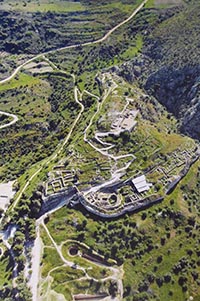
By Jorrit Kelder
Empires like the Egyptians, Hittites, and Babylonians dominated the Late Bronze Age. But what was happening to the west? [/vc_column_text][mk_divider thickness=”1″ margin_top=”10″][vc_column_text]

By Collin Cornell
The Judean colony on the Egyptian island of Elephantine is well known for its temple.But did they also worship deities besides YHW? [/vc_column_text][mk_divider thickness=”1″ margin_top=”10″][vc_column_text]
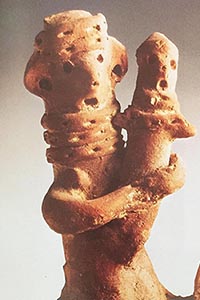
By Luca Bombardieri
Milling grain was hard work in antiquity, but what did it sound like? Ancient art and sculpture give us an idea, as does modern evidence. [/vc_column_text][mk_divider thickness=”1″ margin_top=”10″][/vc_column_inner][/vc_row_inner][/vc_column][/vc_row]
2020 CALL FOR SESSIONS
[vc_row fullwidth=”true” css=”.vc_custom_1490224714943{padding-top: 0px !important;padding-right: 0px !important;padding-bottom: 0px !important;padding-left: 0px !important;}”][vc_column][vc_single_image image=”64474″ img_size=”full” alignment=”center”][/vc_column][/vc_row][vc_row fullwidth=”true” css=”.vc_custom_1567016247085{margin-top: 20px !important;padding-top: 0px !important;padding-right: 0px !important;padding-bottom: 0px !important;padding-left: 0px !important;}”][vc_column width=”1/12″ css=”.vc_custom_1490225195470{margin-right: 10px !important;}” offset=”vc_hidden-sm vc_hidden-xs”][vc_column_text]
泭 SHARE
[/vc_column_text][mk_image src=”http://www.asortest.org/wp-content/uploads/2017/01/social-fb-icon4.jpg” image_width=”42″ image_height=”42″ hover=”false” custom_url=”https://www.facebook.com/ASOResearch/” margin_bottom=”0″][mk_image src=”http://www.asortest.org/wp-content/uploads/2017/01/social-tw-icon4.jpg” image_width=”42″ image_height=”42″ hover=”false” custom_url=”https://twitter.com/ASOResearch?ref_src=twsrc%5Egoogle%7Ctwcamp%5Eserp%7Ctwgr%5Eauthor” margin_bottom=”0″][mk_image src=”http://www.asortest.org/wp-content/uploads/2017/01/social-in-icon4.jpg” image_width=”42″ image_height=”42″ hover=”false” custom_url=”https://www.linkedin.com/company/american-schools-of-oriental-research” margin_bottom=”0″][mk_image src=”http://www.asortest.org/wp-content/uploads/2017/01/social-ml-icon_7.jpg” image_width=”42″ image_height=”42″ hover=”false” custom_url=”mailto:info@asor.org” margin_bottom=”0″][mk_image src=”http://www.asortest.org/wp-content/uploads/2017/01/blog-icon3.jpg” image_width=”42″ image_height=”42″ hover=”false” custom_url=”http://asor.org/blog” margin_bottom=”0″][/vc_column][vc_column border_color=”rgba(255,255,255,0.01)” width=”1/6″ css=”.vc_custom_1490365673198{margin-right: 20px !important;border-left-width: 2px !important;padding-right: 20px !important;padding-left: 20px !important;border-left-color: #99422f !important;}” el_class=”sticky-sidenav”][mk_divider divider_color=”rgba(255,255,255,0.01)” thickness=”1″ margin_top=”3″ margin_bottom=”3″][vc_widget_sidebar sidebar_id=”ca-sidebar-38526″ el_class=”.widget { overflow: hidden; margin-bottom: 0; }”][/vc_column][vc_column border_color=”rgba(170,170,170,0.01)” width=”1/2″ css=”.vc_custom_1490225606852{margin-right: 10px !important;margin-bottom: 30px !important;border-right-width: 2px !important;border-bottom-width: 2px !important;padding-top: 30px !important;padding-right: 30px !important;padding-left: 20px !important;background-color: #ffffff !important;border-right-color: rgba(227,228,228,0.75) !important;border-bottom-color: rgba(227,228,228,0.75) !important;}”][vc_column_text responsive_align=”left”]2020 CALL FOR MEMBER-ORGANIZED SESSION & WORKSHOP PROPOSALS
17勛圖members are invited to propose new sessions and workshops for the 2020 Annual Meeting to be held in Boston, Massachusetts, November 18-21, 2020, at The Westin Boston Waterfront.
Deadline for session and workshop proposals is December 15, 2019
17勛圖members may propose Member-Organized Sessions around a specific theme or Member-Organized Workshops that minimize formal presentations in favor of open discussion. Sessions and workshops may be approved for up to 3 years and can accommodate presenters invited by the session chair as well as papers submitted by 17勛圖members (with the approval of the session chair).
The new member-organized session/workshop is simple and can be submitted online. Proposals should include a session/workshop title, description, and a list of at least four potential speakers, indicating the subject of their presentation. Multi-year proposals should also indicate the planned focus for each subsequent year. Proposals will be evaluated by the Program Committee based on the interest of the proposal itself, but also based on potential overlap with standing ASOR-Sponsored Sessions and with existing Member-Organized Sessions. A list of sessions and workshops already approved for 2020 can be found , while the Instructions for Session Chairs can be found here.
In early January, after all session and workshop proposals have been evaluated, the chair will be notified if his or her proposal has been accepted for one or more years. Accepted sessions will be listed online with the description provided in the proposal, as well as in ASOR���s Online Abstract Management System. The online system will open for paper proposals beginning January 15, 2020, and the first deadline for papers is February 15, 2020.
If you are interested in submitting a new session or workshop proposal, we encourage you to contact the Program Committee co-chairs, Helen Dixon and Allison Thomason. For questions about the application process, you may also contact Arlene Press in the 17勛圖office.[/vc_column_text][/vc_column][vc_column border_color=”rgba(170,170,170,0.01)” width=”1/6″ css=”.vc_custom_1490571214409{margin-right: 10px !important;margin-bottom: 30px !important;border-right-width: 2px !important;border-bottom-width: 2px !important;padding-top: 30px !important;padding-right: 20px !important;padding-left: 20px !important;background-color: #ffffff !important;border-right-color: rgba(227,228,228,0.75) !important;border-bottom-color: rgba(227,228,228,0.75) !important;}”][vc_wp_posts title=”BROWSE THE NEWS ARCHIVE” number=”4″][/vc_column][vc_column border_color=”rgba(170,170,170,0.01)” width=”1/6″ css=”.vc_custom_1490225688999{margin-right: 10px !important;margin-bottom: 30px !important;border-right-width: 2px !important;border-bottom-width: 2px !important;padding-top: 30px !important;padding-right: 30px !important;padding-left: 20px !important;background-color: #ffffff !important;border-right-color: rgba(227,228,228,0.75) !important;border-bottom-color: rgba(227,228,228,0.75) !important;}”][vc_column_text] [/vc_column_text][/vc_column][/vc_row][vc_row][vc_column][vc_column_text] [/vc_column_text][/vc_column][/vc_row]
ANE TODAY VOL IV (2016)
[vc_row fullwidth=”true” css=”.vc_custom_1486761987223{padding-top: 0px !important;padding-right: 0px !important;padding-bottom: 0px !important;padding-left: 0px !important;}”][vc_column][vc_single_image image=”33901″ img_size=”full”][/vc_column][/vc_row][vc_row fullwidth=”true” css=”.vc_custom_1487275830783{padding-top: 10px !important;padding-right: 0px !important;padding-bottom: 0px !important;padding-left: 0px !important;}”][vc_column width=”1/12″ css=”.vc_custom_1493002455400{margin-right: 10px !important;}” offset=”vc_hidden-md vc_hidden-sm vc_hidden-xs”][vc_column_text]
泭SHARE
[/vc_column_text][mk_image src=”http://www.asortest.org/wp-content/uploads/2017/01/social-fb-icon4.jpg” image_width=”42″ image_height=”42″ hover=”false” custom_url=”https://www.facebook.com/ASOResearch/” margin_bottom=”0″][mk_image src=”http://www.asortest.org/wp-content/uploads/2017/01/social-tw-icon4.jpg” image_width=”42″ image_height=”42″ hover=”false” custom_url=”https://twitter.com/ASOResearch?ref_src=twsrc%5Egoogle%7Ctwcamp%5Eserp%7Ctwgr%5Eauthor” margin_bottom=”0″][mk_image src=”http://www.asortest.org/wp-content/uploads/2017/01/social-in-icon4.jpg” image_width=”42″ image_height=”42″ hover=”false” custom_url=”https://www.linkedin.com/company/american-schools-of-oriental-research” margin_bottom=”0″][mk_image src=”http://www.asortest.org/wp-content/uploads/2017/01/social-ml-icon_7.jpg” image_width=”42″ image_height=”42″ hover=”false” custom_url=”mailto:info@asor.org” margin_bottom=”0″][mk_image src=”http://www.asortest.org/wp-content/uploads/2017/01/blog-icon3.jpg” image_width=”42″ image_height=”42″ hover=”false” custom_url=”http://asor.org/blog” margin_bottom=”0″][/vc_column][vc_column border_color=”rgba(255,255,255,0.01)” width=”1/6″ css=”.vc_custom_1493004112151{margin-right: 20px !important;border-left-width: 2px !important;padding-right: 20px !important;padding-left: 20px !important;border-left-color: #99422f !important;}”][mk_divider divider_color=”rgba(255,255,255,0.01)” thickness=”1″ margin_top=”3″ margin_bottom=”3″][vc_widget_sidebar sidebar_id=”sidebar-16″ el_class=”.widget { overflow: hidden; margin-bottom: 0; }”][/vc_column][vc_column border_color=”rgba(170,170,170,0.01)” width=”8/12″ css=”.vc_custom_1487276122024{margin-right: 10px !important;margin-bottom: 30px !important;border-right-width: 2px !important;border-bottom-width: 2px !important;padding-top: 30px !important;padding-right: 30px !important;padding-left: 20px !important;background-color: #ffffff !important;border-right-color: rgba(227,228,228,0.75) !important;border-bottom-color: rgba(227,228,228,0.75) !important;}”][vc_row_inner][vc_column_inner width=”1/3″ css=”.vc_custom_1515087305797{padding-right: 20px !important;}”][mk_image src=”http://www.asor.org/wp-content/uploads/2017/12/foa-reduced-100.png” image_width=”190″ image_height=”100″ crop=”false” hover=”false”][/vc_column_inner][vc_column_inner width=”2/3″][vc_column_text responsive_align=”left”]ANE Today 2016 Index
Vol. 4
[/vc_column_text][/vc_column_inner][/vc_row_inner][vc_row_inner][vc_column_inner][mk_divider thickness=”1″ margin_top=”10″][vc_column_text].
[/vc_column_text][mk_divider thickness=”1″ margin_top=”10″][/vc_column_inner][/vc_row_inner][/vc_column][/vc_row]
ANE TODAY VOL V (2017)
[vc_row fullwidth=”true” css=”.vc_custom_1486761987223{padding-top: 0px !important;padding-right: 0px !important;padding-bottom: 0px !important;padding-left: 0px !important;}”][vc_column][vc_single_image image=”33901″ img_size=”full”][/vc_column][/vc_row][vc_row fullwidth=”true” css=”.vc_custom_1487275830783{padding-top: 10px !important;padding-right: 0px !important;padding-bottom: 0px !important;padding-left: 0px !important;}”][vc_column width=”1/12″ css=”.vc_custom_1493002455400{margin-right: 10px !important;}” offset=”vc_hidden-md vc_hidden-sm vc_hidden-xs”][vc_column_text]
泭SHARE
[/vc_column_text][mk_image src=”http://www.asortest.org/wp-content/uploads/2017/01/social-fb-icon4.jpg” image_width=”42″ image_height=”42″ hover=”false” custom_url=”https://www.facebook.com/ASOResearch/” margin_bottom=”0″][mk_image src=”http://www.asortest.org/wp-content/uploads/2017/01/social-tw-icon4.jpg” image_width=”42″ image_height=”42″ hover=”false” custom_url=”https://twitter.com/ASOResearch?ref_src=twsrc%5Egoogle%7Ctwcamp%5Eserp%7Ctwgr%5Eauthor” margin_bottom=”0″][mk_image src=”http://www.asortest.org/wp-content/uploads/2017/01/social-in-icon4.jpg” image_width=”42″ image_height=”42″ hover=”false” custom_url=”https://www.linkedin.com/company/american-schools-of-oriental-research” margin_bottom=”0″][mk_image src=”http://www.asortest.org/wp-content/uploads/2017/01/social-ml-icon_7.jpg” image_width=”42″ image_height=”42″ hover=”false” custom_url=”mailto:asor@bu.edu” margin_bottom=”0″][mk_image src=”http://www.asortest.org/wp-content/uploads/2017/01/blog-icon3.jpg” image_width=”42″ image_height=”42″ hover=”false” custom_url=”http://asorblog.org/” margin_bottom=”0″][/vc_column][vc_column border_color=”rgba(255,255,255,0.01)” width=”1/6″ css=”.vc_custom_1493004112151{margin-right: 20px !important;border-left-width: 2px !important;padding-right: 20px !important;padding-left: 20px !important;border-left-color: #99422f !important;}”][mk_divider divider_color=”rgba(255,255,255,0.01)” thickness=”1″ margin_top=”3″ margin_bottom=”3″][vc_widget_sidebar sidebar_id=”sidebar-16″ el_class=”.widget { overflow: hidden; margin-bottom: 0; }”][/vc_column][vc_column border_color=”rgba(170,170,170,0.01)” width=”8/12″ css=”.vc_custom_1487276122024{margin-right: 10px !important;margin-bottom: 30px !important;border-right-width: 2px !important;border-bottom-width: 2px !important;padding-top: 30px !important;padding-right: 30px !important;padding-left: 20px !important;background-color: #ffffff !important;border-right-color: rgba(227,228,228,0.75) !important;border-bottom-color: rgba(227,228,228,0.75) !important;}”][vc_row_inner][vc_column_inner width=”1/3″ css=”.vc_custom_1515087305797{padding-right: 20px !important;}”][mk_image src=”http://www.asor.org/wp-content/uploads/2017/12/foa-reduced-100.png” image_width=”190″ image_height=”100″ crop=”false” hover=”false”][/vc_column_inner][vc_column_inner width=”2/3″][vc_column_text responsive_align=”left”]ANE Today 2017 Index
Vol. 5
[/vc_column_text][/vc_column_inner][/vc_row_inner][vc_row_inner][vc_column_inner][mk_divider thickness=”1″ margin_top=”10″][vc_column_text]
.
[/vc_column_text][mk_divider thickness=”1″ margin_top=”10″][/vc_column_inner][/vc_row_inner][/vc_column][/vc_row]
2019 ANNUAL MEETING APP
[vc_row fullwidth=”true” css=”.vc_custom_1490224714943{padding-top: 0px !important;padding-right: 0px !important;padding-bottom: 0px !important;padding-left: 0px !important;}”][vc_column][vc_single_image image=”53030″ img_size=”full” alignment=”center”][/vc_column][/vc_row][vc_row][vc_column][vc_column_text][/vc_column_text][/vc_column][/vc_row][vc_row fullwidth=”true” css=”.vc_custom_1490225468623{padding-top: 0px !important;padding-right: 0px !important;padding-bottom: 0px !important;padding-left: 0px !important;}”][vc_column width=”1/12″ css=”.vc_custom_1490225195470{margin-right: 10px !important;}” offset=”vc_hidden-sm vc_hidden-xs”][vc_column_text]
泭 SHARE
[/vc_column_text][mk_image src=”http://www.asortest.org/wp-content/uploads/2017/01/social-fb-icon4.jpg” image_width=”42″ image_height=”42″ hover=”false” custom_url=”https://www.facebook.com/ASOResearch/” margin_bottom=”0″][mk_image src=”http://www.asortest.org/wp-content/uploads/2017/01/social-tw-icon4.jpg” image_width=”42″ image_height=”42″ hover=”false” custom_url=”https://twitter.com/ASOResearch?ref_src=twsrc%5Egoogle%7Ctwcamp%5Eserp%7Ctwgr%5Eauthor” margin_bottom=”0″][mk_image src=”http://www.asortest.org/wp-content/uploads/2017/01/social-in-icon4.jpg” image_width=”42″ image_height=”42″ hover=”false” custom_url=”https://www.linkedin.com/company/american-schools-of-oriental-research” margin_bottom=”0″][mk_image src=”http://www.asortest.org/wp-content/uploads/2017/01/social-ml-icon_7.jpg” image_width=”42″ image_height=”42″ hover=”false” custom_url=”mailto:info@asor.org” margin_bottom=”0″][mk_image src=”http://www.asortest.org/wp-content/uploads/2017/01/blog-icon3.jpg” image_width=”42″ image_height=”42″ hover=”false” custom_url=”http://asor.org/blog” margin_bottom=”0″][/vc_column][vc_column border_color=”rgba(255,255,255,0.01)” width=”1/6″ css=”.vc_custom_1490365673198{margin-right: 20px !important;border-left-width: 2px !important;padding-right: 20px !important;padding-left: 20px !important;border-left-color: #99422f !important;}” el_class=”sticky-sidenav”][mk_divider divider_color=”rgba(255,255,255,0.01)” thickness=”1″ margin_top=”3″ margin_bottom=”3″][vc_widget_sidebar sidebar_id=”ca-sidebar-38526″ el_class=”.widget { overflow: hidden; margin-bottom: 0; }”][/vc_column][vc_column border_color=”rgba(170,170,170,0.01)” width=”1/2″ css=”.vc_custom_1490225606852{margin-right: 10px !important;margin-bottom: 30px !important;border-right-width: 2px !important;border-bottom-width: 2px !important;padding-top: 30px !important;padding-right: 30px !important;padding-left: 20px !important;background-color: #ffffff !important;border-right-color: rgba(227,228,228,0.75) !important;border-bottom-color: rgba(227,228,228,0.75) !important;}”][vc_column_text responsive_align=”left”]2019 MEETING MOBILE APP
Download ASOR���s 2019 Annual Meeting App
*powered by Attendify
Go to the app store for your mobile device
Search for Attendify and download the KitApp
Open the Attendify App and search for 17勛圖2019
Download and go!
The 2019 17勛圖Annual Meeting app will allow you to
- Network with fellow attendees
- See who else is attending and connect with direct messages
- Access the Academic and Business schedules, exhibitor information and other essential event details all from your smart phone
- Accept notifications to get event alerts and messages
- Explore the venue and local area maps
- Post photos, messages, and comments on the activity stream
- Remember to use #ASOR19 when posting
When launching the app for the first time, you will be asked to log-in. Please use the e-mail address used for your 17勛圖2019 registration and create a password.[/vc_column_text][mk_divider divider_color=”rgba(255,255,255,0.01)” thickness=”10″ margin_top=”5″ margin_bottom=”5″][/vc_column][vc_column border_color=”rgba(170,170,170,0.01)” width=”1/6″ css=”.vc_custom_1490571214409{margin-right: 10px !important;margin-bottom: 30px !important;border-right-width: 2px !important;border-bottom-width: 2px !important;padding-top: 30px !important;padding-right: 20px !important;padding-left: 20px !important;background-color: #ffffff !important;border-right-color: rgba(227,228,228,0.75) !important;border-bottom-color: rgba(227,228,228,0.75) !important;}”][vc_wp_posts title=”BROWSE THE NEWS ARCHIVE” number=”4″][/vc_column][vc_column border_color=”rgba(170,170,170,0.01)” width=”1/6″ css=”.vc_custom_1490225688999{margin-right: 10px !important;margin-bottom: 30px !important;border-right-width: 2px !important;border-bottom-width: 2px !important;padding-top: 30px !important;padding-right: 30px !important;padding-left: 20px !important;background-color: #ffffff !important;border-right-color: rgba(227,228,228,0.75) !important;border-bottom-color: rgba(227,228,228,0.75) !important;}”][vc_column_text] [/vc_column_text][/vc_column][/vc_row][vc_row][vc_column][vc_column_text] [/vc_column_text][/vc_column][/vc_row]
ANE TODAY VOL VI (2018)
[vc_row fullwidth=”true” css=”.vc_custom_1486761987223{padding-top: 0px !important;padding-right: 0px !important;padding-bottom: 0px !important;padding-left: 0px !important;}”][vc_column][vc_single_image image=”33901″ img_size=”full”][/vc_column][/vc_row][vc_row fullwidth=”true” css=”.vc_custom_1487275830783{padding-top: 10px !important;padding-right: 0px !important;padding-bottom: 0px !important;padding-left: 0px !important;}”][vc_column width=”1/12″ css=”.vc_custom_1493002455400{margin-right: 10px !important;}” offset=”vc_hidden-md vc_hidden-sm vc_hidden-xs”][vc_column_text]
泭SHARE
[/vc_column_text][mk_image src=”http://www.asortest.org/wp-content/uploads/2017/01/social-fb-icon4.jpg” image_width=”42″ image_height=”42″ hover=”false” custom_url=”https://www.facebook.com/ASOResearch/” margin_bottom=”0″][mk_image src=”http://www.asortest.org/wp-content/uploads/2017/01/social-tw-icon4.jpg” image_width=”42″ image_height=”42″ hover=”false” custom_url=”https://twitter.com/ASOResearch?ref_src=twsrc%5Egoogle%7Ctwcamp%5Eserp%7Ctwgr%5Eauthor” margin_bottom=”0″][mk_image src=”http://www.asortest.org/wp-content/uploads/2017/01/social-in-icon4.jpg” image_width=”42″ image_height=”42″ hover=”false” custom_url=”https://www.linkedin.com/company/american-schools-of-oriental-research” margin_bottom=”0″][mk_image src=”http://www.asortest.org/wp-content/uploads/2017/01/social-ml-icon_7.jpg” image_width=”42″ image_height=”42″ hover=”false” custom_url=”mailto:asor@bu.edu” margin_bottom=”0″][mk_image src=”http://www.asortest.org/wp-content/uploads/2017/01/blog-icon3.jpg” image_width=”42″ image_height=”42″ hover=”false” custom_url=”http://asorblog.org/” margin_bottom=”0″][/vc_column][vc_column border_color=”rgba(255,255,255,0.01)” width=”1/6″ css=”.vc_custom_1493004112151{margin-right: 20px !important;border-left-width: 2px !important;padding-right: 20px !important;padding-left: 20px !important;border-left-color: #99422f !important;}”][mk_divider divider_color=”rgba(255,255,255,0.01)” thickness=”1″ margin_top=”3″ margin_bottom=”3″][vc_widget_sidebar sidebar_id=”sidebar-16″ el_class=”.widget { overflow: hidden; margin-bottom: 0; }”][/vc_column][vc_column border_color=”rgba(170,170,170,0.01)” width=”8/12″ css=”.vc_custom_1487276122024{margin-right: 10px !important;margin-bottom: 30px !important;border-right-width: 2px !important;border-bottom-width: 2px !important;padding-top: 30px !important;padding-right: 30px !important;padding-left: 20px !important;background-color: #ffffff !important;border-right-color: rgba(227,228,228,0.75) !important;border-bottom-color: rgba(227,228,228,0.75) !important;}”][vc_row_inner][vc_column_inner width=”1/3″ css=”.vc_custom_1515087305797{padding-right: 20px !important;}”][mk_image src=”http://www.asor.org/wp-content/uploads/2017/12/foa-reduced-100.png” image_width=”190″ image_height=”100″ crop=”false” hover=”false”][/vc_column_inner][vc_column_inner width=”2/3″][vc_column_text responsive_align=”left”]ANE Today 2018 Index
Vol. 6
[/vc_column_text][/vc_column_inner][/vc_row_inner][vc_row_inner][vc_column_inner][mk_divider thickness=”1″ margin_top=”10″][vc_column_text][/vc_column_text][mk_divider thickness=”1″ margin_top=”10″][/vc_column_inner][/vc_row_inner][/vc_column][/vc_row]
LIST OF APPROVED SESSIONS (2020)
[vc_row fullwidth=”true” css=”.vc_custom_1490224714943{padding-top: 0px !important;padding-right: 0px !important;padding-bottom: 0px !important;padding-left: 0px !important;}”][vc_column][vc_single_image image=”64474″ img_size=”full” alignment=”center”][/vc_column][/vc_row][vc_row][vc_column][vc_column_text][/vc_column_text][/vc_column][/vc_row][vc_row fullwidth=”true” css=”.vc_custom_1490225468623{padding-top: 0px !important;padding-right: 0px !important;padding-bottom: 0px !important;padding-left: 0px !important;}”][vc_column width=”1/12″ css=”.vc_custom_1490225195470{margin-right: 10px !important;}” offset=”vc_hidden-sm vc_hidden-xs”][vc_column_text]
[/vc_column_text][/vc_column][vc_column border_color=”rgba(170,170,170,0.01)” width=”1/6″ css=”.vc_custom_1490571214409{margin-right: 10px !important;margin-bottom: 30px !important;border-right-width: 2px !important;border-bottom-width: 2px !important;padding-top: 30px !important;padding-right: 20px !important;padding-left: 20px !important;background-color: #ffffff !important;border-right-color: rgba(227,228,228,0.75) !important;border-bottom-color: rgba(227,228,228,0.75) !important;}”][vc_wp_posts title=”BROWSE THE NEWS ARCHIVE” number=”4″][/vc_column][vc_column border_color=”rgba(170,170,170,0.01)” width=”1/6″ css=”.vc_custom_1490225688999{margin-right: 10px !important;margin-bottom: 30px !important;border-right-width: 2px !important;border-bottom-width: 2px !important;padding-top: 30px !important;padding-right: 30px !important;padding-left: 20px !important;background-color: #ffffff !important;border-right-color: rgba(227,228,228,0.75) !important;border-bottom-color: rgba(227,228,228,0.75) !important;}”][vc_column_text] [/vc_column_text][/vc_column][/vc_row][vc_row][vc_column][vc_column_text]
[/vc_column_text][/vc_column][/vc_row]
泭 SHARE
[/vc_column_text][mk_image src=”http://www.asortest.org/wp-content/uploads/2017/01/social-fb-icon4.jpg” image_width=”42″ image_height=”42″ hover=”false” custom_url=”https://www.facebook.com/ASOResearch/” margin_bottom=”0″][mk_image src=”http://www.asortest.org/wp-content/uploads/2017/01/social-tw-icon4.jpg” image_width=”42″ image_height=”42″ hover=”false” custom_url=”https://twitter.com/ASOResearch?ref_src=twsrc%5Egoogle%7Ctwcamp%5Eserp%7Ctwgr%5Eauthor” margin_bottom=”0″][mk_image src=”http://www.asortest.org/wp-content/uploads/2017/01/social-in-icon4.jpg” image_width=”42″ image_height=”42″ hover=”false” custom_url=”https://www.linkedin.com/company/american-schools-of-oriental-research” margin_bottom=”0″][mk_image src=”http://www.asortest.org/wp-content/uploads/2017/01/social-ml-icon_7.jpg” image_width=”42″ image_height=”42″ hover=”false” custom_url=”mailto:info@asor.org” margin_bottom=”0″][mk_image src=”http://www.asortest.org/wp-content/uploads/2017/01/blog-icon3.jpg” image_width=”42″ image_height=”42″ hover=”false” custom_url=”http://asor.org/blog” margin_bottom=”0″][/vc_column][vc_column border_color=”rgba(255,255,255,0.01)” width=”1/6″ css=”.vc_custom_1490365673198{margin-right: 20px !important;border-left-width: 2px !important;padding-right: 20px !important;padding-left: 20px !important;border-left-color: #99422f !important;}” el_class=”sticky-sidenav”][mk_divider divider_color=”rgba(255,255,255,0.01)” thickness=”1″ margin_top=”3″ margin_bottom=”3″][vc_widget_sidebar sidebar_id=”ca-sidebar-38526″ el_class=”.widget { overflow: hidden; margin-bottom: 0; }”][/vc_column][vc_column border_color=”rgba(170,170,170,0.01)” width=”1/2″ css=”.vc_custom_1490225606852{margin-right: 10px !important;margin-bottom: 30px !important;border-right-width: 2px !important;border-bottom-width: 2px !important;padding-top: 30px !important;padding-right: 30px !important;padding-left: 20px !important;background-color: #ffffff !important;border-right-color: rgba(227,228,228,0.75) !important;border-bottom-color: rgba(227,228,228,0.75) !important;}”][vc_column_text responsive_align=”left”]2020 LIST OF APPROVED SESSIONS AND WORKSHOPS
Paper proposals may be submitted to the following sessions per the instructions on the Call for Papers from January 15th – February 15th, 2020.
17勛圖Standing Sessions
- Ancient Inscriptions
- Approaches to Dress and the Body
- Archaeology and Biblical Studies
- Archaeology and History of Feasting and Foodways
- Archaeology of Anatolia
- Archaeology of Arabia
- Archaeology of the Black Sea and the Caucasus
- Archaeology of the Byzantine Near East
- Archaeology of Cyprus
- Archaeology of Egypt
- Archaeology of Iran (CANCELED)
- Archaeology of Islamic Society
- Archaeology of Israel
- Archaeology of Jordan
- The Archaeology of the Kurdistan Region of Iraq
- Archaeology of Lebanon
- Archaeology of Mesopotamia
- Archaeology of the Near East: Bronze and Iron Ages
- Archaeology of the Near East: The Classical Periods
- Archaeology of the Southern Levant
- Archaeology of Syria
- Art Historical Approaches to the Near East
- Bioarchaeology in the Near East
- Career Options for 17勛圖Members: The Academy and Beyond
- Cultural Heritage: Preservation, Presentation, and Management
- Digital Archaeology and History
- Environmental Archaeology of the Ancient Near East
- Gender in the Ancient Near East
- History of Archaeology
- Interdisciplinary Approaches to Seals, Sealing Practices, and Administration
- Isotopic Investigations in the Ancient Near East and Caucasus
- Landscapes of Settlement in the Ancient Near East
- Maritime Archaeology
- Prehistoric Archaeology
- Reports on Current Excavations���17勛圖Affiliated
- Reports on Current Excavations���Non-17勛圖Affiliated
- Technology in Archaeology: Recent Work in the Archaeological Sciences
- Theoretical and Anthropological Approaches to the Near East
Member-Organized Sessions and Workshops for the 2020 Annual Meeting
- Addressing the Challenges of Creative Pedagogies in Ancient Studies (Workshop)
- The Amorites: Culture, History, and Archaeology
- Ancient DNA: New Insights for Archaeology and History in the Middle East (CANCELED)
- Ancient Propaganda: Claim, Truth, and Persuasion
- Archaeology and Climate Change: New Challenges to Fieldwork in the Middle East (Workshop)
- Archaeology as a Tool for Enhancing Participant Welfare, Social Cohesion, and Education
- Archaeology from Every Angle: Papers in Honor of Richard L. Zettler
- The Archaeology of the Gediz (Hermus) Valley
- Archaeology of Petra and Nabataea
- Archaeology of the Near East and Video Games
- Archaeology, Community, and Mentorship: Celebrating the Legacy of Bert and Sally de Vries
- Authoritarianism
- Best Practices for Digital Scholarship (Workshop)
- Biblical Texts in Cultural Context
- Change and Continuity in the Seventh-Century C.E. Near East (CANCELED)
- Complexity Without Monumentality: Rethinking Nomads of the Biblical Period
- Contemporary Identities and Self-Reflective Approaches in the Study of the Ancient Near East
- Cultural Heritage and Archaeology of Palmyra (Workshop)
- Current Directions in Coroplastic Studies
- Cypriot Connectivity in the Mediterranean from the Late Bronze Age to the Classical Period: Assessing Cypriot Material and Textual Evidence from Non-Cypriot Contexts
- Ethics and Responsibility During and After Conflict
- Ethics in Archaeological Practice (Workshop)
- Excavating Hazor
- Experimental and Experiential Archaeology
- Fifty Years at Tell el-Hesi
- From Assyria to Iberia and Back: Current Archaeological Work in the Expanded ���Near Eastern��� Mediterranean
- From Paganism to Christianity: Transformation of Sacred Space in Sepphoris, the Galilee, and Beyond
- From Stone-Age Towns and to City-States: The Contribution of the Mega-Excavations at Tel Motza, Tel Asawir, Tel Beit Shemesh and Tel Yavne
- From Volunteer to Career (Workshop)
- Geoarchaeological Research in Near Eastern Archaeology (Workshop)
- Grand Challenges for Digital Research in Archaeology and Philology (Workshop)
- Hellenistic Galilee: Between Phoenicia and the Hasmonean Kingdom
- Idumea in the Persian, Hellenistic, and Early Roman Periods: Formation and Transition (CANCELED)
- Interdisciplinary Approaches to Collapse, Resilience, and Resistance in the Ancient Near East
- Islamic Seas and Shores: Connecting the Medieval Maritime World
- Navigating the ���In Between���: Identifying a Career Trajectory in Academia for the Early Career Scholar (Workshop)
- Network Approaches to Near Eastern Archaeology and History
- New Directions in the Historical Geography of the Ancient Near East
- Online Photo Archives as Tools for Archaeological Heritage Preservation and Engagement (Workshop)
- Palace-Clan Relations in Ancient Israel: A View from the Jezreel Valley
- Preserving the Cultural Heritage of the Madaba Region of Jordan (Workshop)
- Protecting Libyan Cultural Heritage
- Scribal Hands and Habits in Cuneiform Texts
- The Secret Lives of Objects: Counter Histories and Narratives
- The Southern Phoenicia Initiative (Workshop)
- Stamp Seals from the Southern Levant (Workshop)
- State and Territory in the Ancient Near East: Mapping Relationships and Challenging Paradigms
- Structures of Power in Southern Babylonia in the Second and First Millennia B.C.E.: From Local Rule to Provincial Existence
- Style and Identity in Ancient Near Eastern Art
- The Tel Mo廕�a Expedition Project: An Iron Age Economic and Cultic Center in the Heart of Judah
- Thinking, Speaking, and Representing Animals in the Ancient Near East: New Perspectives from Texts and Images (CANCELED)
- Tiny Talks on (Tiny) Things: Networks Encapsulated in Minute Objects (Workshop)
- The True North to the Near East: The Contributions of 17勛圖in Canada (CASOR) to the Study of the Ancient Near East
- Urban Sustainability: How and Why Cities Live or Die
- Working with Law Enforcement to Combat Trafficking and Preserve Cultural Heritage (Workshop)
- Yerushalayim, Al Quds, Jerusalem: Recent Developments and Dilemmas in Archaeological and Historical Studies from the Bronze Age to Medieval Periods
Descriptions of Sessions & Workshops
ASOR-Sponsored Sessions
Session Chairs: Jessie DeGrado, Brandeis University; Madadh Richey, University of Chicago
Description:泭This year���s session will focus on questions泭related to writing, power, and agency. Recent studies on concepts such泭as cosmopolitanism (e.g., Lavan, Payne, and Weisweiler 2016) and泭heterarchy (e.g., Sv瓣rd 2012, 2015) have complicated assumptions about泭the strictly hierarchical nature of societies in泭ancient泭Mesopotamia,泭Anatolia, and the Levant.
We welcome submissions that explore the complicated and contingent泭nature of agency as evinced through the textual record. Areas of泭interest include the practice of object dedication, epistolary customs泭and diplomatics, and the economic and political role of women. We will泭also hold an open session and invite submissions on any topic related泭to written artifacts in the泭ancient泭Middle East and Mediterranean.
Approaches to Dress and the Body
Session Chairs: Neville McFerrin, Ohio University; Josephine Verduci, University of Melbourne
Description: Traces of practices relating to泭dress泭and泭the泭body are present in many ways in the archaeological, textual, and泭visual records of the ancient world, from the physical remains of泭dressed bodies, to images depicting them, to texts describing such aspects as textile production and sumptuary customs. Previous scholarship has provided useful typological frameworks but has often viewed these objects as static trappings of status and泭gender. The goal of this session is to lluminate the dynamic role of泭dress泭and泭the泭body泭in the performance and泭construction of aspects of individual泭and泭social identity,泭and泭to encourage collaborative dialogue within the study of泭dress泭and泭the body泭in antiquity.
Archaeology and Biblical Studies
Session Chair: Jonathan Rosenbaum, Gratz College
Description: This session is meant to explore the intersections between History, Archaeology, and the Judeo-Christian Bible and related texts.
Archaeology and History of Feasting and Foodways
Session Chairs: Elizabeth Arnold, Grand Valley State University; Jacob Damm, University of California
Description:泭The Archaeology and History of Feasting and Foodways session addresses the production, distribution, and consumption of food and drink. Insofar as foodways touch upon almost every aspect of the human experience���from agricultural technology, to economy and trade, to nutrition and cuisine, to the function of the household and its members, to religious acts of eating and worship���we welcome submissions from diverse perspectives and from the full spectrum of our field���s geography and chronology.
Session Chair: James Osborne, Oriental Institute, University of Chicago
Description: This session is concerned with current fieldwork in Anatolia, as well as the issue of connectivity in Anatolia. What, for example, were the interconnections between Anatolia and surrounding regions such as Cyprus, Transcaucasia, Mesopotamia, and Europe?
Archaeology of Arabia
Session Chairs: Charlotte Marie Cable, Michigan State University
Description: This session seeks contributions covering a wide spatio-temporal swath from the Paleolithic to the present centered on the Arabian Peninsula but including neighboring areas such as the Horn of Africa, East Africa, and South Asia. Contributions might be tied to the region thematically (e.g. pastoral nomadism, domesticates, or agricultural strategies), methodologically (e.g. Landscape archaeology, or satellite imagery technologies) or through ancient contacts such as trade along the Red Sea, Persian/Arabian Gulf or Indian Ocean.
Archaeology of the Black Sea and the Caucasus
Session Chair: Lara Fabian, Albert-Ludwigs-Universitaet Freiburg
Description: This session is open to papers that concern the archaeology of the Black Sea and Eurasia.
Archaeology of the Byzantine Near East
Session Chair: Alexandra Ratzlaff, Brandeis University
Description: This session is open to papers that concern the Near East in the Byzantine period.
Session Chair: Nancy Serwint, Arizona State University
Description: This session focuses on current archaeological research in Cyprus from prehistory to the modern period. Topics may include reports on archaeological fieldwork and survey, artifactual studies, as well as more focused methodological or theoretical discussions. Papers that address current debates and issues are especially welcome.
Session Chairs:泭Krystal Pierce, Brigham Young University
Description: This session is open to research on all areas related to the archaeology of Egypt, including current and past fieldwork, material culture, textual sources, religious or social aspects, international relations, art, and history.
Archaeology of Iran (CANCELED)
Session Chairs: Holly Pittman, University of Pennsylvania
Description: This session explores the archaeology of Iran.
Archaeology of Islamic Society
Session Chair: Beatrice St. Laurent, Bridgewater State University
Description: This session explores the archaeology of Islamic society.
Session Chair: Boaz Gross, Israeli Institute of Archaeology and Tel Aviv University
Description: The focus of this session is on current archaeological fieldwork in Israel.
Session Chairs: Marta D’Andrea, Sapienza Universit�� di Roma; Barbara泭Reeves, Queen’s University
Description: This session is open to any research from any period relating to the archaeology of Jordan. The session is open to papers on recent fieldwork, synthetic analyses of multiple field seasons, as well as any area of current archaeological research focused on Jordan.
The Archaeology of the Kurdistan Region of Iraq
Session Chairs: Jason Ur, Harvard University
Description: This session highlights research on all aspects of history and archaeology focused on the Kurdistan Region of Iraq and adjacent areas.
Session Chair: Hanan Mullins, ASOR
Description: The focus of this session is on current archaeological fieldwork in Lebanon.
Session Chair: Darren Ashby, Penn Museum
Description: This session seeks submissions in all areas illuminated by archaeology that relate to the material, social, and religious culture, history and international relations, and texts of ancient Mesopotamia.
Archaeology of the Near East: Bronze and Iron Ages
Session Chair: Eric Welch, University of Kentucky
Description: This session is open to papers that concern the Near East in the Bronze and Iron Ages.
Archaeology of the Near East: The Classical Periods
Session Chair:泭Michael Zimmerman, Bridgewater State University
Description: This session is open to papers that concern the Near East in the Classical periods.
Archaeology of the Southern Levant
Session Chair:泭Owen Chesnut, North Central Michigan College; Josh Walton, Capital University
Description: The focus of this session is on current archaeological fieldwork in the southern Levant.
Session Chair: Clemens Reichel, University of Toronto; Caroline Sauvage, Loyola Marymount University
Description:泭This session is concerned with all areas of Syria that are illuminated by archaeology.
These include a discussion of recent archaeological excavations, history, religion, society, and texts.
Art Historical Approaches to the Near East
Session Chair: Stephanie Langin-Hooper, Southern Methodist University
Description: This session welcomes submissions that present innovative analyses of any facet of Near Eastern artistic production or visual culture.
Bioarchaeology in the Near East
Session Chair: Sherry C. Fox, Arizona State University
Description: This session welcomes papers that present bioarchaeological research conducted in the Near East. Papers that pose new questions and/or explore new methods are encouraged.
Career Options for 17勛圖Members: The Academy and Beyond
Session Chair: Emily Miller Bonney, California State University, Fullerton
Description: Applicants for tenure-track positions at universities and colleges confront diminished demand for faculty. Increasingly, junior scholars are forced to look for adjunct or temporary appointments and face the possibility of no appointment at all. This session aims to provide insights into alternative careers for both the next generation of 17勛圖scholars and those interested in a career change.泭 Each year one or two panels of four to six scholars who developed careers outside the academy will discuss their careers, answering fundamental questions in 15- to 20-minute presentations. How did they discover the job opportunities that became a meaningful career? Did they begin in the academy and leverage that experience to gain access to a different career or were they able to move from graduate school into this work? How important, if at all, was a post-doc in the choices they had?泭 How long did it take to get into the position where they have spent most of their professional lives? What additional training did they need? Have they been able to continue their research and/or excavation projects: that is, what was the overall impact of the career choice on their scholarship? Sessions will include time for questions and discussion.
Cultural Heritage: Preservation, Presentation, and Management
Session Chairs:泭Glenn Corbett, Council of American Overseas Research Centers (CAORC); Suzanne Davis, Kelsey Museum of Archaeology, University of Michigan
Description: This session explores theory and practice in the areas of archaeological site and collections conservation, presentation, education, and management. Discussion of community-engaged projects is especially welcome.
Digital Archaeology and History
Session Chair: Tiffany Earley-Spadoni, University of Central Florida
Description: This session will present papers that describe significant advances in or interesting applications泭of the digital humanities. Topics may include public digital initiatives,泭3D scanning and modelling, spatial analysis (GIS and remote sensing), social network analysis,泭textual analysis, textual geographies,泭digital storytelling, data management泭etc. In addition to methodological topics, the session also welcomes papers that focus on broader泭debates in the digital humanities.
Environmental Archaeology of the Ancient Near East
Note: When submitting an abstract online for this session, select the session titled “Archaeology of the Natural Environment: Archaeobotany and Zooarchaeology in the Near East”
Session Chairs: Melissa Rosenzweig, Miami University;泭Madelynn von Baeyer, University of Connecticut
Description: This session accepts papers that examine past human resource (flora and fauna) uses and human/environment interactions in the ancient Near East.
Gender in the Ancient Near East
Session Chair: Stephanie Lynn Budin, Near Eastern Archaeology
Description: This session pertains to on-going archaeological, art historical, and/or anthropological work and research into the construction and expression of gender in antiquity, ancient women/womanhood, masculinities (hegemonic and otherwise), Queer Theory, and the engendering of ancient objects and spaces.
Session Chair: Kevin McGeough, University of Lethbridge
Description: Papers in this session examine the history of the disciplines of biblical archaeology and Near Eastern archaeology.
Interdisciplinary Approaches to Seals, Sealing Practices, and Administration
Session Chairs: Sarah Scott, Wagner College; Oya Top癟uo��lu, Northwestern University
Description: This session invites submissions touching on any aspect of glyptic studies. Papers may approach seals and sealings as object, text, and/or image, and rely on multiple strands of evidence.泭 Applied methodologies from a variety of disciplines are encouraged. While seals and sealings form the core subject of investigation for this session, papers that rely on a wide range of comparative objects are welcome. Glyptic-related topics covering the full geographical and chronological horizon of the ancient Near East are considered
Isotopic Investigations in the Ancient Near East and Caucasus
Session Chairs: G. Bike Yaz覺c覺o��lu-Santamaria, University of Chicago; Maureen E. Marshall, University of Illinois at Urbana-Champaign
Description: Biogeochemical research on the human condition in the ancient past is a rapidly growing field. Isotopic investigations targeting questions about climate change, human mobility, animal trade, herding strategies, crop management, diet and subsistence, and infant-feeding practices in the broader ancient Near East have increased in number over the past decade. However, biogeochemical techniques and understandings continue to develop and be re-evaluated, necessitating venues for scholarly exchange, comparison, and discussion. The objective of this session is to encourage a dialogue among researchers conducting and using biogeochemical techniques in the region, integrating analytical methods with social and historical questions. In consecutive years the session will incorporate the results of most recent and ongoing research in the region with methodological advances in techniques and approaches, in tandem with the developing agenda of the ���Archaeological Isotopes Working Group��� Business Meetings.
Landscapes of Settlement in the Ancient Near East
Session Chairs: Jesse Casana, Dartmouth College; Emily Hammer, University of Pennsylvania
Description: This session brings together scholars investigating regional-scale problems of settlement history and archaeological landscapes across the ancient Near East. Research presented in the session is linked methodologically through the use of regional survey, remote sensing, and environmental studies to document ancient settlements, communication routes, field systems and other evidence of human activity that is inscribed in the landscape. Session participants are especially encouraged to offer analyses of these regional archaeological data that explore political, economic, and cultural aspects of ancient settlement systems as well as their dynamic interaction with the natural environment.
Session Chair: Caroline Sauvage, Loyola Marymount University
Description: This session welcomes papers that concern marine archaeology in terms of methods, practices, and case studies in areas throughout the Near East.
Session Chair: Yorke Rowan, University of Chicago
Description: This session is open to papers that concern the prehistoric Near East, particularly in the Paleolithic, Neolithic, and Chalcolithic.
Reports on Current Excavations���17勛圖Affiliated
Session Chair: Jack Green, ACOR
Description: This session is for projects with ASOR/CAP affiliation.
Reports on Current Excavations���Non-17勛圖Affiliated
Session Chair: Daniel Schindler, Texas Tech University
Description: This session is for projects without ASOR/CAP affiliation.
Technology in Archaeology: Recent Work in the Archaeological Sciences
Session Chair: Bradly Erickson, University of North Carolina at Chapel Hill
Description: This session welcomes papers that examine the issue of technology in archaeology.
Theoretical and Anthropological Approaches to the Near East
Session Chair: Tobin Hartnell, American University of Iraq, Sulaimani; Darrell J. Rohl, Calvin University
Description: This session welcomes papers that deal explicitly with theoretical and anthropological approaches to ancient Near Eastern and eastern Mediterranean art and archaeology.
Member-Organized Sessions
Addressing the Challenges of Creative Pedagogies in Ancient Studies (Workshop)
Session Chairs: Nadia Ben-Marzouk, University of California, Los Angeles; Jacob Damm, University of California, Los Angeles; Thomas Landvatter, Reed College
Description: This year, the Creative Pedagogies workshop seeks to generate discussion around the following challenges faced by ancient studies educators: creative language pedagogy, rethinking the survey, and working with material culture. These challenges can manifest as follows. First, many in our field are often called on to teach languages without any training in language pedagogy, either ancient or modern. Second, the traditional survey has grown more complex, either due to new institutional requirements or the simple fact that for many in our field, lower-division surveys provide the only opportunity to engage students. Last, in the absence of major collections, many of us grapple with finding innovative ways to teach material culture aside from images and site plans. This workshop welcomes individuals to present ten-minute papers on ways to address one of these challenges. Introductory papers will be followed by a 30-minute period of both small workgroups and discussion. For the workgroup portions, participants will be tasked with developing learning objectives, in-class activities, and assessments for hypothetical courses, which will in turn be recorded and distributed. Consequently, this workshop will foster discussion about pedagogical problems as well as generate concrete takeaways participants can utilize in their own classrooms.
The Amorites: Culture, History, and Archaeology
Session Chairs: Gojko Barjamovic, Harvard University; Adam E. Miglio,泭Wheaton College
Description: Several recent monographs have reinvigorated the discussion of the Amorites. These studies are noteworthy because they approach the topic from a variety of available data, including linguistic evidence, historical sources, and material culture. This session investigates questions of ���the Amorites��� from the perspective of historical, linguistic, archaeological, and visual art, and invites scholars who work in the entire region between the southern Levant and Anatolia, and from the Mediterranean to Bahrain. It provides a forum for scholars from an array of specialties and aims to facilitate inter-disciplinary conversations about the issues surrounding ���the Amorites��� in the ancient Near East.
Ancient DNA: New Insights for Archaeology and History in the Middle East (CANCELED)
Session Chairs: Abagail Breidenstein, Institute of Evolutionary Medicine, University of Z羹rich; Geoff Emberling, Kelsey Museum of Archaeology, University of Michigan
Description: Studies of DNA are fundamentally rewriting our understanding of the past. However, many archaeologists and historians are not aware of the range of new paleogenomic studies or how to evaluate them critically, and geneticists and molecular anthropologists are not always aware of the range of archaeological and historical studies that might inform their reconstructions. This session brings together geneticists/molecular anthropologists and historians/archaeologists to present and discuss implications of DNA studies for our understanding of processes of domestication of plants and animals and the movements of human populations in the ancient Middle East. Papers will present DNA studies, and we will invite several archaeologists and/or historians as discussants to engage with the issues raised by the DNA studies. In addition to addressing this issue through dialogues, such a session could also lead to opportunities for future collaboration as well as facilitate productive discussions about sampling ethics and current methodological developments related to materials from this region.
Ancient Propaganda: Claim, Truth, and Persuasion
Session Chairs:泭Seth Richardson, University of Chicago
Description: The lived and subjective experience of political thought in the ancient world can seem an ungraspable illusion. Although objects like monuments and images may provide a materiality of ideology and discourse, words can feel hopelessly immaterial���especially when we speak of propaganda, an everyday understanding of which can be equated to ���lies.��� But propaganda is a certain kind of truth, with its own rules and limits for how facts could be selected, stretched, and shaped, and beginning from the premise that particular outcomes were contingent on subscription and actualization of its dialogic claims. This session brings together historians who study how ideological messaging worked in the political communities of the ancient Near East and Egypt. Our purpose is to communicate something of the way in which ���text-readers��� work with issues of theme, genre, literary structure, and performativity, to scholars who may primarily work with more directly material evidence���objects, built environments, and landscapes���in consideration of mutual questions about how to recover a politics in the past.
Archaeology and Climate Change: New Challenges to Fieldwork in the Middle East (Workshop)
Session Chairs: ��m羹r Harman��ah, University of Illinois at Chicago
Description: This workshop emerges from the urgency to address the methodological and political challenges to the archaeology of the Middle East posed by the ongoing debates on climate change, the Anthropocene, and the global ecological crisis. The global crisis for world ecologies and communities has come to the forefront of public debates in the last few years, due to the increasing uncertainty and precarity of the planet���s future. Likewise, scholars in the humanities and social sciences have pointed out the need to rethink the way we write history at this critical moment and reconsider particular research agendas, given the need to reconsider established historical notions such as the prehistory/history divide, the need to rethink temporal scales and incorporate deep time and geological time, the increased importance of collaborating with local communities, and so on. The Middle East today is an embattled region torn by wars, forced migration, heritage violence, and uncontrolled development, all of which are arguably linked to the broader ecological crisis. What does archaeological fieldwork look like in these ���interesting times��� and how are archaeologists addressing and adopting to work in the field in the age of the Anthropocene? What would be the contribution of archaeologists to debates on climate change?
Archaeology as a Tool for Enhancing Participant Welfare, Social Cohesion, and Education
Session Chairs: Rona Shani Evyasaf, Technion-Israel Institute of Technology; Dr. Stephen Humphreys, American Veterans Archaeological Recovery
Description: An increasing body of peer-reviewed research demonstrates that participation in archaeological fieldwork, labwork, and conservation offers physical, psychological, and social benefits. These benefits are becoming more widely acknowledged in the archaeological community, due in part to their inherent media-friendliness and tendency to attract non-standard sources of funding. As a result, more projects have begun to incorporate varying methods to enhance these benefits without compromising the quality of scientific research. Participant-oriented archaeology is now being used to aid military veterans struggling with PTSD and provide an outlet for children with autism, as well as to promote civic renewal, build communities and educational projects, and bridge social divisions. As more data have accumulated to prove the viability of participant-oriented projects there is now an urgent need for the dissemination of this data and the codification of best practices across this emerging field. We welcome proposals depicting innovative projects that use archaeological fieldwork, archival work, or other forms of engagement with the material record to benefit participants and/or promote social benefit, as well as proposals that articulate the methods by which archaeology can contribute to the public good.
Archaeology from Every Angle: Papers in Honor of Richard L. Zettler
Session Chairs:Katherine Blanchard, The Fowler/Van Santvoord Keeper of the Near Eastern Collections, Penn Museum
Description: This session covers a broad range of historical and archaeological analyses and approaches to the ancient Near East in honor of Richard L. Zettler���s contributions to the field. Richard is an expert not only on ancient Near Eastern material culture, but also on Near Eastern history, religion, and daily life through the cuneiform texts. In addition to all of this, he is the curator in charge of the Near Eastern collections at the University of Pennsylvania Museum of Archaeology and Anthropology, where he encourages his students to revisit known objects, think outside of the box, and investigate everything. All of these topics will be reflected in the papers presented in his honor.
The Archaeology of the Gediz (Hermus) Valley
Session Chairs: G羹zin Eren, Boston University; Catherine Scott, Brandeis University
Description: The Gediz (classical Hermus) Valley is recognized as the core of ancient Lydia. Although the region has been represented largely by the Lydian capital Sardis and other major Classical sites, recent field surveys and ongoing archaeological projects are highlighting its deep history and heritage, from the Palaeolithic to recent times, and most notably the Bronze and Early Iron Ages pertaining to the Lydians and their immediate predecessors. This session seeks to bring together scholars to present the current work in the Gediz Valley, discuss the region���s diachronic connections with wider cultural spheres, and reassess the origins of the Lydians in the region.
Archaeology of Petra and Nabataea
Session Chairs:泭Cynthia Finlayson, Department of Anthropology, Brigham Young University; David F. Graf, Department of Religious Studies, University of Miami (Florida)
Description: This purpose of this session is to include projects not only at Petra, but also from throughout the vast Nabataean kingdom and beyond where ever Nabataeans were active (the Mediterranean, Yemen, and Mesopotamia). The capital city of the Nabataeans has been the focus of numerous recent international archaeological projects, including many 17勛圖projects: the Great Temple, the Temple of the Winged Lions, and the Byzantine Church in the past, and currently the North Ridge, the Hellenistic Petra Project, the Garden Pool and Terrace, and the Ed-Deir complex. The art and architecture of Petra continues to be the subject for art historians. The immediate environs of Petra (Wadi Musa, Baydh, Ba���aja, and Humayma) have also seen renewed interest. In addition, there are recent projects in the Nabataean regions of Saudi Arabia (French, Italian, Polish), Syria (French), the Negev (Israeli), and the Sinai and Egypt (French, American). New Nabataean inscriptions also continue to emerge that illuminate Nabataean culture. We believe the session(s) will attract a host of scholars within 17勛圖and beyond. Additionally, by separating an independent session on the Nabataeans away from the already existing Jordan Sessions, more scholars will be able to present in all venues.
Archaeology of the Near East and Video Games
Session Chairs: Tine Rassalle, University of North-Carolina at Chapel Hill
Description: For centuries, the written word has been the preferred medium for transferring archaeological academic knowledge to the broader public. With the advent of modern communication technology like radio, TV, and the internet the possibilities to interact with the audience were broadened. Video games have since the 1980���s been a part of this new wave of
telecommunication, but they remain underrepresented as a field of study in academic scholarship. In this session, we aim to correct this by offering a multidisciplinary discussion of theoretical and methodological approaches to the study of archaeology and video gaming. Archaeogaming, as it is often called, is a systematizing framework that includes the use of archaeological methods within game worlds, the creation of video games for, or about, archaeological practices, or the critical study of how archaeology is represented in video-games. Themes can include using archaeological tools and methods to conduct archaeological investigations into synthetic worlds, exploring heritage through play, and the use and ethics of virtual reality in digital spaces. In this session, we aim to present a diverse array of topics that sit on the intersection of the archaeology of the Near East and video games, opening up debate on the
multifunctionality of this medium for research, education and heritage management.
Archaeology, Community, and Mentorship: Celebrating the Legacy of Bert and Sally de Vries
Session Chairs: Elizabeth Osinga, Umm el-Jimal Project; Darrell J. Rohl,泭泭Calvin University
Description: This session brings together a range of scholars who have been impacted by the long-term service of Bert and Sally de Vries to the scholarship and community development of the Middle East, particularly in Jordan. For more than 50 years, Bert and Sally have made their mark on the archaeology, cultural heritage, and community development and engagement sectors of Jordan, most notably through the Umm el-Jimal Project but also through long-time service and commitment to ACOR. Bert���s plan drawings are ubiquitous in the scholarship of Jordanian archaeology and Sally���s expertise in and collection of traditional textiles is remarkable. Together, they have been faithful champions of Jordan���s archaeology, cultural heritage, and its local communities within the present. Their work has helped to define community archaeology, and they have eagerly supported and mentored numerous local and international scholars and professionals, building capacity for sustainable futures. This session welcomes papers that draw upon or have been inspired by Bert and Sally���s work and that focus on one or more of the key themes of archaeological fieldwork, community archaeology/heritage, and student-scholar mentorship.
Session Chairs: Kara Cooney, University of California, Los Angeles; Jonathan Winnerman, University of California, Los Angeles
Description: With authoritarianism on the rise in the contemporary world, it is surprising that more attention has not been explicitly devoted to this topic by scholars of the ancient Near East. Kingship remains an area of interest, but it and related subjects are rarely framed in terms of authoritarianism or despotic power. The purpose of this panel is to investigate the construction and maintenance of absolute power in ancient regimes. How is authoritarianism, the ability to transgress normal limits on power, conceived through religious, natural, political, or legal means? When does it succeed and when does it fail? How can it be detected in the historical or archaeological record? What is the relationship between power and propaganda and can these two effectively be separated and deconstructed? In order to answer such questions, this panel first seeks to bring together a diverse group of Egyptologists, as Egypt is often viewed as the ancient culture where authoritarianism was practiced to its most extreme degree. This perspective will then be complemented by scholars specializing in different cultures of the ancient Near East in order to achieve a more general and perhaps more broadly applicable consensus.
Best Practices for Digital Scholarship (Workshop)
Session Chairs: Sarah Kansa, Alexandria Archive Institute; Charles E. Jones, The Pennsylvania State University
Description: We expect to offer perspectives on a variety of topics such as open access publication, data collection, data publication, Creative Commons/copyright, data access, sustainability, self-archiving, negotiating author agreements, and the like.
First year topic: Networking and Publishing: Navigating social media, conventional and digital dissemination services
Second year topic (2020): Best practices in different sub-disciplines (ceramics, lithics, zooarch, GIS) *Note: In 2020 this session will function as a Workshop with a discussion among panelists instead of formal paper presentations.
Third year topic: Best practices in publishing digital content
Biblical Texts in Cultural Context
Session Chairs: Christine Elizabeth Palmer, Gordon-Conwell Theological Seminary; Kristine Henriksen Garroway, Hebrew Union College
Description: This session will focus on the biblical text within its ancient Near Eastern cultural and intellectual environment. Its aim is to provide a forum for collaboration and scholarship across disciplines that contextualizes the Bible in the broader cultural world of the ancient Near East through the three dominant themes of ritual, family, and society. We welcome contributions that utilize a variety of approaches���archaeological (material culture), philological (comparative literature), and iconographic (visual exegesis)���to explore biblical texts as cultural products and ���textual artifacts��� of ancient Israel Contributors are also invited to explore examples of textual description, or ekphrasis, that may offer a vantage point on relevant cultural practices and institutions attested in the ancient Near East.
Year one (2020) of this multi-year session will concern itself with biblical ritual in light of ritual practices of the ancient Near East. Year two will be dedicated to family institutions and household practices, including the role of children, identity formation, and family religion. The third year will be focused on society, touching on topics of kingship and state, politics, and local economies.
Change and Continuity in the Seventh-Century C.E. Near East泭 (CANCELED)
Session Chairs: Stephen Humphreys, Durham University; Ian Randall, Brown University
Description: The nature and extent of the changes caused by the emergence and expansion of Islam in the mid-seventh century C.E. continue to generate considerable debate. Due to the nature of the evidence this transitional period has most often been examined in light of broad political, administrative, or economic shifts, with increasing emphasis being placed on regional variation and environmental stressors. Yet there are the beginnings of significant cultural transformations occurring during this period as well, and signs of transition at this scale have recently been the focus of much work despite practical and
methodological barriers. This three-year session attempts to place a renewed emphasis on change and continuity in daily life through this turbulent period as demonstrated by architecture, art, and material culture. Over three years, the session will examine material practice (2018), changes in the urban and rural environment (2019) and mortuary and zooarchaeological approaches (2020). These sessions provide an opportunity for contributors to explore topics related to daily activity, belief, and interaction among elites and non-elites alike in or around the seventh century.
Complexity Without Monumentality: Rethinking Nomads of the Biblical Period
Session Chairs: Erez Ben-Yosef, Tel Aviv University;泭 Zachary Thomas, Macquarie University
Description: The treatment of nomads/mobile peoples in biblical archaeology and biblical scholarship has until recently been confined to a narrow range of social interpretations, most of which are heavily based on Bedouin ethnography. Accordingly, the prevailing perception of biblical-era nomads has been one of people that could not form strong political entities, and whose influence on the course of history was marginal. Recent archaeological evidence of a strong nomadic polity in the Arabah Valley calls into question the existing research paradigm, with substantial implications for archaeologically based historical reconstructions and textual issues related to mobile groups, including the sedentarization process of the Israelite tribes and the emergence of a kingdom in the highlands. This session aims at furthering discussions of biblical-era nomads as a multi-dimensional phenomenon, consisting of complex continuums of sedentarization and subsistence practices. Papers include new or revised treatments of such societies in texts and archaeology, research on nomadism in other periods and geographic locations that can contextualize the southern Levantine case, and studies related to the epistemological challenges posed by archaeological and textual sources. This session will serve as a forum for scholars seeking to move beyond the existing paradigms and dichotomies around nomads and their socio-political role in the southern Levant and wider Near Eastern world.
Contemporary Identities and Self-Reflective Approaches in the Study of the Ancient Near East
Session Chairs: P覺nar Durgun, Metropolitan Museum of Art; Liat Naeh, Metropolitan Museum of Art
Description: The study of the ancient Near East has been shaped by past and ongoing political and scholarly agendas of the West. But how do our own identities���the here and now���inform the study of the ancient Near East? What questions do we prioritize and what questions do we not ask? This kind of self-reflective scrutiny may be challenging, confrontational, and controversial; but it is also instrumental for the advancement of our field(s).
This session hopes to create a platform for such discussions, focusing on the ways in which individual cultures, religions, nationalities, epistemologies, and political views are made visible or silenced in research. We invite contributions that raise questions on the impact of contemporary colonialism, politics, war, national borders and divisions, and localism; or that revisit the values and priorities instilled through higher education, field training, and professional experiences. We are especially interested in contributions that explore local Middle Eastern perspectives, or encounters among the world views of scholars from the Middle East, Europe, and North America, examining issues of ownership, bias, and scholarly narratives. Case studies, syntheses, and personal reflections are all welcomed.
Cultural Heritage and Archaeology of Palmyra (Workshop)
Session Chairs: Adrian St瓣hli, Harvard University
Description: The armed conflict in Syria began in March 2011 and escalated, leading to significant degradation of humanitarian conditions and the destruction of Syria���s exceptional archaeological, urban, and architectural heritage. Several monuments of Palmyra were destroyed in 2015. In 2017, the University of Lausanne (Switzerland) launched an international project offering the possibility to digitize archeological archives, to produce 3D models, and to create a VR experience of the destroyed Baalsham簾n temple. These results were possible thanks to international collaborations. The project also considers the social impact of producing digital doubles of lost monuments and aims to reach refugees in order to give them access to their history. Memory culture is the way a society ensures cultural continuity by preserving, with the help of cultural mnemonics, its collective knowledge from one generation to the next. In this session, we hope to engage more scholars to share experience and papers on similar problems and approaches involving archaeology, digital archaeology and heritage studies. Following existing initiatives such as the Archaeological Heritage Network, Harvard University and the Harvard Art Museums are planning to establish a cultural heritage program. The aim of this session will be to invite and to get in touch with colleagues interested in participating to create a ���Cultural Heritage Initiative.���
Current Directions in Coroplastic Studies
Session Chairs: Nancy Serwint, Arizona State University; Casey Gipson, Arizona State University
Description: Following on the success of ���Figuring Out the Figurines of the Ancient Near East��� sessions at the 17勛圖2009. 2010, and 2011 meetings, another multi-year session that focuses on sculpture fashioned from clay in the ancient Mediterranean will be offered. The nearly ubiquitous discovery of clay sculpture in a variety of contexts over a chronological and geographic spread has resulted in a surge of research studies that assess the terracotta sculpture from multiple perspectives. The multi-year session will focus on emergent approaches in the discipline and will be titled ���Current Directions in Coroplastic Studies.��� The first year���s session (2020) will be ���Methodologies in the Study of Terracotta Sculpture.��� Year two��� session will be ���The Materials and Production of Terracotta Sculpture,��� while the third year will be titled ���Context and the Relationship with Typologies.���
Cypriot Connectivity in the Mediterranean from the Late Bronze Age to the Classical Period: Assessing Cypriot Material and Textual Evidence from Non-Cypriot Contexts
Session Chairs: Giorgos Bourogiannis, Institute of Historical Research, National Hellenic Research Foundation
Description: The session aims to assess Cypriot archaeological, epigraphic and, when applicable, numismatic evidence from extra-insular sites in order to investigate the role of Cyprus in a broader Mediterranean context, understand its engagement in cultural interaction, and discuss Cypriot activity and perhaps presence overseas. The chronological span is set between the Late Bronze Age and the end of the classical period (ca.16th���4th centuries B.C.E.), when Cyprus experienced high levels of contact and significant changes in its socio-economic structures. The latter had an impact on the island���s material and written record and on its patterns of interaction with other areas. The session aims to address the following questions: How is Cypriot activity in the ancient Mediterranean reflected by and on material and epigraphic evidence? How do different types of evidence relate to each other? What is their source and context? What differences can be found in Cypriot evidence abroad, how did Cypriot connections with each area differ, and what was the Cypriot role in them? What changes can be deduced from the study of Cypriot evidence overseas over a long period of time? What was the possible role of epigraphic evidence discovered abroad as a statement of a Cypriot cultural identity?
Ethics and Responsibility During and After Conflict
Session Chairs: Tashia Dare, University of Kansas, Museum Studies Program
Description: This session focuses on ethical questions and evaluations in archaeology and other cultural heritage professions during crisis situations. The following are possible questions to be considered. In times of armed conflict what responsibilities do heritage professionals have toward affected local communities, if any? Who benefits from this assistance and in what ways (both from the perspective of the professional and the local community)? Should heritage professionals be involved in human rights issues, humanitarian crises, and/or post-conflict peace-building, reconstruction, or reconciliation efforts? Is there a moral and/or professional obligation to assist in these situations, even helping individuals and communities to not only survive but to thrive? If so, what concerns are there in doing this and how should these concerns be addressed? What challenges and questions do heritage professionals face as they work with local communities and other professionals in protecting and preserving heritage in times of crisis? How do heritage professionals engage with local communities and how do members of local communities engage with heritage professionals during and following crises situations?
Ethics in Archaeological Practice (Workshop)
Session Chairs: Sarah Lepinski, Independent Scholar; Sarah Kielt Costello, University of Houston���Clear Lake
Description: This workshop will explore pressing topics and issues surrounding archaeological ethics as currently practiced, particularly as they relate to the 17勛圖membership, and address the principles of ethics in practice and professional responsibility surrounding conduct and authority in archaeology. The first session will include a diverse range of topics representing the composition of a volume to be published in 2021 or early 2022 (already in progress). The workshop format is intended to further the discussion and raise new topics not represented (or not fully explored) in that volume; that discussion will help determine the themes for the following two years.
Session Chairs: Eric H. Cline, The George Washington University; Yosef Garfinkel, The Hebrew University of Jerusalem; Shlomit Bechar, The Hebrew University of Jerusalem
Description: The site of Hazor has seen a number of excavations over the years, including those led by Garstang and by Yadin. Most recently, excavations on the citadel have been conducted by Amnon Ben-Tor, the late Sharon Zuckerman, and Shlomit Behar. In addition, a new project focused on the lower city has begun, directed by Yosef Garfinkel, Assaf Yasur-Landau, Michael Hasel, and Eric H. Cline. This session will include reports from the most recent excavation seasons by both teams, presenting the results from both the acropolis and the lower city.
Experimental and Experiential Archaeology
Session Chairs: Tracy L. Spurrier, University of Toronto
Description: This session will feature recent research involving experimental and experiential archaeology projects. This type of work allows archaeologists to put themselves into the past to better understand the production processes of everyday life activities, and to attempt to access ancient human existence, albeit through the lens of our modern perspectives.
Experimental and experiential archaeology projects test archaeological interpretations of ancient manufacture by reconstructing objects and recreating their production methods. Through the experiments, one can try to identify the intentions and goals involved in ancient production and to understand the limitations and challenges that may have been present throughout these processes. They include, but are not limited to, craft production, food preparation, building construction, tool making, and technological innovations. The act itself of conducting an experiment replicating past procedures, as opposed to simply studying them, allows for greater insight into the complexity of the overall process as well as personally experiencing the physicality of a task and other related sensations. The outcomes of experimental and experiential archaeology projects are invaluable for many reasons: for testing hypotheses about ancient manufacture; and for use as pedagogical tools for education purposes, for creating accurate living history museums, and in simulation models and exercises.
Session Chairs: Kara Larson, Mississippi State University; Geoffrey Ludvik, University of Wisconsin-Madison; and Jeffrey Blakely, University of Wisconsin-Madison
Description: In the wake of the Six-Day War, 17勛圖President G. Ernest Wright had the desire to initiate a new archaeological project in Israel on a site that had previously been dug. Thus was borne the Joint Archaeological Expedition to Tell el-Hesi, which conducted its initial season in 1970. Building upon the work of Petrie and Bliss, the Joint Archaeological Expedition sought to apply modern principles of investigation to this important site and its surroundings.泭This year, 2020, marks the 50th anniversary of the Tell el-Hesi excavations.泭In celebration of that anniversary, this session will highlight two themes:
- Studies revisiting the material culture uncovered by the Joint Archaeological Expedition���s excavations and spanning four millennia of occupation at the site, much of which remains unpublished and/or never fully analyzed.
- The recently completed Hesi regional survey, which also began in 1970 and was completed in 2010.
We welcome an interdisciplinary collection of papers incorporating archaeometric techniques and current theoretical models in the study of related Hesi materials.泭Papers will explore various features of Tell el-Hesi and the surrounding region, aiming to synthesize new interpretations of the site and advance the legacy of modern research at Hesi begun half a century ago.
From Assyria to Iberia and Back: Current Archaeological Work in the Expanded ���Near Eastern��� Mediterranean
Session Chairs: Nassos Papalexandrou, The University of Texas at Austin
Description: 17勛圖meetings usually concentrate on archaeological work in traditional areas of the ancient Near East but areas of the central or western Mediterranean remain outside its main focus. However, recent developments like the epochal exhibit at the Metropolitan Museum of Art titled Assyria to Iberia at the Dawn of the Classical Age, with a catalogue edited by Joan Aruz et al. (2014) or publications like Greek Art and the Orient by Ann Gunter (2009) and Communities of Style by Marian Feldman (2014), showcased the fascinating evidence pertaining to an expanded and highly interconnected Mediterranean world that culturally or economically came under the orbit of the ancient Near East. This session solicits presentations focusing on various manifestations of the traffic of people, ideas, or artifacts of Near Eastern origin throughout the Mediterranean of the Early Iron Age. In Greece and Italy these phenomena are usually studied under the not-unproblematic heading of ���orientalizing,��� whereas further west they belong to archaeologies of Phoenician expansion and interaction with indigenous populations of the Iberian peninsula, North Africa and the south of Europe. The aim of the session will be to highlight developments outside the traditional territorial focus of the ancient Near East, which however implicate it as a source or recipient of various multi-directional movements and flows of people, commodities, and ideas.
From Paganism to Christianity: Transformation of Sacred Space in Sepphoris, the Galilee, and Beyond
Session Chairs:泭Zeev Weiss, The Hebrew University of Jerusalem;泭Shulamit Miller, The Hebrew University of Jerusalem
Description: This session aims to investigate the social, cultural, and religious implications associated with the transformations of sacred space. The complex mix of ethnicities and religious practices attested in Roman and Late Antique Galilee, provide an excellent setting for investigating material expressions of religious worship, as well as changes transpiring in the religious character of the region over time. As a case study for the transformations of sacred space, this session will focus on the religious milieu of ancient Sepphoris, combining studies of the religious diversity witnessed in the material assemblages of the city; changes in urban space from private to public, temple to church; and visual expressions of religious and cultural identity employed in the sacred architecture and its d矇cor. Each of the studies will address the finds from Sepphoris, contextualizing them within their local Galilean and broader regional contexts.
We invite to this session papers engaging urbanism, religious architecture, visual representations and material finds for the study of shifts in sacred space. We are particularly interested in studies providing insights into processes of social, cultural, political and religious changes taking place in the eastern Mediterranean during the Roman period and in Late Antiquity.
From Stone-Age Towns and to City-States: The Contribution of the Mega-Excavations at Tel Motza, Tel Asawir, Tel Beit Shemesh and Tel Yavne
Session Chairs: Omry Barzilai, Israel Antiquities Authority;泭Gideon Avni, Israel Antiquities Authority
Description: The increasing development in modern Israel in the last two decades has been a major supplier for new archaeological discoveries originating in salvage excavations.
Deficiency in housing and traffic networks throughout the country has triggered new construction projects, some of them overly large archaeological sites. As a result of the increased development, Israeli archaeology was obliged to face a new challenge in the form of ���mega-excavations,��� which involved excavations of thousands of square meters in a relatively short time. While at first glance, this task seemed to be impossible, a comprehensive preparation including recruitment of qualified manpower and incorporation of the finest field technologies and equipment has proven the opposite. The extensive field work was accompanied with on-site analyses which in turn revealed valuable data that could have not been obtained in small scale excavations. Among the major discoveries are the large Neolithic town of Motza, the Early Bronze age city at Asawir, the late Iron Age village on the east side of Tel Beit Shemesh and a public industrial district from the Persian period at Tel Yavne. The aim of this three-year session is to present aspects of research relating to the four mega-excavations carried between 2018 and 2020 by the Israel Antiquities Authority, the Israeli Institute of Archaeology, and Hebrew Union College. The first year’s session (2020) will present these valuable archaeological sites and focus on settlement planning and urban development. The second year will be devoted to economy, trade, and exchange, whereas the third year will focus on ritual and burial aspects.
From Volunteer to Career (Workshop)
Session Chairs: Laura Mazow, East Carolina University;泭Kevin McGeogh, University of Lethbridge
Description: This workshop will highlight the impact that the experience as a volunteer on an archaeological field school has on people���s lives and later careers. The focus will primarily be on the Tel Miqne-Ekron archaeological project, which was a joint American-Israeli field school that ran from 1981���1996. Almost 25 years later, its committed volunteers have traveled many different paths, a number of which we hope to highlight in this workshop.
Geoarchaeological Research in Near Eastern Archaeology (Workshop)
Session Chairs: Shawn Bubel, University of Lethbridge; Howard Cyr, University of Tennessee, Knoxville
Description: This session highlights insights gained through geoarchaeological research. The workshop begins with an opening paper reflecting on the theme. Presenters are asked to tie their paper to the theme. The discussion that follows the papers is an open forum for specialists and non-specialists to discuss the application of geoarchaeological methods to their projects. The aim is to increase the accessibility of geoarchaeological research and to offer support for adopting these methods/techniques into archaeological projects.
2020: Making Geoarchaeological Research Accessible to Non-Specialists
Grand Challenges for Digital Research in Archaeology and Philology (Workshop)
Session Chairs: Miller C. Prosser, Oriental Institute, University of Chicago; Timothy P. Harrison, University of Toronto
Description: A ���grand challenge��� is an idea that is meant to generate major changes, expand boundaries, intensify research activities, and mobilize resources. This workshop provides a venue in which researchers collaborate to address a series of grand challenges in the domains of digital archaeology and philology.
Year One: Breaking out of the Table: The Grand Challenge of Digitization
Year Two: Integrating Data Sets
Year Three: Analysis, Publication, Archiving, and Sustainability
Year One (2020):
In this session, we concentrate not only on the methods of recording digital data, but also on the schemas or data models used to record the data. In the first year, the goal is to promote discussions and evaluations of methods that are better suited to the unusual kinds of data we work with in the fields of archaeology and philology.
Topics may include, but are not limited to, graph database models, semi-structured data, the semantic web, linked open data, creative uses of GIS platforms, and TEI as a model for textual data. We also welcome presentations on specific projects or newly developed tools and platforms. Presenters may be working on excavations, surveys, text editions, epigraphy, paleography, or any sub-field that falls under the broad umbrella of ASOR.
Hellenistic Galilee: Between Phoenicia and the Hasmonean Kingdom
Session Chairs: Uzi Leibner, The Hebrew University of Jerusalem
Description: Historical sources regarding Hellenistic Galilee are few and ambiguous and do not provide a clear picture about the population���s identity. Also our archaeological knowledge about this period from the inner parts of Galilee is scarce. While we have ample evidence for a dense Jewish population in the area in the Hasmonean and Early Roman periods, we do not know if and how it relates to that of the Hellenistic era and when and how did the region come under the control of the Hasmonean kingdom. This information is imperative for understanding the ethnic and cultural background in which Second Temple period Judaism and early Christianity developed in the Galilee.
The Hellenistic Galilee Project was initiated in an attempt to shed light on these questions through an investigation of the material culture and settlement dynamics in Hellenistic-period Galilee. The research includes an excavation of the key site of Khirbet el-���Eika and smaller excavations in additional sites, and a survey of Hellenistic sites across the Galilee. The material culture revealed at Khirbet el-���Eika points to a gentile population, with close ties to the Phoenician coast. The site came to a sudden end in a dramatic destruction dated to ca. 145/4 BCE and additional sites, abandoned in this period were identified in our survey. The session will concentrate on the material culture and settlement dynamics in the Galilee during the Hellenistic and Hasmonean periods and the conclusions that can be derived regarding the shifting in ethnic identity and political power in the transition between these two periods.
Idumea in the Persian, Hellenistic, and Early Roman Periods: Formation and Transition (CANCELED)
Session Chairs: Oren Gutfeld, The Hebrew University of Jerusalem;泭Adi Erlich, University of Haifa
Description: Positioned between the First and Second Temple periods, relatively little attention has been paid to the archaeology of the Persian and Hellenistic periods in Israel in general, and to that of the Judean Shephelah (Lowland) in particular. In recent years, however, the rich results of excavations in the region have greatly increased our understanding of settlement history in the region during this time. Following the first Idumea session in 2019, we offer a second session, this time concentrating on the transformations the region witnessed during the Persian, Hellenistic and Early Roman periods. The papers will examine the formation of an ethnic and later an administrative Idumean entity in the Persian period, its heyday in the Hellenistic period, and the shift from Idumea to Judea in the later Hellenistic or Early Roman period.
Interdisciplinary Approaches to Collapse, Resilience, and Resistance in the Ancient Near East
Session Chairs: Lorenzo d’Alfonso, New York University; Tobin Hartnell, American University of Iraq; Nancy Highcock, University of Cambridge
Description: How a society responds to a crisis is the result of deliberate choices made by its members according to power dynamics and perceived risks. 泭However, just as the level of social and economic inclusion varies across the body politic, the risks are also dispersed unequally throughout society. As a result, the capacity for resilience or desire for resistance after a crisis may reflect the needs of different social groups within any given community.
This session seeks papers addressing the following themes:
- How collapse can promote resilience or new social forms in interconnected regions?
- What external and internal dynamics are visible during and after a crisis?
- What do the strategies for confronting crisis reveal about social relationships within the body politic? How do these strategies (e.g. military or diplomacy) affect existing social relationships?
- Were these strategies helped or hindered in the case of a foreign hegemon or a local polity?
- How did societies increase their resilience or fail in the face of environmental crises?
In this light, our session invites historians, archaeologists, environmental scientists, and heritage specialists to contribute to an inter-disciplinary dialogue on the study of Collapse, Resilience and Resistance in the Near East.
Islamic Seas and Shores: Connecting the Medieval Maritime World
Session Chairs: Veronica Morriss, University of Chicago; Asa Eger, University of North Carolina at Greensboro
Description: While the importance of Islamic seafaring has been historically overlooked, a new wave of research is revealing the many ways that the Islamic world was shaped by water. Outdated paradigms, such as the decline of maritime commerce following the conquest, and old tropes such as the ���Arab fear of the sea��� are being overturned by studies focusing on how the Mediterranean, Red Sea, Persian Gulf, and Indian Ocean connected far-flung cultures, communities, and economies. This multi-year session will explore these connections region-by-region, to create a broader understanding of the development, expansion, and impact of Islamic maritime networks. This session aims to create a comprehensive view of the Islamic maritime world through archaeological and historical studies on seaborne trade and travel, mercantile networks, commodity production and maritime industry, as well as ports, coastal communities, and their associated hinterlands.
This session will be organized around the following the regions:
2020: The Red Sea and Western Indian Ocean
2021: The Mediterranean
2022: The Persian Gulf and Indian Ocean
Navigating the ���In Between���: Identifying a Career Trajectory in Academia for the Early Career Scholar (Workshop)
Session Chairs: Vanessa Workman, Bar-Ilan University; Eric Welch, University of Kentucky; Owen Chesnut, North Central Michigan College
Description: The workshop will feature a panel of speakers who represent different professional stages and research specialties in academic fields of the ancient Near East and beyond. Speakers will briefly present relevant experiences in their respective specialties, followed by a question-and-answer style panel during which each panel member will be prompted to speak on topics related to moving through the stages of education (undergraduate to post-doctoral positions), into finding and applying for jobs.
Topics covered will range from how to choose universities, advisors, and projects in the under/graduate stages, to building skills in preparation for numerous tracks in academia (e.g., field archaeologists, linguistic tracks and textual analysis, sciences in archaeology, laboratory work), and ways to present experiences and skills on one���s academic resume/CV. The overall objective of the session is to expose Early Career Scholars to the many options available in academia and offer pertinent guidance and tips to those who may not have access to it at their home institutions.
Network Approaches to Near Eastern Archaeology and History
Session Chairs: Steven Edwards, University of Toronto; Ioana Dumitru,泭Johns Hopkins University; Christine Johnston,泭Western Washington University
Description: This session will explore current applications of network analysis across a range of case studies spanning the Near East. From the rise of social and economic inequality to the development of interregional trade systems, network analysis provides archaeologists and historians with a suite of statistical tools to explore patterns in large, complex datasets. The contributions in this session highlight how network analysis is being used to tackle challenging and important questions of archaeological and historical significance, and showcase the amenability of network approaches to engaging with diverse types of data���whether archaeological or textual in nature.
New Directions in the Historical Geography of the Ancient Near East
Session Chairs: Chris McKinny, Texas A&M University Corpus Christi; Kyle Keimer, Macquarie University; Aharon Tavger, Israel Heritage Department at Ariel University
Description: This session aims to provide a platform at 17勛圖for archaeologists and historians to present original research related to historical geography. We would like to have topical discussions that are more narrowly defined by chronological or regional considerations. While we hope to see studies connected with the historical geographical details of the Hebrew Bible and other related texts, we also would like to see the discipline of historical geography be applied to texts and regions beyond both the southern Levant and the Bronze and Iron Ages.
Online Photo Archives as Tools for Archaeological Heritage Preservation and Engagement (Workshop)
Session Chair: Jack Green, American Center of Oriental Research (ACOR Jordan),
Description: Online photo archives provide access to thousands of recent and historic images of archaeological and cultural heritage collections, sites, and landscapes across the MENA region. These range from aerial to ground-based photographs, crowd-sourced images, institutional or project-based archives, and digitized private archives. A recent increase in such online archives can partly be traced to recent responses to damage and destruction of cultural heritage across the Middle East. Such images may be used to aid reconstructions of damaged structures or objects, as research tools for monitoring changes and threats to collections, sites, and monuments in the region, as well as resources for preserving cultural memory among local and diaspora communities. Despite multiple resources and platforms available online, there is limited dialog between such projects about shared values, roles, and objectives. This workshop provides a forum to discuss opportunities and challenges for online photo archives focused on heritage preservation in the MENA region, asking questions such as: Who are their intended audiences? How might these archives be used in scholarly and public education settings? How effective are they in documenting, monitoring, and preserving heritage? Finally, the workshop attendees will consider the importance of collaboration, sharing, and building greater awareness of such archives.
Palace-Clan Relations in Ancient Israel: A View from the Jezreel Valley
Session Chair: Omer Sergi, The Sonia and Marco Nadler Institute of Archaeology, Tel Aviv University
Description: Recent studies have demonstrated that kinship was the dominant ideology for social interaction in the ancient Near East. In a kin-based society, political hegemony is practiced through alliances between communities in a network of patron-client relations, centered on the ruling elite, often residing in a palace. The ability to extract a portion of the clan���s agricultural surplus, to accumulate it and then to further redistribute it, served as the economic mechanism by which the palace could exercise and materialize political hegemony over lower ranked socio-political units. 廎寸rbat Tevet, a small (ca. 5 ha) site in the Jezreel Valley, provides us with a rare glimpse for such socio-political structure: during the late Iron Age IIA (ninth century B.C.E.) 廎寸rbat Tevet was transformed from a small rural site inhabited by a local clan (Iron Age I), to a royal estate, where agricultural products were accumulated and further distributed in the service of the Omride rule over the Jezreel Valley. The proposed session aims to explore the role of 廎寸rbat Tevet as an economic mechanism by which the Omride family, from their residence in Samaria, could practice political hegemony over communities inhabiting the Jezreel Valley. By illuminating the economic aspect of political hegemony we wish to contribute to the ongoing discussion of ���state formation��� in the Iron Age Levant.
Preserving the Cultural Heritage of the Madaba Region of Jordan (Workshop)
Workshop Chairs: Douglas Clark,泭La Sierra University; Suzanne Richard, Gannon University; Andrea Polcaro, University of Perugia; Marta D���Andrea, Sapienza Universit�� di Roma; Basem Mahamid, Department of Antiquities of Jordan
Description: This workshop seeks to encourage collaborative presentations, panel discussions, and structured conversations focused on issues in the Madaba Region of central Jordan, as defined by the Department of Antiquities: the area between southern Amman, the eastern desert, the Wadi Mujib, and the Dead Sea. Archaeological issues���whether generically archaeological, geo-political, architectural, anthropological, ethnographic, conceptual and theoretical, cultural heritage- or community-related, or technological���are enlarged, enriched, and enhanced when approached collaboratively in a regional context.
2019: Madaba Region strategies and plans for preserving cultural heritage and fostering community archaeology. This would involve short reports/conversations among excavations/projects already carrying out heritage protection initiatives and/or community archaeology (such as Hisban, Tall Madaba, MRAMP, Mukawir, Lahun?), those with plans to do the same (`Umayri), MOTA/DoA initiatives, USAID/ACOR/SCHEP endeavors, all in the service of cross-pollination of ideas and practices in the region.
2020: Collaborative presentations/conversations among Madaba Region archaeological excavation projects, centered on the current Madaba Archaeological Museum where regional finds are stored, studied, and displayed. Given the success with our application for a US Ambassador���s grant (AFCP/CATF���Ambassador���s Fund for Cultural Protection/Cultural Antiquities Task Force, funded by the US Department of State) for 2019-2021 and building on the introductory presentation in 2019, the workshop will focus on progress in plans for this totally upgraded and repurposed storage and research facility for our collective artifacts, as well as updates on new virtual technologies designed to preserve and present the Madaba region���s extensive cultural heritage.
2021: Collaborative presentations/conversations among Madaba Region archaeological excavation projects, centered on the proposed new Madaba Regional Archaeological Museum where regional finds will be displayed in a state-of-the-art facility. For example (one among many), one innovative feature imagined for the new museum is the use of a room in the introductory section of the Madaba Archaeological Park West as a springboard for exploring archaeological sites in the region, equipped with regional maps and directional indicators to these sites, including hard-copy and digital (perhaps smart-phone) access to information about the sites and directions for getting to them. Other issues involving the new museum will provide ample subject material for collective thinking and planning.
Protecting Libyan Cultural Heritage
Session Chairs: Will Raynolds, 17勛圖Cultural Heritage Initiatives; Heba Abd El Salam, 17勛圖Cultural Heritage Initiatives
Description: Since the Libyan revolution of 2011, cultural heritage sites around the country have faced threats from urban encroachment, looting, and the ravage of war. Members of the Libyan Department of Antiquities and Historic Cities Authority accompanied by civil society advocates such as the Boy Scouts and Girl Guides, have launched efforts to document, stabilize, and protect sites and collections around the country, and have been increasingly successful in enlisting the assistance of volunteers. In recent years, 17勛圖has partnered with Libyan colleagues to advance this vital work at a time of unprecedented change. This session is intended as a forum for Libyan colleagues to present the results of these efforts.
Scribal Hands and Habits in Cuneiform Texts
Session Chairs: Nicholas Reid, Reformed Theological Seminary (Orlando) and ISAW, New York University; Klaus Wagensonner, Yale University
Description: With increased access to collections and ongoing digitization projects, the opportunity has arisen to embark on new primary research related to scribal hands. These observations have been largely hidden in the field of Assyriology, since textual copies were produced freehand by scholars. This great service to scholarship that moved the field forward through copies also hid other important data points, since copies are often interpretive and look like the hand of the scholar rather than the scribe. On the basis of the available evidence, scholars organized texts by provenance, personal names, dates, and topics, depending on the internal data of the texts. This approach to the vast number of cuneiform texts produced significant results, but we have not exhausted the available information, as there are other ways to consider these texts. By comparing handwriting, texts that were not able to be linked prospographically, topically, or chronologically may be linked through the handwriting of the scribe. By identifying scribal hands, much can be learned about archives, writing, literacy, and scribal arts. The session consists of papers related to various periods, that can explore scribal techniques, diagnostic features, orthography, textual division, and handwriting. These papers will seek to establish the prospects, limitations, methodological approaches, and early findings related to the study of scribal hands.
The Secret Lives of Objects: Counter Histories and Narratives
Session Chairs: Lissette Jimenez, San Francisco State University; Kiersten Neumann, Oriental Institute, University of Chicago
Description: Objects have unique histories, beginning with where they were made,泭followed by how they may have been used, discarded, discovered, bought泭and sold, stored, and displayed. The lives and stories of objects泭persist as archaeologists, art historians, and museum professionals泭continue to appropriate, objectify, and re-contextualize them in an泭attempt to uncover the histories and sometimes hidden truths泭surrounding these artifacts. Researching and contextualizing objects泭can shed light on issues of provenance and provenience; raise泭discussions of repatriation; and potentially redefine the histories of泭disciplines. The focus of this session will be on the importance of泭context and object histories and how current object-based research泭encourages a dialogue of challenging ethical issues.
Year one (2019) of this multi-year session highlighted the importance of泭object research and context. Contributions focused on collections research, archival research and redefining disciplinary泭histories, and repatriation efforts.泭This year (2020) will explore how different types of object narratives and counter histories are established by cultural institutions, exhibitions, research, education, and publications, and how the reception and meaning of objects can change as a result of mode of presentation, perspective, and voice.泭We also welcome related papers on repatriation efforts. Year three (2021) will explore the泭application of technology or digital humanities projects to the study泭of objects and collections. Contributions to this session will discuss泭the benefits of interdisciplinary and collaborative object-based泭research and suggest future possibilities for object and collections泭studies.
The Southern Phoenicia Initiative (Workshop)
Session Chair: S. Rebecca Martin, Boston University; Jeffrey R. Zorn, Cornell University
Description: The Southern Phoenicia Initiative is a working group that seeks to establish research ties across key sites in the region of Southern Phoenicia. We invite papers from those who are interested in sharing data and resources to investigate the ecology, geology, geomorphology, material culture, and social anthropology of this loosely defined and liminal area. The chronological parameters stretch from the Middle Bronze Age to the Roman Period with the explicit aim of transgressing typical divisions in Near Eastern archaeology (Biblical, Classical) and investigating long-term processes. We aim to use Part I of the workshop for updates of recent and ongoing projects. Part II will consider specific topics, new projects, and methodologies for interdisciplinary research.
Stamp Seals from the Southern Levant (Workshop)
Session Chair: Stefan M羹nger, University of Bern; Ido Koch, Tel Aviv University
Description: This workshop presents the new project “Stamp Seals from the Southern Levant: A Multi-Faceted Prism for Studying Entangled Histories in an Interdisciplinary Perspective.” The project addresses stamp seals, a common but highly valued and multi-functional artifact class, as a privileged media to study various aspects of ancient Levantine social, economic, cultural, and religious history, especially in pre-Hellenistic times. Its core aim is to develop an online open-access, collaborative and expandable database entitled Corpus of Stamp Seals from the Southern Levant (CSSL) as a sustainable reference tool for future research in several disciplines: archaeology, ancient history, biblical studies, history of religion, Mediterranean studies, and others including exact sciences.
State and Territory in the Ancient Near East: Mapping Relationships and Challenging Paradigms
Session Chair: Julie Deluty, Saint Joseph’s University; Heidi Fessler, Independent Researcher
Description: This session explores connections between polities and geography, and how ancient people negotiated systems of power and government within their physical settings. Our knowledge of political geography in the ancient Near East is filtered through centuries of scholarship at times promoting notions of control that could use amended analyses. In light of this, this session welcomes papers that reinterpret dynamics between polities based on supporting archaeological or textual discoveries, or experiment with theoretical approaches that enlighten our
understanding of an established data-set. Papers could argue, for泭instance, that a different model of control is more appropriate to泭explain evidence of a geopolitical relationship than previously put泭forth, or show how recent archaeological or textual discoveries泭require us to reevaluate our understanding of the power dynamics in a泭region. Special attention to how people in the ancient world perceived泭their own geopolitical structures or how geography served to define a泭city or region is encouraged.
Structures of Power in Southern Babylonia in the Second and First Millennia B.C.E.: From Local Rule to Provincial Existence
Session Chair: Odette Boivin, Institute for the Study of the Ancient World, New York University; Baptiste Fiette, Coll癡ge de France
Description: The focus of this session is to explore changes in the structures of power in central and southern Babylonia from the early second millennium until the late first millennium B.C.E. During that period, the region passes from fragmented local rule to a provincial existence in larger empires, a long process marked by several episodes of rebellion, some of them directed against northern Babylonian and Assyrian domination. The papers presented in this session will explore strategies and means used by institutions and by various levels of state or regional power to rule over the Babylonian south at various times throughout this transformative period of its history. They may include political, economic, legal, and cultural aspects of such strategies.
Bringing together scholars working on these different stages in Mesopotamian history will help identify patterns of long-term continuity and changes, and how this is affected by a shift from local to outside rule. The session is open to specialists of cuneiform studies, historians, archaeologists, and art historians.
This is the panel supported by the Committee on Mesopotamian Civilizations
Style and Identity in Ancient Near Eastern Art
Session Chair: Elizabeth Knott, Institute for the Study of the Ancient World, New York University; Kate Justement, Institute for the Study of the Ancient World, New York University
Description: Style and stylistic analysis play a foundational role in the study of ancient Near Eastern (ANE) visual culture. Earlier approaches have built stylistically-based geographical and chronological classifications for both objects and the individuals thought to produce them. Though style has often been understood to be an indicator of culture and therefore identity, ancient Near Eastern scholars (e.g., Silvana Di Paolo, Marian Feldman, and Constance von R羹den) have shown that style is not reflective of identity in a straightforward way. Instead, artistic style can be used to explore the dynamics of craft training, social practices, political or ideological constructions, and more.
Papers in this session are asked to explore the relationship between style and identity through specific case studies, using individual artworks, groups of objects, or elements of craft practice. Papers could, for example, work to define the relationship between craft training and practice, analyze the utility of modern stylistic classifications, or explore style as a conscious/unconscious reflex as informed by existing discussions of intentionality and habitus.
The Tel Mo廕�a Expedition Project: An Iron Age Economic and Cultic Center in the Heart of Judah
Session Chair: Oded Lipschits, Tel Aviv University; Shua Kisilevitz, Tel Aviv University and Israel Antiquities Authority
Description: This session presents an overview of the Iron Age IIA cultic structures discovered at Tel Mo廕�a. The study of the remains and material culture from the stratified cultic structures provide an opportunity to examine aspects of cult, economy, and state formation in Iron Age IIA Judah.
Thinking, Speaking and Representing Animals in the Ancient Near East: New Perspectives from Texts and Images (CANCELED)
Session Chair: Laura Battini, French National Center for Scientific Research (CNRS); Coll癡ge de France
Description: In the ancient Near East, animals have always been important; employed by humans as a labor force, as food, as transportation, and for enjoyment, they are represented everywhere (works of art, furniture, dress, everyday objects, amulets) and arecmentioned in private and official texts. This session focuses on ���official��� and popular representations of animals to better understand the complex relationships between men and animals. The first year papers concerning birds are encouraged. The second year (2020) the focus will be on two special animals, dogs and equids, because of their particular relations with men. Finally, pets will be the topic of the third year.
Tiny Talks on (Tiny) Things: Networks Encapsulated in Minute Objects (Workshop)
Session Chair: Emily Miller Bonney, California State University Fullerton; Leann Pace, Wake Forest University
Description: This session continues the conversation from the 2019 crafting workshop. The organizers invite papers six minutes long and using no more than 6 slides to explores how crafting – particularly, but not exclusively, of tiny objects – can inform discussions of networks. While participants are not limited to papers on tiny artefacts we are intrigued by Susan Stewart���s explication in On Longing of miniatures as powerful embodiments of all the characteristics of the subject represented because of, rather than in spite of, their diminutive scale. Little objects may be viewed as microcosms of networks. A single item, by the material from which it is made, the skill required to produce it and the context in which it was found, can provide a route into understanding the world in which it was produced, used and deposited. How is that network of relationships embodied in the object? Tiny objects also can provide evidence of otherwise unseen networks, surprising the excavator by the context in which the item appears. How did this particular item, or the artisan who made, it end up here? What networks of trade, political relationships, and behavior brought it to its final resting place or led to its creation?
The True North to the Near East: The Contributions of 17勛圖in Canada (CASOR) to the Study of the Ancient Near East
Session Chair: Craig A. Harvey, University of Michigan; Marica Cassis, University of Calgary
Description: Canadian scholars and institutions have been an integral part of ASOR���s mission since its founding and for the past 30 years have continued this involvement through the establishment of 17勛圖in Canada (CASOR). Since its official incorporation in 1990, C17勛圖has promoted the archaeology and history of the Near East in Canada through the support of 17勛圖programs in Canada and by providing funding from Canadian citizens, institutions, and organizations to 17勛圖and its overseas institutions. This session provides an opportunity for a retrospective look at the contributions of Canadian scholars and institutions to the study of the cultures of the ancient Near East and the wider Mediterranean. Papers in this session will both highlight the work of CASOR���s founding members and present the ongoing scholarship of Canadian projects, including the work of graduate students who will take this work into the future.
Urban Sustainability: How and Why Cities Live or Die
Session Chair: Odette Boivin, ISAW-NYU; Shana Zaia, University of Vienna
Description: Urbanization profoundly changed how humans live and interact with one another, a process that was initiated nowhere as early as in the Near East, home to some of the oldest cities in the world. But cities themselves were not static and were also subject to change, transformation, and development. The long history of the Ancient Near East is rich in examples of cities being founded, growing, shrinking, being neglected, destroyed, rebuilt, abandoned for a time or forever. What decides the fate of a city? What factors make it viable or not? What may prolong or reduce its lifespan? In this session, we will explore the many aspects of urban sustainability: environmental, economic, political, and cultural. We welcome contributions from archaeologists, philologists, historians, and art historians working on any region and period of the Ancient Near East and Egypt.
Working with Law Enforcement to Combat Trafficking and Preserve Cultural Heritage (Workshop)
Session Chair: Catherine P. Foster, U.S. Department of State; Sarah Lepinski, Independent Scholar
Description: Representatives from the U.S. government will discuss the many activities, programs, and initiatives currently being undertaken to combat the trafficking in international cultural property and to preserve heritage sites and objects. Topics for discussion will include seizures and repatriations, investigations and prosecutions, private sector funding and partnerships. Participants will learn how they can contribute to these efforts and the most effective ways to work with law enforcement. Future workshops will explore the role of the military and how the U.S. government, in partnership with the private sector, preserves heritage in conflict and post-conflict situations.
Yerushalayim, Al Quds, Jerusalem: Recent Developments and Dilemmas in Archaeological and Historical Studies from the Bronze Age to Medieval Periods
Session Chair: Prof. Yuval Gadot, Department of Archaeology and Ancient Near Eastern Cultures, Tel-Aviv University; Dr. Joe Uziel, Israel Antiquities Authority
Description: This session will be devoted to the presentation of new archaeological and historical research related to the political, social and economic history of Jerusalem from the Bronze Age to the Medieval periods. The importance of Jerusalem for the history and archaeology of the Southern Levant cannot be overestimated. For over three millennia the city has stood as a center of political, economic and religious affairs. As such it has attracted the attention and imagination of scholars across the globe and finds from the city and its region echo in the public realm.泭The session will present an assortment of studies relating to the most recent finds from the many excavations conducted within the city and its hinterland, focusing on several major topics in which significant contribution to the knowledge of Jerusalem’s history has been made. 泭The 2020 planned session will be partly devoted for presenting the groundbreaking results of the ���Setting the Clock in the City of David: radiocarbon chronology from the Early Bronze to Late Antiquity��� project, with lectures presenting results of C14 dating during the Middle Bronze, Iron Age, Hellenistic, Roman, Byzantine and Early Islamic periods. At the same time, we will welcome contributions by scholars working in the field or researching Jerusalem���s past.
ANE TODAY VOL VII (2019)
[vc_row fullwidth=”true” css=”.vc_custom_1486761987223{padding-top: 0px !important;padding-right: 0px !important;padding-bottom: 0px !important;padding-left: 0px !important;}”][vc_column][vc_single_image image=”33901″ img_size=”full”][/vc_column][/vc_row][vc_row fullwidth=”true” css=”.vc_custom_1487275830783{padding-top: 10px !important;padding-right: 0px !important;padding-bottom: 0px !important;padding-left: 0px !important;}”][vc_column width=”1/12″ css=”.vc_custom_1493002455400{margin-right: 10px !important;}” offset=”vc_hidden-md vc_hidden-sm vc_hidden-xs”][vc_column_text]
泭SHARE
[/vc_column_text][mk_image src=”http://www.asortest.org/wp-content/uploads/2017/01/social-fb-icon4.jpg” image_width=”42″ image_height=”42″ hover=”false” custom_url=”https://www.facebook.com/ASOResearch/” margin_bottom=”0″][mk_image src=”http://www.asortest.org/wp-content/uploads/2017/01/social-tw-icon4.jpg” image_width=”42″ image_height=”42″ hover=”false” custom_url=”https://twitter.com/ASOResearch?ref_src=twsrc%5Egoogle%7Ctwcamp%5Eserp%7Ctwgr%5Eauthor” margin_bottom=”0″][mk_image src=”http://www.asortest.org/wp-content/uploads/2017/01/social-in-icon4.jpg” image_width=”42″ image_height=”42″ hover=”false” custom_url=”https://www.linkedin.com/company/american-schools-of-oriental-research” margin_bottom=”0″][mk_image src=”http://www.asortest.org/wp-content/uploads/2017/01/social-ml-icon_7.jpg” image_width=”42″ image_height=”42″ hover=”false” custom_url=”mailto:asor@bu.edu” margin_bottom=”0″][mk_image src=”http://www.asortest.org/wp-content/uploads/2017/01/blog-icon3.jpg” image_width=”42″ image_height=”42″ hover=”false” custom_url=”http://asorblog.org/” margin_bottom=”0″][/vc_column][vc_column border_color=”rgba(255,255,255,0.01)” width=”1/6″ css=”.vc_custom_1493004112151{margin-right: 20px !important;border-left-width: 2px !important;padding-right: 20px !important;padding-left: 20px !important;border-left-color: #99422f !important;}”][mk_divider divider_color=”rgba(255,255,255,0.01)” thickness=”1″ margin_top=”3″ margin_bottom=”3″][vc_widget_sidebar sidebar_id=”sidebar-16″ el_class=”.widget { overflow: hidden; margin-bottom: 0; }”][/vc_column][vc_column border_color=”rgba(170,170,170,0.01)” width=”8/12″ css=”.vc_custom_1487276122024{margin-right: 10px !important;margin-bottom: 30px !important;border-right-width: 2px !important;border-bottom-width: 2px !important;padding-top: 30px !important;padding-right: 30px !important;padding-left: 20px !important;background-color: #ffffff !important;border-right-color: rgba(227,228,228,0.75) !important;border-bottom-color: rgba(227,228,228,0.75) !important;}”][vc_row_inner][vc_column_inner width=”1/3″ css=”.vc_custom_1515087305797{padding-right: 20px !important;}”][mk_image src=”http://www.asor.org/wp-content/uploads/2017/12/foa-reduced-100.png” image_width=”190″ image_height=”100″ crop=”false” hover=”false”][/vc_column_inner][vc_column_inner width=”2/3″][vc_column_text responsive_align=”left”]ANE Today 2019 Index
Vol. 7
[/vc_column_text][/vc_column_inner][/vc_row_inner][vc_row_inner][vc_column_inner][mk_divider thickness=”1″ margin_top=”10″][vc_column_text][/vc_column_text][mk_divider thickness=”1″ margin_top=”10″][/vc_column_inner][/vc_row_inner][/vc_column][/vc_row]