to view the list of 2018 Honorific and Memorial Gifts[/vc_column_text][vc_column_text]
Benefactor ($20,000 and up)
[/vc_column_text][vc_row_inner][vc_column_inner width=”1/2″][vc_column_text]Arnold and Porter, LLC (in kind)
P. E. MacAllister
James F.* and Carolyn Midkiff Strange[/vc_column_text][/vc_column_inner][vc_column_inner width=”1/2″][vc_column_text]The Whiting Foundation
World Monuments Fund
Jeanine Young-Mason[/vc_column_text][/vc_column_inner][/vc_row_inner][vc_column_text]
Patron ($10,000 – $19,999)
[/vc_column_text][vc_row_inner][vc_column_inner width=”1/2″][vc_column_text]Anonymous
Foundation for Jewish Heritage
Norma Kershaw[/vc_column_text][/vc_column_inner][vc_column_inner width=”1/2″][vc_column_text]Linda Noe Laine
W. Mark Lanier Theological Library
Eric and Carol Meyers[/vc_column_text][/vc_column_inner][/vc_row_inner][vc_column_text]
Friend ($5,000 – $9,999)
[/vc_column_text][vc_row_inner][vc_column_inner width=”1/2″][vc_column_text]Susan Ackerman
Sonya and Richard Coffman
Oystein LaBianca
Susan Laden
Elzabeth Macaulay-Lewis
Christopher Morris[/vc_column_text][/vc_column_inner][vc_column_inner width=”1/2″][vc_column_text]Richard F. Natarian
City University of New York
Joe D. Seger
Wayne Russell Shepard
Andy and Amy Vaughn
Joseph Weinstein[/vc_column_text][/vc_column_inner][/vc_row_inner][vc_column_text]
Sponsor ($1,000 – $4,999)
[/vc_column_text][vc_row_inner][vc_column_inner width=”1/2″][vc_column_text]Lisa Marilyn Ackerman
Anonymous
Sheila T. Bishop
Jeffrey Blakely and Brauna Hartzell
James Bucko
Wallace S. Cameron
Douglas Clark
Sheldon and Debbie Fox
J羹rgen Friede
Lawrence Geraty
Denise L. Gold
Timothy Harrison
Michael G. Hasel
Peyton Randolph Helm[/vc_column_text][/vc_column_inner][vc_column_inner width=”1/2″][vc_column_text]Jayne L. Hollander
Carol Landes
Alex MacAllister
Vincent Mauer
Barbara Porter
Heather Remek
David J. Rosenstein
Thomas Schneider
Olin J. Storvick
University of Delaware
Carolyn Waldron
J. Edward and Keeley Wright
K. Lawson Younger[/vc_column_text][/vc_column_inner][/vc_row_inner][vc_column_text]
Sustainer ($500 – $999)
[/vc_column_text][vc_row_inner][vc_column_inner width=”1/2″][vc_column_text]Gary Arbino
The Boston Foundation
Theodore Burgh
Hanan Charaf
Janice E. Courtney
Carl W. Ernst
Jane DeRose Evans
Joseph A. Greene
David Hendin
Andi Kapplin
Ruth E. Kent
Ann-Marie Knoblauch
Dale W. Manor
Byron R. McCane[/vc_column_text][/vc_column_inner][vc_column_inner width=”1/2″][vc_column_text]Heather McKee
Beth Alpert Nakhai
Larry and Sherry Pearl
Thomas R. Pickering
Suzanne Richard
Fred Rogers
Daniel Schowalter
Marian Scheuer Sofaer and Abraham Sofaer
Jeanne Marie Teutonico
Jane Cahill West
James and Sandra Young[/vc_column_text][/vc_column_inner][/vc_row_inner][vc_column_text]
Supporter ($250 – $499)
[/vc_column_text][vc_row_inner][vc_column_inner width=”1/2″][vc_column_text]Elie M. Abemayor
Susan Alcock
William S. Andreas
Lamar Barden
Wilfred F. Bunge
Frances Cahill
Kay Granberry Clements
Joseph E. Coleson
Lynn Swartz Dodd
Melanie C. Dreher
James Fisher
Paul Fitzpatrick
Seymour Gitin
Barry M. Gittlen
Constance and Dennis Groh[/vc_column_text][/vc_column_inner][vc_column_inner width=”1/2″][vc_column_text]Carroll C. Kobs
Bjorn F. and Beverly Lindren
Thomas R. W. Longstaff
Charles E. Mason III
Faith Mason
Larry Mitchel
Kazumi Oguchi
Jack and Ann Sahlman
Harriet Seiler
Hershel Shanks
Paul Shulder
Stuart Swiny
Jane C. Waldbaum
Richard E. Whitaker
Frederick Winter[/vc_column_text][/vc_column_inner][/vc_row_inner][vc_column_text]
Contributor ($100 – $249)
[/vc_column_text][vc_row_inner][vc_column_inner width=”1/2″][vc_column_text]Matthew J. Adams
Henry M. Addkison
Betty S. Anderson
Jeffrey Anderson
Vernon F. Appleby
Robert Babayan
Randall C. Bailey
Stephanie C. Baldwin
Leigh-Ann Bedal
Dianne H. Benton
Scott Berger
Andrea Berlin
Mildred Bilt
Elizabeth Bloch-Smith
Anselm Blumer
Emily Miller Bonney
Oded Borowski
Karen A. Borstad
Joyceen Boyle
Vivian Bull
Cynthia Ruth Burdge
Annemarie Weyl Carr
Elizabeth F. Carter
Miriam Chernoff
Paul Chovanec
Malcolm Clark
Eric Cline
Margaret E. Cohen
R. Dennis Cole
Christopher Craig
Pearce Paul Creasman
Stevan Dana
Michael Danti
Matthew DeForrest
Gregorio del Olmo Lete
Ruth Denault
Elif Denel
Kenneth Diable
Manfried L. G. Dietrich
Claude Doumet Serhal
Carl S. Ehrlich
David J. Eidson
Geoff Emberling
Raymond Ewing
Brian Facemire
Kathleen M. Fisher
Paul Fischer
Catherine Foster
Norma J. Franklin
Deirdre Fulton
Victor Gao
Jody Garfinkle
Steven J. Garfinkle
Kristine Garroway
Howard and Ann Garton
Robert Gauld
Paul J. Gaylo
Irene Gendzier-Kfoury
Kathryn Gleason
Richard C. Godfrey
Marylinda Govaars
Jeff Gray
Carl Guzzo
Robert Haak
Shahla Haeri
Rachel Hallote
James W. Hardin
W. Benson Harer
Joseph P. Healey
Jennifer Helbley
Sharon Herbert
Peter Herdrich
William C. Hickman
Merilyn P. Hodgson
Eric Dale Hovee
Thomas Hoyt
Stephen Huffman
Herbert B. Huffmon
Tim and Leigh Hunt
David Ilan
Brian Janeway
Terry Jenoure and Michael O���Bannon
Alexander Joffe
Celeste Johnson
Charles Ellwood Jones[/vc_column_text][/vc_column_inner][vc_column_inner width=”1/2″][vc_column_text]Chandler Joyner
James F. Joyner
Marshall Kaiser
Dylan Karges
Trudy Kawami
KDI Capital Partners
Stephen Kimpel
Charles Knapp
Edward Koskie
David Laird
Nancy Lapp
Jacob Lassner
Albert Leonard, Jr.
Jennifer Lile
Susan Lintz Williams
Meir Lubetski
Charles B. Marlin III
Daniel Mason
Gerald L. Mattingly/Karak Resources Project
Daniel Mattson
Kyle P. McCarter
Sheila E. McGinn
Charles Metcalf
Piotr Michalowski
Charles Midkiff
William R. Millar
Garold Mills
Sandy Mermelstein
Eugene and Janet Merrill
Kathleen Mitchell
Victoria E. Morris
Jeffrey Muir
Robert Mullins
Bart Nadeau
Nawal Nasrallah
Naomi Norman
David Norris
Charlotte A. O���Barr
Renee O���Brien
Robert Oden
Paige and Dorothy Patterson
Steven C. Phelps
Barbara C. Pilcher
Robert M. Polzin
Thomas J. Ray
Simon Reiffen
Barbara Rentenbach
John Rinks
Mary I. Robinson-Mohr
Bruce Romanic
Jonathan Rosenbaum
B. W. Ruffner
Jeremy B. Rutter
Wolfhart Schubach
Ryland and Carol Scott
Rosanna Warren Scully
Lee R. Seeman
David and Ruth Seigle
Nancy Serwint
Shades Crest Baptist Church
Audrey Shaffer
H. Katharine Sheeler
Maria-Louise Sidoroff
Donald Simon
Kathryn Simonsen
Donald Smith
Gary Smith
John R. Spencer
Winthrop W. Spinney
Scott Starbuck
Herbert A. Stetzenmeyer
Richard A. Stogner
Dwight Tawney
Edward Thomas
Christopher A. Tuttle
University of South Florida
Matthew Luke Vincent
Stephen Von Wyrick
James L. Walker
Linda Wall
Robert R. Wilson
Randall Younker
Richard L. Zettler
Frank R. Zindler[/vc_column_text][/vc_column_inner][/vc_row_inner][vc_column_text]
Donor (up to $100)
[/vc_column_text][vc_row_inner][vc_column_inner width=”1/2″][vc_column_text]Randy Lee Akers
Patrick Allmand
Catherine Alvarez
Rook Andalus
Bjorn Anderson
Steven Anderson
Jakob Andersson
Nathanael J. Andrade
Richard Anningson
Rami Arav
Susan Arter
Darren Ashby
Pedro Azara
Brenda Baker
Bruce Basile
Mark Begemann
Sheri and Stan Beikman
Mike BenAvi
Claartje R. Bertaut
Robert Bewley
Neal Bierling
Michael Borries
Roger Even Bove
Alan E. Bower
Larry D. Bruce
Phillip Caddell
Mary Callaway
Bill Caraher
Christopher A. Carr
Mervyn Carson
Juan Chairez
Mark Alan Chancey
Zuzana Chovanec
Jobadiah Christiansen
Megan Cifarelli
Joseph Cigliano
Betty Coffman
Carson Coffman
Stephen Cook
William Cook
Lorelei Corcoran
Sarah Kielt Costello
Jacob Damm
Marta D���Andrea
John D. Darst
Izaak J. de Hulster
Catherine Deans-Barrett
Elizabeth DeLozier
Aaron Demsky
Robert Deutsch
Helen Dixon
Leslie Dobbs-Allsopp
Rudolph Dornemann
Sally S. Dunham
Tiffany Earley
Alexander Eger
Michael Eisenberg
Jay Harold Ellens*
Erika Espinosa
Aaron Faust
Michael Feiler
Amanda Filmyer
Kevin D. Fisher
Harold L. Flemings
Paul V. M. Flesher
Jacquin Francoise
Elise Friedland
Pamela Gaber
Amy Gansell
William Garrison
Andy Garza
Angela Goodwin
Manuel Gold
Mitka Golub
Martin Gordon
Claire Gottlieb
Jonathan Greer
Ellen Grooms
Jennie Grossi
Arnold J. Guttierrez
Stephanie Haas
Jo Ann Hackett
Mark Hall
Lowell K. Handy
Edward Hanlon
Danny E. and Blanche Hardin
Rick Hauser
Kerry Hennigan
Chad Henson
Ellen Herscher
Richard Hess[/vc_column_text][/vc_column_inner][vc_column_inner width=”1/2″][vc_column_text]Karyn Hilliard
Susan Tower Hollis
Ellen Porter Honnet
Howard Hopkins
Colin Hotard
Jeffrey Hudon
Susan Hussein
Massimo Imperiali
Benedict Janecko
Stephen Jervey
Robert and Madeline Johnston
JonLee Joseph
Lillian B. Joyce
Debra Kalodner
Donald Kane
Michael Kolarcik
Aaron Koller
Robert Kraft
Jacques Lagarce
Randall Lee
Thomas Lee
Ehud Lenz
JoAnn Denny Long
David Maltsberger
Suzanne Malush
Jill Marshall
Jillian Mather
Robert Matteo
Stanley Maxwell
Laura Mazow
Carol McCammon
Albert L. McClure
Glenn McDavid
Sheila McKeogh
Anne McKinney Dehnisch
Martin McNamara
Dottie Middleton
Andrew Moelis
Lauren Monroe
Ashley Motes
James Muhly
David L. Nelson
Network for Good
Kiersten Neumann
Melissa Newman
John P. Oleson
Sam Oppenheim
Heather Dana Davis Parker
David Payne
Don Polaski
Taube Ponce
Arlene L. Peeke
Arlene Press
Kenneth Ragland
Jennifer Ramsay
William Raynolds
M. Barbara Reeves
Patricia A. Reid Ponte
Carolyn Draper Rivers
Chris Rollston
Mitchell Rothman
Richard Sarason
Kennett D. Schath
Dorothea H. Scher
William Schniedewind
Annabel Shanklin Perlik
Lynne Shaw
Mary Short
Felicia Silcox
Alan Simmons
Michael Simone
H. D. Uriel Smith
Bruno Soltic
Amalia Som de Cerff
Stefano Spagni
Ricardo St. Hilaire
Martin Stupich
Theodore N. Swanson
Aldo Tamburrino
Ron Tappy
Glen Taylor
Armando Vargas, Jr.
Eva von Dassow
Efraim Wallach
Emil A. Wcela
Eric Welch
Janet Whiteaker
Charles Wilson
Irene J. Winter
Ziony Zevit
Jane Zimmerman[/vc_column_text][/vc_column_inner][/vc_row_inner][vc_column_text]*Deceased[/vc_column_text][/vc_column][vc_column border_color=”rgba(170,170,170,0.01)” width=”1/6″ css=”.vc_custom_1496377378685{margin-right: 10px !important;margin-bottom: 30px !important;border-right-width: 2px !important;border-bottom-width: 2px !important;padding-top: 30px !important;padding-right: 20px !important;padding-left: 20px !important;background-color: #ffffff !important;border-right-color: rgba(227,228,228,0.75) !important;border-bottom-color: rgba(227,228,228,0.75) !important;}”][vc_wp_posts title=”BROWSE THE NEWS ARCHIVE” number=”4″][/vc_column][vc_column border_color=”rgba(170,170,170,0.01)” width=”1/6″ css=”.vc_custom_1496375380556{margin-right: 10px !important;margin-bottom: 30px !important;border-right-width: 2px !important;border-bottom-width: 2px !important;padding-top: 30px !important;padding-right: 20px !important;padding-left: 20px !important;background-color: #ffffff !important;border-right-color: rgba(227,228,228,0.75) !important;border-bottom-color: rgba(227,228,228,0.75) !important;}”][vc_column_text] [/vc_column_text][/vc_column][/vc_row]
Table of Contents for Journal of Cuneiform Studies泭70 (2018)
You can receive (and other ) through an Please e-mail泭the Membership office if you have any questions.
Pp. 3-25: “Sumerian ‘Child’,” by Vitali Bartash
This article studies Sumerian terms for minors (dumu, di4-di4-la(2) and lu2 tur-ra) in texts of various genres to define their precise meaning and relationship to kinship and age-grade terminologies. The author argues that dumu is essentially a kinship term ���son/daughter, one’s own child, offspring,��� which lacks any age connotations. In contrast, di4-di4-la(2) designates children as an age grade. As in other languages, words for children as kinship and children as minors often exchange their semantic domains. Lu2 tur-ra, lit. ���minor��� is another age-grade term. In contrast, it has a pronounced social connotation and denotes those under patriarchal or professional authority, including children, youths, and young unmarried, or even recently married, individuals, as well as junior professionals.
to access the above article on JSTOR (17勛圖membership with online access and/or subscription to JSTOR Current Content required).
Pp. 27-36: “The Stele of Sarab-e Sey Khan: A Recent Discovery of a Second-Millennium Stele on the Iranian���Mesopotamian Borderland in the Western Zagros Mountains,” by Aref Biglari, Sajjad Alibaigi and Masoud Beyranvand
Recent surveys on the eastern hillsides of Bamou Mountain near the current frontiers of Iran and Iraq have led to the discovery of an ancient broken stele in the area of the Sarab-e Sey (Seyed) Khan spring. The stele was made from a large slab of limestone that was broken and of which only two fragments have been recovered so far. The remaining pieces of the stele had a full-size image of a person in a long robe holding a crook in his right hand, undoubtedly a representation of the god Amurru; his left foot rests on the back of a sitting goat while grasping the goat’s horns with his left hand. Another, smaller figure stands to the right of the main figure, near his left shoulder, with in front of him carved a star which could be the symbol of Ishtar. The highly damaged nature of the stele and the absence of an inscription does not allow any precise dating, but it may be proposed that the stele of Sey Khan dates to the Old Babylonian period.
to access the above article on JSTOR (17勛圖membership with online access and/or subscription to JSTOR Current Content required).
Pp. 37-51: “The Divine Appointment of the First Antediluvian King: Newly Recovered Content from the Ur Version of the Sumerian Flood Story,” by Jeremiah Peterson
A newly reconstructed manuscript of the Sumerian Flood Story from Old Babylonian Ur furnishes us with further content of the composition, most notably the divine appointment of the first king, Alulim of Eridu. It appears that this text contained an etiology for the pervasive royal image of the king as shepherd of the people.
to access the above article on JSTOR (17勛圖membership with online access and/or subscription to JSTOR Current Content required).
Pp. 53-86: “Beginnings of Old Babylonian Babylon: Sumu-abum and Sumu-la-El,” by Rients de Boer
This article studies the lives of two men pivotal in the history of (Old Babylonian) Babylon: Sumu-abum and Sumu-la-El. Sumu-abum was an Amorite tribal and military leader who led groups of Amorite warriors between ca. 1890 and 1860 BCE. He managed to conquer large swaths of northern Babylonian and the Lower Diyala region. In the wake of these conquests, numerous small Amorite kingdoms were set up by his subordinates. The most important one was Sumu-la-El (1880���1845 BCE), who founded the First Dynasty of Babylon. After Sumu-abum’s death, Sumu-la-El subjugated several other petty kings in Babylon’s vicinity and built a string of fortresses around his territory. Through his actions he formed the core of the Babylonian kingdom.
to access the above article on JSTOR (17勛圖membership with online access and/or subscription to JSTOR Current Content required).
Pp. 87-114: “On Some Metrological Issues Affecting Yield Estimates in Second-Millennium BCE Upper Mesopotamia,” by Herv矇 Reculeau
Comparative and quantitative analyses of second millennium BCE agriculture in Upper Mesopotamia are often hindered by the use of absolute values for metrological units of surface and capacity that are based on third millennium southern Mesopotamian documentations. The evidence suggests to the contrary that different metrological systems were used through space and time, and that both their relative and absolute values varied to a great extent, even in cases when similar cuneiform signs and/or unit names were used. This essay analyses the surface and capacity units of Old Babylonian Mari and Assyria in the Old and Middle Assyrian periods, and explores paths to establish their absolute value in modern units by focusing on their internal coherence.
to access the above article on JSTOR (17勛圖membership with online access and/or subscription to JSTOR Current Content required).
Pp. 115-166: “Fraud, Forgery, and Fiction: Is There Still Hope for Agum-Kakrime?,” by Susanne Paulus
In this paper, I discuss the authenticity of one of the most controversial Kassite inscriptions known only from post-Kassite copies, the Agum-kakrime Inscription. I revisit the most common arguments brought up against the inscription’s authenticity and then discuss it in the context of other Kassite inscriptions known from later copies. I additionally address the proposed financial motivations for possible forgers as well as potential anachronisms and the Sitz im Leben of the copies discovered in the library of Assurbanipal.
to access the above article on JSTOR (17勛圖membership with online access and/or subscription to JSTOR Current Content required).
Pp. 167-188: “Assyrian Antiquities Lost in Translation,” by Julian Edgeworth Reade
Europeans who excavated the great Assyrian cities in the mid-nineteenth century discovered colossal alabaster figures, hundreds of wall panels, and innumerable smaller items that they wished to send home. The journey was perilous and much was lost, most notably sculptures from Khorsabad and elsewhere that were on a French convoy attacked near the Tigris-Euphrates confluence in 1855. There has been much uncertainty over what perished on this and other occasions. This paper integrates the relevant sources, identifies antiquities lost during transport from Khorsabad, the Northwest Palace at Nimrud, the Southwest and North Palaces at Nineveh, and other sites, and compares the loss of original photographs, squeezes and paper archives after arrival in Europe.
to access the above article on JSTOR (17勛圖membership with online access and/or subscription to JSTOR Current Content required).
Pp. 189-227: “Two Temple Rituals from Babylon,” by Roc穩o Da Riva and Gianluca Galetti
BM 40790 (81���04���28, 335) and BM 40854 (81���04���28, 401) + BM 41208 (81���04���28, 756) bear ritual instructions to be carried out in the Esagil. The main activities described deal with Nab羶 and Nan��ya in their cellas: Ezida and Eur禳aba, respectively. These two tablets clearly belong together, and���together with other tablets now lost���may have originally constituted a series of rituals for the whole year that were connected, in a way or another, to the New Year Festival of Nisan. A striking aspect of BM 40790 and BM 40854+ is the presence of female deities and of female and sexually ambiguous cult attendants. The two texts show a new perspective on temple rituals, in which female agency appears stronger than previously assumed.
泭to access the above article on JSTOR (17勛圖membership with online access and/or subscription to JSTOR Current Content required).
[/vc_column_text][mk_divider][vc_column_text]To view the entire issue on JSTOR, .[/vc_column_text][/vc_column][vc_column border_color=”rgba(170,170,170,0.01)” width=”1/6″ css=”.vc_custom_1496684098866{margin-right: 5px !important;margin-bottom: 20px !important;border-right-width: 2px !important;border-bottom-width: 2px !important;padding-top: 30px !important;padding-right: 10px !important;padding-left: 10px !important;background-color: #ffffff !important;border-right-color: rgba(227,228,228,0.75) !important;border-bottom-color: rgba(227,228,228,0.75) !important;}”][vc_wp_posts title=”BROWSE THE NEWS ARCHIVE” number=”4″][/vc_column][vc_column border_color=”rgba(170,170,170,0.01)” width=”1/6″ css=”.vc_custom_1496684008271{margin-right: 10px !important;margin-bottom: 30px !important;border-right-width: 2px !important;border-bottom-width: 2px !important;padding-top: 30px !important;padding-right: 20px !important;padding-left: 20px !important;background-color: #ffffff !important;border-right-color: rgba(227,228,228,0.75) !important;border-bottom-color: rgba(227,228,228,0.75) !important;}”][vc_column_text] [/vc_column_text][/vc_column][/vc_row]
Table of Contents for Near Eastern Archaeology 81.2 (June 2018)
Subscription Options You can receive (and other ) through an or through an . Single issues (subject to availability) are available for purchase, with 17勛圖members receiving a discount. Please e-mail us if you have any questions.
Pp. 100-107: “The Site of Pella in Jordan: A Case Study for Developing Interpretive Strategies in an Archaeological Heritage Attraction,” by Abdelkader Ababneh
The interpretation of archaeological sites and landscapes for the benefit of the wider public has been of interest to heritage managers, archaeologists, and public groups泭ever since sites have been open for visitation. However, those responsible for interpreting archaeological sites for presentation to the public often fail to take advantage of a site’s interpretive potential. Interpretation of archaeological sites is a relatively recent activity in Jordan, as is their valuing and heritage management. This study explores issues relating to site interpretation and the potential benefits of improved interpretive strategies. Based on an analysis of the literature and on an exploratory study at the site of Tabqat Fahl (ancient Pella) the author offers concrete recommendations for revealing the potential of the site and improving the interpretive media choices that can be used to communicate the site’s themes to visitors. The aim is to preserve the site into the future and to revitalize it by improving the standard of information about the natural and cultural heritage value found there. Realizing the full potential of the site of Pella is a task that will require the cooperation of a wide range of disciplines and institutions, including historical, architectural, and archaeological.
to access the above article on JSTOR (17勛圖membership with online access and/or subscription to JSTOR Current Content required).
Pp. 108-119: “Gertrude Bell’s Mesopotamian Archaeological Photographs,” by Lisa Cooper
Photographs taken by Gertrude Bell during her 1909 and 1911 archaeological trips to Mesopotamia provide not only a valuable record of sites, monuments, and landscapes that have suffered near or complete destruction over the past one hundred years, they also provide insight into the mindset, aims, and agendas Bell held when she produced these images. Her photographs taken at two sites in particular, Assur and Ukhaidir, highlight some of her attitudes and motivations at the time. On the one hand, in the case of Assur, the photos reflect her admiration for her European archaeological colleagues’ skill at excavation and concede their claim to the ancient city’s glorious past. On the other hand, the photographs highlight her efforts to showcase her own archaeological knowledge. Many also reflect a sympathetic stance towards the people of modern Mesopotamia, acknowledging their vital presence and often regarding them as the inheritors of the country’s rich ancient legacy.
to access the above article on JSTOR (17勛圖membership with online access and/or subscription to JSTOR Current Content required).
Pp. 120-127: “Ships Graffiti in Maresha Subterranean Complex 89,” by Elie Haddad, Ian Stern and Michal Artzy
During the course of excavations in room 50, Subterranean Complex (SC) 89 at Maresha, several interesting wall drawings were discovered. Located within the southeastern part of the lower city of Maresha, SC 89 bears graffiti depicting four ships. The graffito on the western wall contains a very long warship and additional prows of two warships. The graffito in the entranceway contains a single merchant vessel. The graffiti were scratched into the soft chalk stone with a sharp tool and are typologically datable to the Hellenistic period. The graffito of the warship���the first from Maresha���represents a Macedonian galley according to the authors. They theorize that if the locals were the artists, the ships depicted should represent their vessels. Who did the actual hard labor of the quarrying of these future tombs? The authors suggest the possibility that captives or slaves carried out the task.
to access the above article on JSTOR (17勛圖membership with online access and/or subscription to JSTOR Current Content required).
Pp. 128-140: “The Petroglyphs of Domab in the Central Plateau of Iran,” by Ebrahim Karimi
Two clusters of rock art consisting of a considerable number of petroglyphs are identified in the Domab region in the west of the Isfahan province in the central plateau of Iran. Hunting scenes and zoomorphic depictions, mostly ibexes, are the main subjects of rock art in the Domab area. All panels are made on the schist rocks that can be seen all over the region. Several scattered panels that bear geometric markings and depictions of ibexes have also been identified. The petroglyphs of Domab show similarities in terms of subject matter, style, and iconography to the rock art of other regions of central Iran, such as Teymare and Qameshlu national park. The current evidence suggests hunters as the possible creators of some of this rock art.
to access the above article on JSTOR (17勛圖membership with online access and/or subscription to JSTOR Current Content required).
Pp. 141-144: “A Rejoinder on the Value of Archaeomagnetic Dating: Integrative Methodology Is the Key to Addressing Levantine Iron Age Chronology,” by Michele D. Stillinger, Joshua M. Feinberg, Erez Ben-Yosef, Ron Shaar, James W. Hardin and Jeffrey A. Blakely
Archaeomagnetic dating is a firmly established dating technique applicable to a wide variety of heat-treated anthropological materials and is advantageous for sites that lack materials suitable for radiocarbon dating. To correct recent misinterpretations of the method, we provide examples of how archaeomagnetic dating curves are calibrated and show how, in some instances, the technique can provide superior results. We emphasize that no single dating technique is capable of resolving the challenging chronology controversies in the Levant, and instead argue that multiple dating methods must be integrated in order to achieve the highest possible temporal resolution.
to access the above article on JSTOR (17勛圖membership with online access and/or subscription to JSTOR Current Content required).
Pp. 145-156: “From a Fortified Canaanite City-State to ���a City and a Mother��� in Israel: Five Seasons of Excavation at Tel Abel Beth Maacah,” by Naama Yahalom-Mack, Nava Panitz-Cohen and Robert Mullins
Tel Abel Beth Maacah is a prominent site on the border of Israel, Syria, and Lebanon where it occupied a strategic geopolitical niche among ancient Canaanites, Israelites, Arameans, and Phoenicians. A survey and five seasons of excavation have revealed an occupation sequence ranging from EB II until modern times with peak occupation dating to MB IIB and Iron Age I���IIA. The robust continuity in settlement from the Late Bronze Age until Iron Age II is a unique phenomenon in this region and sheds important light on the site’s transition from a Canaanite city-state to an Iron Age territorial kingdom, particularly acute in this region, between the Israelite kingdom and that of Aram-Damascus.
to access the above article on JSTOR (17勛圖membership with online access and/or subscription to JSTOR Current Content required).
[/vc_column_text][mk_divider][vc_column_text]To view the entire issue on JSTOR, .[/vc_column_text][/vc_column][vc_column border_color=”rgba(170,170,170,0.01)” width=”1/6″ css=”.vc_custom_1496684098866{margin-right: 5px !important;margin-bottom: 20px !important;border-right-width: 2px !important;border-bottom-width: 2px !important;padding-top: 30px !important;padding-right: 10px !important;padding-left: 10px !important;background-color: #ffffff !important;border-right-color: rgba(227,228,228,0.75) !important;border-bottom-color: rgba(227,228,228,0.75) !important;}”][vc_wp_posts title=”BROWSE THE NEWS ARCHIVE” number=”4″][/vc_column][vc_column border_color=”rgba(170,170,170,0.01)” width=”1/6″ css=”.vc_custom_1496684008271{margin-right: 10px !important;margin-bottom: 30px !important;border-right-width: 2px !important;border-bottom-width: 2px !important;padding-top: 30px !important;padding-right: 20px !important;padding-left: 20px !important;background-color: #ffffff !important;border-right-color: rgba(227,228,228,0.75) !important;border-bottom-color: rgba(227,228,228,0.75) !important;}”][vc_column_text] [/vc_column_text][/vc_column][/vc_row]
Table of Contents for Bulletin of ASOR泭379 (May 2018)
You can receive (and other ) through an . Please e-mail泭the Membership office if you have any questions.
Pp. 1-18: “The Kingdom of Geshur and the Expansion of Aram-Damascus into the Northern Jordan Valley: Archaeological and Historical Perspectives,” by Omer Sergi and Assaf Kleiman
Fragmented texts in the Hebrew Bible mention a kingdom named Geshur, usually in contexts that denote its independent existence and relations with King David’s royal court (e.g., 2 Sam 3:3; 13:37���38; 14:32; 15:8). Scholars investigating the history of this kingdom have frequently commented on the ambiguous and non-informative nature of these verses, especially in regard to political history and foreign affairs. Others have emphasized the contribution of archaeological research for elucidating some of the aspects mentioned above, and, in particular, for demonstrating the existence of a territorial entity around the Sea of Galilee during the early 1st millennium B.C.E. Nonetheless, the dynamic discussion has not inspired a reevaluation of the archaeological record in the northern Jordan Valley, the presumed home of the Geshurites, and most scholars have uncritically adopted the traditional archaeological views regarding the dating of sites located in this region. In this article, we challenge the common dating of some key sites (e.g., et-Tell and Tel 尪En Gev) and consequently reexamine the nature of the political formation that emerged in the region in the early Iron Age and its possible identification with the kingdom of Geshur.
to access the above article on JSTOR (17勛圖membership with online access and/or subscription to JSTOR Current Content required).
Pp. 19-41: “Late 1st-Millennium B.C.E. Levantine Dog Burials as an Extension of Human Mortuary Behavior,” by Helen Dixon
Simple dog burials, dating primarily to the second half of the 1st millennium B.C.E. (Persian���Hellenistic periods [ca. 6th���1st centuries B.C.E.]), have been excavated at more than a dozen Levantine sites, ranging from a handful of burials to more than 1,000 at Ashkelon. This study systematizes previously discussed canine interments, distinguishing intentional whole burials from other phenomena (e.g., dogs found in refuse pits), and suggests a new interpretation in light of human mortuary practice in the Iron Age II���III-period (ca. 10th���4th centuries B.C.E.) Levant. The buried dogs seem to be individuals from unmanaged populations living within human settlements and not pets or working dogs. Frequent references to dogs in literary and epigraphic Northwest Semitic evidence (including Hebrew, Phoenician, and Punic personal names) indicate a complex, familiar relationship between dogs and humans in the Iron Age Levant, which included positive associations such as loyalty and obedience. At some point in the mid-1st millennium B.C.E., mortuary rites began to be performed by humans for their feral canine ���neighbors��� in a manner resembling contemporaneous low-energy���expenditure human burials. This behavioral change may represent a shift in the conception of social boundaries in the Achaemenid���Hellenistic-period Levant.
to access the above article on JSTOR (17勛圖membership with online access and/or subscription to JSTOR Current Content required).
Pp. 43-54: “Evidence for Middle Bronze Age Chronology and Synchronisms in the Levant: A Response to H繹flmayer et al. 2016,” by Daphna Ben-Tor
In a recent article published in the Bulletin of the American Schools of Oriental Research 375, Felix H繹flmayer and his colleagues present a set of radiocarbon data from Tell el-Burak on the Lebanese coast and claim that these data argue for dating the early phase of the Middle Bronze Age in the Levant (Middle Bronze Age IIA/I) between ca. 2000 and the early 18th century B.C. Considering these radiocarbon dates, the authors assert that the low chronology for this period suggested by Manfred Bietak, based on archaeological evidence from Tell el-Dab尪a, should be raised by roughly 120 years. The aim of this article is to show that ceramic and glyptic evidence from Egypt and the Levant firmly support the low chronology and historical synchronisms proposed by Bietak.
to access the above article on JSTOR (17勛圖membership with online access and/or subscription to JSTOR Current Content required).
Pp. 55-85: “Archaeology and Conservation of the Middle Phrygian Gate Complex at Gordion, Turkey,” by Semih G繹nen, Richard F. Liebhart, Naomi F. Miller and Elspeth R. M. Dusinberre
In 2016, a project was undertaken at Gordion, Turkey, to stabilize and conserve the remains of a rubble platform built early in the Middle Phrygian period (ca. 800���700 b.c.e.) under the vast Gate Complex leading to the megarons on the Citadel Mound. In the process, aspects of Middle Phrygian building strategies came to light that enhanced our understanding gained from the original excavation in the 1950s. This article outlines the archaeology of the Middle Phrygian Gate Complex and the sophisticated internal structures that lent stability to the rubble platform upon which it was built, and examines the recent evaluation and stabilization of the remaining rubble. Internal walls that created a casemate-like structure, combined with strategically placed juniper logs, assisted with the construction of the rubble fill and its structural stability. The use of water-soluble gypsum in the rubble led to the eventual collapse of the walls in antiquity. Conservation and stabilization in 2016 illuminated these features, made the rubble safe again, and improved the visitor’s experience of the site, allowing the gateway of the Early Phrygian period behind the Middle Phrygian Gate Complex to come into its own as a visible access point to the megarons within.
to access the above article on JSTOR (17勛圖membership with online access and/or subscription to JSTOR Current Content required).
Pp. 87-102: “Human Figurines from the Region of Tel Halif in Light of Schematic Representations in the Chalcolithic Cultures of the Southern Levant,” by Ianir Milevski, Nimrod Getzov and Amir Ganor
This article presents a newly discovered figurine of chalky limestone found at a cave close to Tel Halif in the northern Negev during salvage excavations conducted after the cave was partially looted. The figurine is compared with the corpus of figurines with similar iconographic characteristics. Two exemplars found years earlier at Tel Halif itself are reexamined. In light of new data, it is suggested that these figurines should be dated to the Chalcolithic period.
to access the above article on JSTOR (17勛圖membership with online access and/or subscription to JSTOR Current Content required).
Pp. 103-112: “A Double Abecedary? Hala廎仟m and 尨Abgad on the TT99 Ostracon,” by Thomas Schneider
This article attempts to advance the debate on the terms inscribed on an ostracon of the Egyptian 18th Dynasty from the excavation of Theban Tomb 99, suggested by Ben Haring to contain the first historical attestation of the Hala廎仟m sequence. It presents new etymologies for the words listed on the two sides of the document, all of them in Egyptian syllabic writing. The obverse contains at least the five initial consonants of the Hala廎仟m sequence; the words of the acrostic may form a mnemonic verse. Additionally, the reverse side may provide the first historical attestation of the beginning of the second and historically more consequential ancient alphabet sequence, the 尨Abgad. This sheds important new light on the history of the Semitic alphabets and Egyptian knowledge of alphabetic ordering in the 15th century B.C.E.
to access the above article on JSTOR (17勛圖membership with online access and/or subscription to JSTOR Current Content required).
Pp. 113-152: “Distancing the Dead: Late Chalcolithic Burials in Large Maze Caves in the Negev Desert, Israel,” by Uri Davidovich, Micka Ullman, Boaz Langford, Amos Frumkin, Dafina Langgut, Naama Yahalom-Mack, Julia Abramov and Nimrod Marom
The Late Chalcolithic of the southern Levant (ca. 4500���3800 b.c.e.) is known for its extensive use of the subterranean sphere for mortuary practices. Numerous natural and hewn caves, constituting formal extramural cemeteries, were used as secondary burial localities for multiple individuals, refecting and reaffirming social order and/or communal identity and ideology. Recently, two large complex caves located in the northern Negev Highlands, south of the densely settled Late Chalcolithic province of the Beersheba Valley, yielded skeletal evidence for secondary interment of select individuals accompanied by sets of material culture that share distinct similarities. The observed patterns suggest that the interred individuals belonged to sedentary communities engaging in animal husbandry, and they were deliberately distanced after their death, both above-ground (into the desert) and underground (deep inside subterranean mazes), deviating from common cultural practices.
to access the above article on JSTOR (17勛圖membership with online access and/or subscription to JSTOR Current Content required).
Pp. 153-169: “Climate, Settlement History, and Olive Cultivation in the Iron Age Southern Levant,” by Israel Finkelstein and Dafina Langgut
In this article, we suggest a palaeo-climate reconstruction of the Iron Age based on pollen diagrams for sediment cores extracted from the center of the Sea of Galilee and from the Ze尨elim ravine on the western shore of the Dead Sea. We describe three pollen zones that roughly correspond to the Iron Age I, Iron Age IIA, and Iron Age IIB���C. Pollen Zone 1 (ca. 1100���950 b.c.e.) is characterized by high arboreal and olive pollen percentages in both records, representing relatively wet climate conditions and intense olive cultivation in the regions west of the lakes. Pollen Zones 2 (ca. 950���750 b.c.e.) and 3 (ca. 750���550 b.c.e.) are typified by a profound reduction in olive cultivation. Based on Mediterranean tree pollen percentages in the Sea of Galilee record and sediment characteristics in the Ze尨elim profile, climate conditions still seem to have been humid, albeit slightly less than in Pollen Zone 1. The low arboreal pollen in Pollen Zones 2 and 3 in the Ze尨elim diagram is probably the result of intense human influence on the natural vegetation in the Judaean highlands. The lowest olive pollen values during the Bronze and Iron Ages were documented in both records at ca. 700 b.c.e., possibly the outcome of depopulation as a result of deportation and the succeeding abandonment of olive orchards. These and other trends discussed in the article show that climate is only one of the factors that influenced settlement processes and economic trends in antiquity.
泭to access the above article on JSTOR (17勛圖membership with online access and/or subscription to JSTOR Current Content required).
Pp. 171-195: “Neolithic Kritou Marottou-Ais Giorkis, Cyprus���Living in the Uplands,” by Alan Henri Simmons, Katelyn DiBenedetto and Levi Keach
For many years, the ���Neolithic Package��� was believed to be a latecomer to the Mediterranean islands. The oldest Neolithic remains were those from the Cypriot aceramic Khirokitia Culture, starting around 7000 cal b.c. Late by mainland standards, the Khirokitia Culture had few parallels with either the Levantine or Anatolian mainland from which it derived. Recent research, however, has revolutionized perspectives on the colonization of these islands, with Cyprus again playing a major role. We now know that the island had a pre-Neolithic occupation around 12,000 years ago. In addition, an early Neolithic occupation predating the Khirokitia Culture has been documented, with both Pre-Pottery Neolithic A and B (or Cypro-PPNB) phases as early as those on the mainland. Most sites are coastal; however, Cypro-PPNB Ais Giorkis is located in the foothills. Interdisciplinary excavations have revealed it to be a unique occurrence, with some of the earliest directly dated domesticates in the Near East, unusual architecture, and evidence for trade and feasting���all of which are summarized here. Ais Giorkis contributes to emerging research on Cyprus that has reoriented how we view island colonization, early seafaring abilities, domestication processes and accompanying social changes, and the spread of the Neolithic from its core areas.
泭to access the above article on JSTOR (17勛圖membership with online access and/or subscription to JSTOR Current Content required).
Pp. 197-228: “Four Iron Age Silver Hoards from Southern Phoenicia: From Bundles to Hacksilber,” by Tzilla Eshel, Naama Yahalom-Mack, Sariel Shalev, Ofir Tirosh, Yigal Erel and Ayelet Gilboa
Iron Age silver in the Levant has attracted scholarly attention regarding its function as currency. Scholars debate whether hacksilber can be interpreted as representing a pre-monetary economic system, using pre-portioned silver exchanged in standardized weights, which inspired the invention of coins. In this study, four Iron Age silver hoards from southern Phoenicia (Tell Keisan, Tel Dor, 尪Ein Hofez, and 尪Akko) are examined from archaeological and analytical perspectives. The combination of a contextual analysis of the hoards, a typological study of the items in them, chemical analysis, and comparison with other Bronze and Iron Age southern Levantine hoards implies that the use of silver as currency changed throughout the Bronze and Iron Ages. In particular, contrary to common interpretations, the hoarding of silver in stamped bundles and the practice of hacking silver do not represent a single phenomenon. Rather, bundling was gradually replaced by the practice of hacking silver ingots to verify their quality. In Iron Age II, during every transaction, the hacked items were weighed using miniature silver items to balance the scales. We conclude that the ���hacked silver��� economic system was not based on ���pre-weighing��� and therefore cannot be defined as heralding the use of coins.
泭to access the above article on JSTOR (17勛圖membership with online access and/or subscription to JSTOR Current Content required).
[/vc_column_text][mk_divider][vc_column_text]To view the entire issue, including book reviews, on JSTOR, .[/vc_column_text][/vc_column][vc_column border_color=”rgba(170,170,170,0.01)” width=”1/6″ css=”.vc_custom_1496684098866{margin-right: 5px !important;margin-bottom: 20px !important;border-right-width: 2px !important;border-bottom-width: 2px !important;padding-top: 30px !important;padding-right: 10px !important;padding-left: 10px !important;background-color: #ffffff !important;border-right-color: rgba(227,228,228,0.75) !important;border-bottom-color: rgba(227,228,228,0.75) !important;}”][vc_wp_posts title=”BROWSE THE NEWS ARCHIVE” number=”4″][/vc_column][vc_column border_color=”rgba(170,170,170,0.01)” width=”1/6″ css=”.vc_custom_1496684008271{margin-right: 10px !important;margin-bottom: 30px !important;border-right-width: 2px !important;border-bottom-width: 2px !important;padding-top: 30px !important;padding-right: 20px !important;padding-left: 20px !important;background-color: #ffffff !important;border-right-color: rgba(227,228,228,0.75) !important;border-bottom-color: rgba(227,228,228,0.75) !important;}”][vc_column_text] [/vc_column_text][/vc_column][/vc_row]
How far have we really come in mapping the Sinai Peninsula since the first British surveys in 1868-1869? A new survey shows the importance of charting places and names for fully understanding past and present.
The ancient Phoenicians traveled the Mediterranean and beyond as navigators and colonists. But what did they call themselves? In their own eyes, Phoenicians don���t seem to have existed.
Mothers and motherhood appear throughout the New Testament but males get most of the attention. With perfection now completed by means of Christ, where did that leave women, including mothers?
Iraqi archaeology needs to get back on its feet, and quickly. A British Museum training program is helping Iraqi archaeologists learn 21st century skills on some of the most important sites in the Near East.
Dolmens in the Levant always get a boost from their better-known European counterparts. But a closer look at their locations and geology show they formed an important part of the Early Bronze Age settlement landscape.
One of the central questions about the meaning of life is how to understand suicide. How did humans of the ancient Near Eastern world attribute meaning to suicidal acts, especially since there is no term for suicide in ancient texts?
We live in a world of which every corner has been mapped, and in which we constantly use maps to navigate our way. Yet this use of maps is relatively recent. Maps originated in the ancient Near East but why aren���t there more?
The Hittites made due with a pantheon of at least 3000 gods. So how did belief in a single god develop? Yahweh rose to prominence from relative obscurity, but the trail had already been blazed by Marduk and Assur.
This is an archived Board list for trustees serving through December 31, 2018.
The Board of Trustees is ASOR’s governing body, responsible for setting 17勛圖policy. The Board meets twice a year (in the spring and on the Sunday following the Annual Meeting).
The officers, all of whom are elected by the 17勛圖Board, include a Board Chair, President, Past President, Vice President, Secretary, Treasurer, and such other officers as may be elected pursuant to the Bylaws, such as a Vice Chair, Assistant Secretary, or Assistant Treasurer. In addition, the Board is comprised of six Membership-Elected Trustees, six Institutionally-Elected Trustees, twelve Board-Elected Trustees, and three Overseas Institute Trustees, as well as individuals designated by the Board as Honorary and Life Trustees.[/vc_column_text][mk_divider thickness=”1″ margin_top=”10″][vc_column_text responsive_align=”left”]
Richard L. Coffman, a native Texan, is a trial lawyer and managing partner of the Coffman Law Firm in Beaumont, Texas. His law practice focuses on class actions, mass actions, and business litigation throughout the United States. He has been named a Texas Super Lawyer.
Before attending law school, Coffman, who also is a Certified Public Accountant, worked for two international public accounting firms. He also served as an adjunct member of the accounting faculties of the University of Washington and University of Texas business schools. Coffman regularly travels on mission trips to South Sudan.
Prior to taking up his current position as 17勛圖Board Chair, on July 1, 2016, Coffman served as ASOR���s Assistant Treasurer in 2012 and as the 17勛圖Treasurer, from January 1, 2013, through June 30, 2016. He also served on the 17勛圖2016-2020 Strategic Planning Task Force and the 17勛圖Branding Task Force. As Chair of the Board, Coffman also sits on several 17勛圖committees.[/vc_column_text][mk_divider thickness=”1″ margin_top=”10″][vc_column_text responsive_align=”left”]
Susan Ackerman
President (until December 31, 2019)
Susan Ackerman is the Preston H. Kelsey Professor of Religion, Professor of Women���s, Gender, and Sexuality Studies, and Professor of Jewish Studies at Dartmouth College, where she has been on the faculty since 1990. At Dartmouth, she served as the Chair of the Religion Department from 2004-2012 and is currently serving as the Chair of the Program in Women���s, Gender, and Sexuality Studies (a position she also held from 2002-2004). Her research specialties include the religion of ancient Israel, women and gender in ancient Israel, myth and ritual studies in ancient Israel, and the Hebrew Bible.
Prior to taking up her position as 17勛圖President, on January 1, 2014, Ackerman served as a member of the 17勛圖Board for seven years (2007-2013), during which time she was a member of the 17勛圖Capital Campaign Cabinet, the Task Force on the 17勛圖Strategic Plan for 2011-2015, and the Finance Committee. She has also served as President of the New England and Eastern Canada Region of the Society of Biblical Literature (2013-2014), as President of the Colloquium for Biblical Research (2008-2010), and as a member and then Secretary of the Board of Trustees of the W. F. Albright Institute for Archaeological Research (AIAR), from 2008-2013.[/vc_column_text][mk_divider thickness=”1″ margin_top=”10″][vc_column_text responsive_align=”left”]
P. E. MacAllister
Chair of the Board, Emeritus
P. E. MacAllister is Chair of the Board of MacAllister Machinery in Indianapolis, Indiana. He started working with his father in the tractor business in 1945 (after he was honorably discharged from the Army Air Corps), and he assumed management of the business in 1951. He ran the business for forty years, passing it to his son Chris in 1991 and assuming the position of Chair of the Board.
A curbstone student of history and the classics, whether literature or music, MacAllister has worked extensively in the church, Near Eastern archaeology, TV programming, education, and Republican politics. He writes continuously and has published three books.
MacAllister became involved in 17勛圖in 1968, and he has served on the 17勛圖Board since 1976. He held the position of Chair of the Board from 1994���2013, when he was appointed Chair of the Board, Emeritus. MacAllister also holds an appointment as a Life Trustee of ASOR.
In 1996, he received ASOR���s most prestigious award, the Richard泭J. Scheuer Medal, for lifetime achievement and professional service. The P. E. MacAllister Excavation Fellowships, established in 2013 by the MacAllister family and 17勛圖friends, also honor his long-standing service to ASOR.[/vc_column_text][mk_divider thickness=”1″ margin_top=”10″][vc_column_text responsive_align=”left”]
Andrew G. Vaughn
Executive Director (until June 30, 2021)
Andrew G. (Andy) Vaughn became ASOR���s Interim Executive Director on January 1, 2007, and he was appointed Executive Director on July 1, 2007. Prior to this appointment, Vaughn taught at Gustavus Adolphus College in St. Peter, MN. There, from 1997���2007, he was Assistant Professor and later Associate Professor of Hebrew Bible. He also served as Chair of Department of Religion. His teaching and research interests include泭cultural heritage,泭history, archaeology, Semitic languages, and Israelite religion.泭泭He is a past recipient of the Mitchell Dahood Prize for Biblical Scholarship, and he was a Fulbright Fellow at Tel Aviv University from 1993���94.
Prior to taking up his position as Executive Director of ASOR, Vaughn served on ASOR���s Publications Committee from 2001���2006, and he was elected as Chair of the Publications Committee in 2005. As Chair, he served on the 17勛圖Board and Executive Committee from 2005���2006, and he was on the 17勛圖Management Committee from 2006���2007. He was editor of the joint ASOR/SBL Archaeology and Biblical Studies Book Series from 2001���2007. He has also served as Vice President of the Upper Midwest Region of the Society of Biblical Literature (2006-2007) and on the SBL Development Committee (2004���2007).[/vc_column_text][mk_divider thickness=”1″ margin_top=”10″][vc_column_text responsive_align=”left”]
Sharon Herbert
Vice President (until December 31, 2019)
Sharon Herbert is the Charles K. Williams II Distinguished University Professor of Classical Archaeology and former chair of the Department of Classical Studies and Director of the Interdepartmental Program in Classical Art and Archaeology at the University of Michigan, where she has enjoyed a泭remarkable career as a field archaeologist, teacher, and academic泭administrator since she joined the Michigan faculty in 1973. She is also the former Curator of Greek and Hellenistic Collections and former Director (1997-2013) of the University of Michigan’ s Kelsey Museum.
Herbert’s research specialties include Hellenistic Egypt and the Near East and ancient ceramics.泭She is best known for her泭contributions to the泭archaeology of Israel, as director of the Tel Anafa泭excavations from 1978 to 1981 and as co-director of the Tel Kedesh excavations泭from 1997 to 2012. She has also conducted archaeological fieldwork in Greece,泭Italy, and Egypt.
In addition to serving as 17勛圖Vice President, a position that she has held since January 1, 2013, Herbert serves as the President of the W. F. Albright Institute for Archaeological Research (AIAR). In November 2017, Herbert received ASOR���s W. F. Albright Service Award, in recognition of her work on behalf of the Albright.[/vc_column_text][mk_divider thickness=”1″ margin_top=”10″][vc_column_text responsive_align=”left”]
Timothy P. Harrison
Past President (until December 31, 2019)
Tim Harrison is Professor and Chair of the Department of Near and Middle Eastern Civilizations at the University of Toronto, where he has been on the faculty since 1997. Harrison previously served as the Department���s Associate Chair and Graduate Coordinator.
Harrison’s research specialties include complex societies, Near Eastern archaeology, Bronze and Iron Age civilizations, urbanism, ethnicity, exchange networks, ceramic analysis, and archaeological method and theory. He directs the CRANE project (Computational Research on the Ancient Near East), which seeks to create an analytical framework to integrate the huge amount of complex and interrelated Near Eastern archaeological data, ranging from settlement patterns to ceramics. He is in addition the Project Director of the Tayinat Archaeological project, which was launched in 1999, and is a member of the project staff of the Tell Madaba Archaeological Project.
Harrison first joined the 17勛圖Board in January 2000 and served two terms as ASOR���s President from 2008-2013. During this time, he took responsibility for major initiatives within ASOR, including the creation of ASOR���s Strategic Plan for 2011-2015 and the 17勛圖Policy on Professional Conduct. Harrison also led the extraordinarily successful ���Building a Foundation for ASOR��� capital campaign, which raised $1.7 million for ASOR���s endowment and other programming initiatives. Currently, in addition to serving as Past President, he is the Chair of the Board���s Committee on the 17勛圖Policy on Professional Conduct and is a member of the Development Committee.
In November 2014, Harrison received ASOR���s most prestigious award, the Richard J. Scheuer Medal, for lifetime achievement and professional service.[/vc_column_text][mk_divider thickness=”1″ margin_top=”10″][vc_column_text responsive_align=”left”]
Lynn Swartz Dodd
Secretary (until December 31, 2018)
Lynn Swartz Dodd is Associate Professor of the Practice of Religion at the University of Southern California Dornsife College of Letters, Arts and Sciences. There, she has served as the Director of the Interdisciplinary Archaeology Undergraduate Major and the Director of Undergraduate Studies in Religion. She was also designated a USC Dornsife Distinguished Faculty Fellow.
Dodd’s research centers on archaeology and politics and ancient innovation and social change, particularly the ways that beliefs about the world figure in social change. As Curator of USC’s Archaeology Research Center, she is also engaged in technical material studies, excavation publication projects, and research involving the use of lasers and new imaging techniques in archaeological research and conservation. She is a staff member of the Amuq Valley Research Project Survey (Turkey), the Kenan Tepe Excavations (Tigris River, Turkey), and the Tell al-Judaidah Publication Project (Turkey), as well as the Native American Sacred Landscapes Project (California). Dodd is in addition the co-organizer of the Israeli Palestinian Archaeology Working Group.
Dodd has served 17勛圖in many capacities: for example, as a member of the Publications Committee and of the Committee on Archaeological Research and Policy (and as Chair of that committee’s Fellowships Subcommittee). She was the Chair of the Ad Hoc Ethics Working Group that authored the Policy on Professional Conduct adopted by the 17勛圖Board in April 2015. She has been 17勛圖Secretary since January 1, 2013.
In November 2015, she received the 17勛圖Membership Service Award.泭 泭[/vc_column_text][mk_divider thickness=”1″ margin_top=”10″][vc_column_text responsive_align=”left”]
Heather McKee
Treasurer (until December 31, 2020)
Heather McKee has held multiple management positions in the field of healthcare policy. Most recently, she served as the Executive Director of The Sublette Center, in Pinedale, WY, a nonprofit senior health and housing organization, and while in Wyoming, she was a member of the Governor���s Advisory Council on Health Finance Reform. Prior to that, she worked as a Project Manager for the Department of Health Care Policy at Harvard Medical School, a Program Manager and Instructor in Medical Ethics, at The Medical College of Wisconsin, and a Grant Writer and Grants Administrator for The Milwaukee Indian Health Board, in Milwaukee, WI. She has also served as Director of The Bonner Scholars Program and The Center for Service-Learning at Mars Hill College, in Mars Hill, NC, and as a Staff Accountant at Arthur Andersen & Company, in Charlotte, NC.
Currently, McKee is involved in several volunteer activities. She serves on the Board of Directors, and is the Co-Chair of the Finance Committee, of the Davidson Housing Coalition, and she is a Founding Member of The North Mecklenburg Homelessness Task Force. She also serves as a mentor in the “Leadership Davidson” program at Davidson College, her undergraduate alma mater, and she serves the Davidson College Presbyterian Church as a deacon and in numerous other capacities.
McKee has been 17勛圖Treasurer since January 1, 2018.[/vc_column_text][mk_divider thickness=”1″ margin_top=”10″][vc_column_text responsive_align=”left”]
Jane DeRose Evans is Professor of Art History at Temple University. She specializes in the archaeology of the Roman provinces and especially in ancient numismatics. She is a Fellow of the American Numismatic Society and a member of the Royal Numismatic Society.泭After excavating for many years in Javols, France, she is now project numismatist for the Harvard/Cornell Excavations in Sardis and the George Washington University excavations at Bir Madhkur (Jordan). She has also worked in Israel, Italy, England, and Philadelphia.
Evans has been a member of 17勛圖for many years, and from 2010-2015, she served on the Ad Hoc Ethics Working Group that authored the Policy on Professional Conduct adopted by the 17勛圖Board in April 2015. She currently serves on the Cultural Heritage Committee and has testified on behalf of the Memoranda of Understanding that allow intercepting illegally obtained antiquities from Cyprus and Egypt at the US border.
Evans served on the 17勛圖Board from 2011-2013 and then rejoined the Board again in January 2016. She is currently serving as a member of the Trustee Nominations Committee.[/vc_column_text][mk_divider thickness=”1″ margin_top=”10″][vc_column_text responsive_align=”left”]
Ann-Marie Knoblauch
Membership-Elected Trustee
Ann-Marie Knoblauch is Associate Professor of Art History and Associate Director of the School of Visual Arts at Virginia Tech. Her research interests bridge east and west, especially Cyprus and Greece during the archaic and classical periods. She is especially concerned with articulating the voices of underrepresented groups in the ancient Mediterranean world — non-Athenian and non-male — through the material culture left behind.泭This approach to the ancient world manifests itself in two main research endeavors, investigations into the visual iconography of Athenian women and active fieldwork on the island of Cyprus. Knoblauch has been involved in the excavations of Idalion, Cyprus, since 1998, and on Cyprus, she has also excavated at Yeronisos Island. She has also excavated in Israel and Greece.
Knoblauch has chaired several 17勛圖sessions on Cyprus at the 17勛圖Annual Meeting, and she also served as guest co-editor for a special double issue of Near Eastern Archaeology (NEA 71/1-2) whose focus was ���Ancient Cyprus: American Research.��� In addition, she served as a member of the Near Eastern Archaeology editorial board from 2008 through 2016.
Knoblauch joined the 17勛圖Board in January 2013. While on the Board, she has been a member of the Executive Committee, the Finance Committee, the Officers Nominations Committee, and the Task Force for Implementing the 17勛圖2011-2015 Strategic Plan. She is the current chair of the Trustee Nominations Committee. She has also been a member of the Board of Trustees of the Cyprus American Archaeological Research Institute (CAARI) since 2002.[/vc_column_text][mk_divider thickness=”1″ margin_top=”10″][vc_column_text responsive_align=”left”]
Jeffrey Blakely
Institutionally-Elected Trustee
Jeffrey (Jeff) Blakely is Adjunct Professor of Biblical Archaeology in the Department of Classical and Ancient Near Eastern Studies at the University of Wisconsin-Madison. His research interests include the archaeology of the ancient Near East, biblical archaeology, the history of archaeology in the Near East, stratigraphy, ceramics, and, preeminently, the archaeology of the Hesi region, between Gaza and Hebron, over the past ten millennia. Indeed, Blakely began his career in archaeology at the end of his freshman year at Oberlin College in 1971 when joined that summer���s excavation at Tell el-Hesi, and he currently co-directs the Hesi Regional Project in association with former 17勛圖Trustee James W. Hardin of Mississippi State University.泭Blakely has also excavated at Caesarea Maritima, Wadi al-Jubah in Yemen, in North America, and for a season at Aqaba, Jordan.
Blakely served on the 17勛圖Board as interim Vice President for Publications in 2008. Shortly thereafter, he became Vice-President for Publications and Chair of the Publications Committee, positions he held until 2010. In 2008 (volume 71/1-2) and in 2012 (volume 75/1), Blakely served as the editor of Near Eastern Archaeology (NEA). Blakely also served, from 2008-2010, as a member of the Finance Committee of the 17勛圖Board. He rejoined the Board, and the Board’s Finance Committee, in January 2016.
In November 2008, Blakely received the 17勛圖Membership Service Award.泭 泭[/vc_column_text][mk_divider thickness=”1″ margin_top=”10″][vc_column_text responsive_align=”left”]
J. Edward Wright
Institutionally-Elected Trustee
J. Edward (Ed) Wright is Professor of Hebrew Bible and Early Judaism and Director of The Arizona Center for Judaic Studies at the University of Arizona. Wright���s area of expertise is early Jewish history and religion with particular interest in early Jewish apocryphal texts — texts that shed light on the non-traditional aspects of early Jewish thought and culture, allowing for a more accurate depiction of the rich diversity of early Judaism.
Wright is泭also a member of the Board of Advisors of the Museum of Biblical Archaeology, a new national public museum that will be devoted to the history, culture, and people of the land of the Bible. In addition, he serves as a co-editor of ���The Bible and Interpretation��� website, and he is a past President of the Society of Biblical Literature, Pacific Coast Region.
Within ASOR, Wright was the guest editor of a special issue of Near Eastern Archaeology泭��� ���The House that Albright Built��� (NEA 65/1). He has served as an 17勛圖Trustee since 2006, and he also served two terms as President of the W. F. Albright Institute for Archaeological Research (AIAR), from 2006-2012. He remains an Honorary Trustee of the Albright. Currently, Wright serves as the Chair of the 17勛圖Board���s Development Committee.
In November 2012, Wright received ASOR���s W. F. Albright Service Award, which honors an individual who has shown special support or made outstanding service contributions to one of the overseas centers, ACOR, AIAR, CAARI, or to one of the overseas committees – the Baghdad Committee and the Damascus Committee.[/vc_column_text][mk_divider thickness=”1″ margin_top=”10″][vc_column_text responsive_align=”left”]
Peyton Randolph Helm
Board-Elected Trustee
Peyton Randolph (Randy) Helm has, most recently, completed a term as the interim chancellor of UMass Dartmouth, a position he held since March 15, 2016. Previously, Helm served as the eleventh president of Muhlenberg College, from July 1, 2003, through June 30, 2015. Prior to joining the Muhlenberg community, Helm served as Vice-President for College Relations and Professor of Classical Studies at Colby College in Waterville, Maine.
Helm began his career in academic administration at the University of Pennsylvania, where he was named coordinator of College House Programs in 1981. He then served as Associate Director of Development and then Director of Development for Penn���s School of Arts and Sciences. From 1981-1988 he was also an adjunct Assistant Professor of Ancient History and Urban Studies at Penn. In 1988, Helm was named Vice-President for Development and Alumni Relations at Colby College, where he was promoted to Vice-President for College Relations in 2001.
Helm earned his B.A. in Archaeology from Yale University and his Ph.D. in ancient history, specializing in ancient Greek and Near Eastern history and literature, from the University of Pennsylvania. He joined the 17勛圖Board in January 2016.[/vc_column_text][mk_divider thickness=”1″ margin_top=”10″][vc_column_text responsive_align=”left”]
Eric M. Meyers
Board-Elected Trustee
Eric Meyers is the Bernice and Morton Lerner Emeritus Professor in Judaic Studies and Archaeology in the Department of Religious Studies of Trinity College of Arts and Sciences, Duke University. He served as Director of the Graduate Program in Religion at Duke from 1979-1985 and as Associate Director in 2000-2001. He became Director again in academic year 2001-2002, a position he held until 2007.
Meyers’s research interests include the Bible, Jewish history, and archaeology. Meyers has directed digs in Israel for forty years, including the Meiron Excavation Project, whose work included excavations of the nearby synagogues of Gush 廎兀lav and Nabatrein, and the Sepphoris Regional Project.
Within ASOR, Meyers held the position of First Vice-President for Publications from 1982-1990, and from 1982-1992 he served as the editor of Biblical Archaeologist (BA). He served as well the associate editor of the Bulletin of ASOR (BASOR) from 1976-1993. Most notably, Meyers served as ASOR���s President from January 1, 1990, through July 1, 1996, and then again from May 2006 through December 2008.
In 2009, Meyers became Project Director of a major two-and-a-half year grant for archiving the history of American archaeology in the Middle East through ASOR. In addition, from 1975-1976, he served as Director of the W. F. Albright Institute of Archaeological Research (AIAR) in Jerusalem. Today, he is an Honorary Trustee of the Albright. He also currently serves as a member of the 17勛圖Board’s Development Committee.
In 1997, Meyers received ASOR���s G. Ernest Wright Publication Award, which is given to the editor/author of the most substantial volume(s) dealing with archaeological material, excavation reports, and material culture from the ancient Near East and eastern Mediterranean. A decade later, in November 2007, he received ASOR���s most prestigious award, the Richard泭J. Scheuer Medal, for lifetime achievement and professional service. The Eric and Carol Meyers Excavation Fellowships, established in 2014, also honor his long-standing service to ASOR.[/vc_column_text][mk_divider thickness=”1″ margin_top=”10″][vc_column_text responsive_align=”left”]
B. W. Ruffner
Board-Elected Trustee
B. W. Ruffner has been a practicing physician since receiving his medical degree from The Duke University School of Medicine in 1964. From 1970���1976, he was Chief, Division of Oncology, at The University of Virginia Medical School. From 1976 to the present, he has been an Attending Physician at Erlanger and Memorial in Chattanooga, Tennessee. He has also served on the faculty at UVA (1970���1976) and The University of Tennessee, Chattanooga Unit (1976 ��� present). He has held a number of leadership positions within the University of Tennessee Medical School including Assistant Dean (1997���2004) and Interim Dean (2006���2007). He has been Chairman, UT Physicians from 1997���present, and is Past President of the Tennessee Medical Association (2010���2011).
Ruffner has also been very involved in civic organizations. He has been Secretary of the Rotary Club of Chattanooga, President of the Chattanooga Symphony and Opera Association, and President and Treasurer of the Chattanooga Area Clinical Pastoral Care Association. Ruffner has in addition been active as a volunteer on many 17勛圖affiliated excavations: Sepphoris, Banias, Kursi, Tayinat, and Shikhin.
Ruffner first joined the 17勛圖Board in 2001, and he served as 17勛圖Treasurer from 2003���2006. In July 2013, he assumed the position of Chair of the 17勛圖Board and served with distinction through 2016. Currently, he serves on the Board���s Finance Committee, and he also serves as a member of ASOR’s Membership and Outreach Committee.
In November 2007, Ruffner received the Charles U. Harris Service Award, which is given in recognition of long term and/or special service as an 17勛圖officer or Trustee.[/vc_column_text][mk_divider thickness=”1″ margin_top=”10″][vc_column_text responsive_align=”left”]
Carolyn Midkiff Strange
Board-Elected Trustee
Carolyn Midkiff Strange is the granddaughter of T. O. and Lilly Midkiff, West Texas pioneer ranchers who settled and bought property in Texas at about the turn of the twentieth century. Tyson, their oldest son, and Naomi, his wife (Carolyn Strange’s father and mother), also bought property. They worked hard, doing whatever work was necessary in order to pay off their land while living through the Great Depression.
Carolyn Strange met her life partner, James F. Strange, when they were students at Rice University, and for 57 years, until Jim’s death in 2018, Carolyn and Jim were steadfast partners in Jim’s archaeological work. Carolyn Strange served as Registrar for several seasons at Khirbet Shema��� and Meiron and subsequently had other roles in Jim Strange’s excavations at Sepphoris.泭The Stranges also raised four children and instilled in them their love for archaeology. Today their son James Riley Strange, their daughter Katherine Burke, and their son-in-law Aaron Burke are all professional archaeologists.
Carolyn Strange has been an 17勛圖member for more than 50 years. In 2014, Jim and Carolyn Strange jointly established ASOR’s Strange and Midkiff Familes Excavation Fellowships, designated to support the participation of 17勛圖members as volunteers or staff on excavation projects.[/vc_column_text][mk_divider thickness=”1″ margin_top=”10″][vc_column_text responsive_align=”left”]
Hanan Charaf is a faculty member in the Department of Art and Archaeology at the Lebanese University and an associate member of the Research Unit 7041 at the University of Paris 1, Panth矇on-Sorbonne. Her research interests include the ceramics of the Late Bronze and Iron Age in northern Levant, intra- and supra-regional pottery exchange in the Levant, the cultural characteristics of the end of the Late Bronze Age and the beginning of the Early Iron Age in the Northern Levant, the study of trade patterns of Cypriot pottery to the Levant, and raising cultural heritage awareness among local populations. She serves as senior field archaeologist at the excavations of Tell Arqa (ancient Irqata) and Gbeil/Byblos in Lebanon.
Charaf has been a member of 17勛圖since 2000. She has been the series editor of ASOR���s Archaeological Reports Series (ARS) since 2015, and in 2010, she co-edited Near Eastern Archaeology (NEA 73/2-3), dedicated to the archaeology of Lebanon. Charaf is also a member of the 17勛圖Honors and Awards Committee, the 17勛圖Publications Committee, and the Officers Nomination Committee of the 17勛圖Board.
Charaf joined the 17勛圖Board in January 2014.[/vc_column_text][mk_divider thickness=”1″ margin_top=”10″][vc_column_text responsive_align=”left”]
Heather Dana Davis Parker
Membership-elected Trustee
Heather Dana Davis Parker has worked, most recently, as a lecturer for the Center for Leadership Education at Johns Hopkins University. Her research on early script traditions contributes directly to the study of the origins of Levantine regional states and kingdoms. Parker also is interested in the use of digital technologies in the research, presentation, and preservation of ancient inscriptions and artifacts and has participated in conferences highlighting the use of modern technology in cultural heritage preservation.
Parker has received grants from the American Center of Oriental Research (ACOR), the W. F. Albright Institute for Archaeological Research (AIAR), and the Council of American Overseas Research Centers (CAORC) for her work on the paleography of Northwest Semitic scripts. She has conducted research in museums throughout Europe and the Middle East, including the Louvre, the Vorderasiatisches Museum, the Jordan and Israel Museums, and the National (Archaeological) Museums of Cyprus, Sardinia, Athens, and Malta.
Parker has served 17勛圖on both the 17勛圖2016-2020 Strategic Planning Task Force and the 17勛圖Branding Task Force, and she currently is Chair of the Early Career Scholars Committee. In addition, she co-chairs the session on Ancient Inscriptions at the 17勛圖Annual Meeting, and she serves on the editorial board for the Bulletin of ASOR (BASOR). She is also President of the Colloquium for Biblical and Near Eastern Studies.
Parker joined the 17勛圖Board in January 2017.[/vc_column_text][mk_divider thickness=”1″ margin_top=”10″][vc_column_text responsive_align=”left”]
Debra Foran
Institutionally-elected Trustee
Debra Foran is Assistant Professor in the Department of Archaeology and Classical Studies at Wilfrid Laurier University. Her research focuses on pilgrimage and trade during the Late Byzantine period (5th to 8th centuries CE) in Jordan.
From 2006 and 2012, Foran directed the Tell Madaba Archaeological Project. Currently, she is the Director of the Town of Nebo Archaeological Project, which is investigating the role of landscape in the religious and economic development of the site of Khirbat al-Mukhayyat (Jordan). This project is part of a larger regional research effort designed to investigate the development of centralized institutions and state-ordered societies in central Jordan. Foran has also participated in archaeological field projects in Syria and Tunisia.
Foran has chaired several 17勛圖sessions on the archaeology of Jordan and the Byzantine and Early Islamic Near East. She served as Vice-President and Treasurer of ASOR-Canada (CASOR) from 2004 to 2007, at which time she was elected President, a position she still holds.
Foran joined the 17勛圖Board in January 2017.[/vc_column_text][mk_divider thickness=”1″ margin_top=”10″][vc_column_text responsive_align=”left”]
Michael Hasel
Institutionally-elected Trustee
Michael G. Hasel is Director of the Institute of Archaeology and Lynn H. Wood Archaeological Museum at Southern Adventist University, where he has also served as Professor of Near Eastern Studies and Archaeology since 1998.
Hasel has participated and served in administrative capacities on ten different excavations in the Middle East, including Gezer, Ashkelon, Dor, Miqne-Ekron, Masada, and Hazor, in Israel; Idalion, Cyprus; and Jalul in Jordan. He has directed excavations at Khirbet Qeiyafa and currently is co-director of the Fourth Expedition to Lachish. As curator of the Lynn H. Wood Archaeological Museum, Hasel was responsible for planning and displaying art and objects from the ancient Near East in a state-of-the-art exhibit entitled ���Vessels in Time: A Journey Into the Biblical World.���
Hasel, an 17勛圖member since 1989, has chaired several 17勛圖sessions and served on the Agenda Committee. He held the Samuel H. Kress Fellowship at the W. F. Albright Institute for Archaeological Research (AIAR) in 1995-96 and a Fulbright at the Cyprus American Archaeological Research Institute (CAARI) in 2005. He is also a fellow of the Institute for Biblical Research.
Hasel joined the 17勛圖Board in January 2014.[/vc_column_text][mk_divider thickness=”1″ margin_top=”10″][vc_column_text responsive_align=”left”]
Lisa Ackerman
Board-elected Trustee
Lisa Ackerman is the Interim Chief Executive Officer of the World Monuments Fund, an organization founded in 1965 that has assisted in the conservation and development of long-term stewardship strategies at more than 600 sites in 100 countries. She has held her position at WMF since 2007 and has developed multiple international collaborative projects in conservation. In addition to general supervision over approximately 60 projects in 40 countries, she is the senior project manager for activities in Cambodia, Iraq, Libya, Thailand, and Tunisia. Previously she served as Executive Vice President and Chief Operating Officer of the World Monuments Fund and as Executive Vice President of the Samuel H. Kress Foundation.
Ackerman serves on the boards of Historic House Trust of New York City and New York Preservation Archive Project. She is also a Visiting Assistant Professor in the Graduate Center for Planning at the Pratt Institute in New York City. She previously served on the boards of St. Ann Center for Restoration and the Arts, Partners for Sacred Places, and the Neighborhood Preservation Center. In 2007, she received the Landmarks Lion award from the New York City Historic District Council. In 2008, Ackerman was named the first recipient of the US/ICOMOS Ann Webster Smith Award for International Heritage Achievement.
Ackerman joined the 17勛圖Board in January 2018.[/vc_column_text][mk_divider thickness=”1″ margin_top=”10″][vc_column_text responsive_align=”left”]
Sheila Bishop
Board-elected Trustee
Sheila Bishop is the President of the Foundation for Biblical Archaeology, which was established ���to promote the science of Biblical Archaeology as a discipline by providing funding and support for new and continuing excavations, publication, research, and education.” The Foundation has helped support the Mount Zion Survey, the excavations at Sepphoris, the Roman Aqaba project, the Cana of Galilee project, the reconstruction of a first-century Nazareth farm site, the Tzuba excavation, and the Jezreel expedition. The Foundation for Biblical Archaeology also funds Student Service Scholarships, which provide undergraduates and graduates at ASOR-member colleges, seminaries, and universities with funding to pay for transportation and lodging incurred while attending the 17勛圖Annual Meeting. In return, students serve as volunteers at the Registration Desk and in service of the Annual Meeting Program Committee and Session Chairs.
Bishop has served on the 17勛圖Board since January 2011. In November 2016, Bishop received the 17勛圖Membership Service Award.[/vc_column_text][mk_divider thickness=”1″ margin_top=”10″][vc_column_text responsive_align=”left”]
Vivian Bull
Board-elected Trustee
Vivian Bull served as the President of Drew University from July 1, 2012, through July 21, 2014. Before 1992, Bull taught for more than thirty years as a member of Drew’s economics department and served for eight years as the university’s Associate Dean of the College of Liberal Arts. She also directed the university���s Semester on the European Community in Brussels four times and served on a total of twenty-one Drew-led archaeological expeditions in the Middle East. She served as 18th president of Linfield College, McMinnville, Oregon, from 1992 to June 2005.
Bull’s academic specialty is in international economics with a specific focus on economic problems in the West Bank and Gaza. She has served on the executive committee of the Northwest Association of Schools and Colleges (a regional accrediting organization) and on the board of directors of the National Association of Independent Colleges and Universities. She previously served on the board of Fred Meyer Inc. and the Fred Meyer Foundation and the American National/Chemical Bank in NJ. She helped organize the College of Management and Administration of Africa University in Zimbabwe and is a former Trustee of the university, where she continues to serve as a consultant. She is also currently working with the Board of Higher Education and Ministry of the United Methodist Church, where she chairs the investment committee.
Bull served as Chair of the Board of Trustees of the W. F. Albright Institute for Archaeological Research (AIAR) for many years and now she serves as an Honorary Trustee of the Albright. She joined the 17勛圖Board in January 2014 and currently serves as a member of the Board’s Development, Finance, and Officers Nominations Committees.
In November 2016, Bull received the Charles U. Harris Service Award, which is given in recognition of long term and/or special service as an 17勛圖officer or Trustee.[/vc_column_text][mk_divider thickness=”1″ margin_top=”10″][vc_column_text responsive_align=”left”]
Elizabeth Macaulay-Lewis
Board-elected Trustee
Elizabeth (Lizzie) Macaulay-Lewis is an archaeologist and architectural historian who currently serves as an Assistant Professor in the Liberal Studies Programs at the Graduate Center, City University of New York. There, she also serves as Deputy Executive Officer for the M.A. in Liberal Studies and directs the M.A. in Liberal Studies concentration in the Archaeology of the Classical, Late Antique, and Islamic Worlds. Her research focuses on the material culture of the Roman, Late Antique, and Islamic worlds, with particular emphasis on Roman gardens and architecture, the reception of ancient material culture in the United States, and Islamic Architecture.
Macaulay-Lewis also serves as Deputy Director of Manar al-Athar, an open-access digital humanities resource for the study of the Middle East, and currently she is the Chair of Smarthistory’s Governing Board and the Contributing Editor for Smarthistory���s ���Art of the Islamic World.���
Macaulay-Lewis is a member of the Board of the American Friends of Herculaneum and a former Trustee of the Archaeological Institute of America. She joined the 17勛圖Board in January 2017.[/vc_column_text][mk_divider thickness=”1″ margin_top=”10″][vc_column_text responsive_align=”left”]
Theodore (Teddy) Burgh is Associate Professor in the Department of Philosophy and Religion at the University of North Carolina Wilmington. His research specialties include the archaeology of ancient Israel and the Near East, the Hebrew Bible, archaeomusicology (the study of ancient music culture), the reconstruction of Syro-Palestinian and Near Eastern music culture and cataloging musical artifacts, utilization analysis of Syro-Palestinian sacred and secular space, and ethnomusicology. Burgh is himself an accomplished musician (he plays flute, clarinet, and saxophone), and in addition to his university career, he enjoys composing and performing. He is a member of the FROG Project and Lee Venters and Vermillion Sands (Wilmington, NC).
Burgh has been an 17勛圖member since 1996, presenting numerous papers at the 17勛圖Annual Meeting as well as chairing sessions. He has been a member of the Membership and Outreach Committee since the beginnings of his involvement with ASOR, and he has especially championed that committee���s Friends of 17勛圖initiative.
Burgh joined the 17勛圖Board in January 2015. Currently, he serves as a member of the Board���s Trustee Nominations Committee.[/vc_column_text][mk_divider thickness=”1″ margin_top=”10″][vc_column_text responsive_align=”left”]
Thomas Schneider
Membership-elected Trustee
Thomas Schneider is Professor of Egyptology and Near Eastern Studies in the Department of Classical, Near Eastern and Religious Studies at the University of British Columbia. He also serves at UBC as Special Advisor to the Dean and Vice-Provost, Graduate and Postdoctoral Studies, and he is in addition an advisor to the President of Quest University. Before joining the faculty at UBC, Schneider held positions at the University of Wales, Swansea (now Swansea University), the University of Heidelberg, the University of Basel, and the University of Vienna. While at Basel, he participated in the MISR Project (Mission Siptah-Ramses X in the Valley of the Kings). His research interests include Egyptian history and chronology, cultural relations within the ancient Near East, Egyptian phonology, and Afroasiatic and Near Eastern languages.
Schneider founded and served as editor-in-chief of the Journal of Egyptian History from 2008���2014; he also served as editor-in-chief and Egyptological sub-editor for the monograph series Culture and History of the Ancient Near East from 2006���2013 and as a member of the editorial board of the UCLA Encyclopedia of Egyptology from 2009���2011. He has served 17勛圖as the Editor of Near Eastern Archaeology since 2012.
Schneider joined the 17勛圖Board in January 2018.[/vc_column_text][mk_divider thickness=”1″ margin_top=”10″][vc_column_text responsive_align=”left”]
Joseph Greene
Institutionally-elected Trustee
Joseph (Joe) Greene is the Deputy Director and Curator of the Harvard Semitic Museum, where he has worked since 1994. His research interests focus on archaeological survey and landscape archaeology of the Mediterranean/Middle East region, cultural resource management in the Mediterranean/Middle East region, and museums and the history of museums in Mediterranean and Middle Eastern countries.
From 1976 to 1980, Greene excavated at Carthage, Tunisia, with the 17勛圖Punic Project. From 1980 to 1983, he directed the Carthage Survey, an archaeological reconnaissance of the hinterland of ancient Carthage. In 1986, he was a National Endowment for the Humanities Fellow at the American Center of Oriental Research (ACOR) in Amman, Jordan, and in 1987-88, he directed the ACOR/USAID Cultural Resource Management Project. In 2001, Greene served as a consultant to the Petra National Trust. Between 1977 and 1986, he worked on archaeological excavations and surveys in Cyprus at Idalion, Kourion, and Palaipaphos, and in 1986-87, he was a Senior Fulbright Fellow at the Cyprus American Archaeological Research Institute (CAARI) in Nicosia.
Within ASOR, Greene served as the editor of the 17勛圖Archaeological Reports Series from 2003���2008 and then of the 17勛圖Annual from 2009���2014. He currently serves as the Clerk/Newsletter Chair of the Cyprus American Archaeological Research Institute (CAARI) Board, and since 2002, he has been the editor of CAARI News.
Greene joined the 17勛圖Board in January 2015. Currently, he serves as a member of the Board���s Committee on the 17勛圖Policy on Professional Conduct.
In November 2015, Greene received the 17勛圖Membership Service Award.[/vc_column_text][mk_divider thickness=”1″ margin_top=”10″][vc_column_text responsive_align=”left”]
Carol Meyers
Institutionally-elected Trustee
Carol Meyers is Professor Emerita of Religious Studies at Duke University’s Trinity College of Arts and Sciences. Her research interests include the archaeology of ancient Israel, archaeology and religion in ancient Israel, the Hebrew Bible, women and gender in ancient Israel, and anthropological and social-science approaches to the Hebrew Bible.
In 1971, Meyers began excavating at Meiron, and from 1978 to 2009, she served as Associate Director of the Meiron Excavation Project, which included excavations of the nearby synagogues of Gush 廎兀lav and Nabatrein. She has also served, since 1984, as the Co-Director of the Joint Sepphoris Project and, since 1992, as the Co-Director of the Sepphoris Regional Project. 泭泭泭
Within ASOR, Meyers served on the Publications Committee from 1977���1992 and on the Committee on Archaeological Research and Policy for nine terms (twenty-seven years!) at various points between 1976 and 2010. She has also served on the Media Committee, the Officers Nominations Committee, the Advisory Committee of the 17勛圖Archiving Initiative, and on various 17勛圖Strategic Planning Committees: the Task Force on the 17勛圖Strategic Plan for 2011-2015, the Academic Master Planning Committee of 2004���2006, and the Strategic Initiatives Retreat of 2001. In addition, she was an associate editor of the Bulletin of ASOR (BASOR) from 1997���2005.
Meyers first joined the 17勛圖Board in 1976, serving as a Trustee from 1976-1978 and again from 2005 onward. Since 1994, she has also served as a Trustee of the W. F. Albright Institute for Archaeological Research (AIAR). Currently, she serves as a member of the Board���s Committee on the 17勛圖Policy on Professional Conduct and on the Officers Nominations Committee.
In November 2014, Meyers was awarded ASOR���s P. E. MacAllister Field Archaeology Award. The Eric and Carol Meyers Excavation Fellowships, established in 2014, also honor her long-standing service to ASOR.[/vc_column_text][mk_divider thickness=”1″ margin_top=”10″][vc_column_text responsive_align=”left”]
Peggy Duly
Board-elected Trustee
Peggy Duly, a native Californian, is retired from her position as medical technologist and research associate in the Clinical Chemistry Lab at the University of California, San Diego. Previously, she worked at the University of Colorado Medical Center. As far back as her undergraduate days, however, Duly identified her avocation as anthropology with an emphasis on archaeology. She has fostered her anthropological interests through trips to Canada, Mexico, Peru, Ecuador, Columbia, Panama, England, Scotland, Northern Ireland, Eire, France, Spain, Norway, Sweden, Denmark, Russia, Germany, Austria, Hungary, the Czech Republic, Italy, Greece, Australia, New Zealand, Cyprus, Egypt, Jordan, and Israel.
Duly joined the 17勛圖Board in January 2015.[/vc_column_text][mk_divider thickness=”1″ margin_top=”10″][vc_column_text responsive_align=”left”]
Susan Laden
Board-elected Trustee
Susan (Sue) Laden is the publisher of the Biblical Archaeology Society, which was founded in 1974. Laden joined the Biblical Archaeology Society almost immediately thereafter ��� in 1975. This non-profit, non-denominational Society’s goal is making available, in understandable language, the latest insights of professional archaeologists as they relate to the Bible. The Biblical Archaeology Society is known primarily for its magazine, Biblical Archaeology Review. The magazine���s core audience includes individuals who are fascinated by the Bible or by ancient history but who have almost no background in archaeology. The Biblical Archaeology Society also sponsors travel/study programs. Recently, Laden has been instrumental in launching the Biblical Archaeology Society’s web-based newsletter ���Bible History Daily.���
Laden serves on ASOR���s Membership and Outreach Committee, where she has been especially involved in helping develop the Friends of 17勛圖outreach program.
Laden joined the 17勛圖Board in January 2015.[/vc_column_text][mk_divider thickness=”1″ margin_top=”10″][vc_column_text responsive_align=”left”]
W. Mark Lanier
Board-elected Trustee
Mark Lanier is a trial lawyer and founder of the Lanier Law Firm, which has offices in Houston, New York, and Los Angeles. He has won many awards for his work as an attorney, including, most recently, being recognized as ���Houston���s泭Lawyer of the Year��� in 2017 for Personal Injury Litigation ��� Plaintiffs, as ���Trial Lawyer of the Year���泭by泭The National Trial Lawyers泭and泭The Trial Lawyer泭magazine (2016), and as ���Houston���s泭Lawyer of the Year��� for Mass Tort Litigation/Class Actions (2016). In 2015, he was awarded the泭American Association of Justice���s泭Lifetime Achievement Award, and in 2012, he was awarded the Clarence Darrow award, which honors the famed attorney Clarence Darrow and is given to attorneys who have demonstrated conviction in their work and exceptional courage in the face of adversity.
Lanier is also enthusiastically involved in government and community activities outside the practice of law. He is the founder of the Lanier Theological Library, one of the nation���s largest private theological collections. He himself has published two books focused on integrating Christian faith into daily life: Christianity on Trial (2014) and Psalms For Living (2016).
Lanier joined the 17勛圖Board in January 2012. He has been a strong supporter of ASOR���s outreach efforts, and the Lanier Theological Library provides major funding to help publish ASOR���s e-newsletter that is dedicated to outreach, The ANE Today. Lanier also serves as a Trustee of the W. F. Albright Institute for Archaeological Research (AIAR).[/vc_column_text][mk_divider thickness=”1″ margin_top=”10″][vc_column_text responsive_align=”left”]
Joe D. Seger
Board-elected Trustee
Joe D. Seger is Professor Emeritus in the Department of Anthropology and Middle Eastern Cultures and Director Emeritus of the Cobb Institute of Archaeology at Mississippi State University, whose faculty he joined in 1982. His research interests include Near Eastern archaeology and field methods, Old Testament history and literature, ancient Semitic languages, and ancient Near Eastern religions and cultures. He is an expert in ceramic analysis and excavation techniques.
Seger’s career as a field archaeologist began with the Joint Expedition to Tell Balatah, biblical Shechem, in 1962. He returned for the 1964 season and became Field Director in 1969. Since 1975 he has been the Project Director of the Lahav Research Project excavations at Tell Halif in Israel.
Seger first joined the 17勛圖Board in 1986 and has served on the Board ever since. From 1996-2002, he served as the 17勛圖President. Seger also served as the President of the W.F. Albright Institute of Archaeological Research (AIAR) from 1988-1994 and now he serves as an Honorary Trustee of the Albright. He also currently serves the 17勛圖Board as the Chair of the Officers Nominations Committee and as a member of the Development Committee.
In 2006, Seger received ASOR���s most prestigious award, the Richard泭J. Scheuer Medal, for lifetime achievement and professional service. The recently established Joe D. Seger Excavation Fund also honors his long-standing service to ASOR.[/vc_column_text][mk_divider thickness=”1″ margin_top=”10″][vc_column_text responsive_align=”left”]
W. F. Albright Institute for Archaeological Research (AIAR)
J. P. Dessel is the Steinfeld Associate Professor of Ancient Near Eastern Archaeology and History at the University of Tennessee. His research focuses on the rise of social complexity, urban-rural dynamics in the Bronze and Iron Ages, and ethnicity in the ancient world. He has participated in excavations in Israel, Turkey, Egypt and North America. He has directed the excavation of two village sites, Tell el-Wawiyat and Tell ���Ein Zippori, in the Lower Galilee of Israel. Currently, he is the co-field director at Tell Tayinat in Turkey.
Dessel is also currently serving as the Vice-President of the W. F. Albright Institute for Archaeological Research (AIAR). Previously, he served as Treasurer of the Albright Board, and before that Secretary. He has been a member of the Albright Board since 2000. Within ASOR, Dessel served on the editorial board of Biblical Archaeologist (BA) from 1994-1997 and continued in this position from 1997-2000 under the journal’s new name, Near Eastern Archaeology (NEA). He became the Albright representative to the 17勛圖Board in 2015.
In November 2012, Dessel received ASOR���s W. F. Albright Service Award, which honors an individual who has shown special support or made outstanding service contributions to one of the overseas centers, ACOR, AIAR, CAARI, or to one of the overseas committees – the Baghdad Committee and the Damascus Committee.[/vc_column_text][mk_divider thickness=”1″ margin_top=”10″][vc_column_text responsive_align=”left”]
��ystein LaBianca
American Center of Oriental Research (ACOR)
��ystein (Sten) LaBianca is Associate Director, Institute of Archaeology, and
Professor of Anthropology and Graduate Programs Coordinator in the Department of Behavioral Sciences at Andrews University, where he has taught since 1980. LaBianca also served as chair of the Department of Behavioral Sciences from 1982 until 1990.
LaBianca’s areas of research and teaching include cultural anthropology, anthropological archaeology, development anthropology, and research methods. He is co-director of the Madaba Plains Project in Jordan and senior director of the Jordan Field School at Tall Hisban, also in Jordan. His research in Jordan has received research grants from Andrews’ Office of Scholarly Research, the National Geographic Society, the National Endowment for the Humanities, the U.S. Department of State’s Ambassador’s Fund for Cultural Heritage Preservation, and the Research Council of Norway.
In addition to serving as a member of the Board of Trustees of the American Center for Oriental Research (ACOR), LaBianca has represented Middle East anthropology and archaeology on the steering committee of the Middle East Section of the American Anthropological Association. Within ASOR, he served as the Chair of the Committee on Archaeological Research and Policy from 2009-2014. He became the ACOR representative to the 17勛圖Board in 2001.
In November 2014, LaBianca received the 17勛圖Membership Service Award.[/vc_column_text][mk_divider thickness=”1″ margin_top=”10″][vc_column_text responsive_align=”left”]
F. Bryan Wilkins
Cyprus American Archaeological Research Institute (CAARI)
Bryan Wilkins grew up in Middle East (India, Iran, and Cyprus), while his father pursued a Foreign Service career. He developed a lifelong interest in archaeology and anthropology and participated in numerous underwater explorations off the northern coast of Cyprus. Later, he studied with John Witthoft and J. B. Pritchard at the University Museum at the University of Pennsylvania. He pursues ongoing studies of ancient Greece, Rome, and the Mediterranean, focusing in particular on early trade development patterns. Wilkins has also spent a thirty-year career as a newspaper reporter especially concerned with macroeconomics and international economics. In addition, Wilkins operates a farm business based in Kentucky.
Wilkins became President of the Cyprus American Archaeological Research Institute (CAARI) and a member of the 17勛圖Board on July 1, 2015. Previously, he served as CAARI Treasurer for many years.[/vc_column_text][mk_divider thickness=”1″ margin_top=”10″][vc_column_text responsive_align=”left”]
HONORARY TRUSTEES
[/vc_column_text][vc_column_text responsive_align=”left”]Lawrence T. Geraty
The American Society of Overseas Research (ASOR) is committed to protecting the privacy of those who use our website, social media outlets, mobile App, and other services. 17勛圖does not use illegal or misleading methods to mine public data. All data is obtained through normal business practices including, but not limited to, donations, membership applications, online registrations, authorship, online purchases, purchased lists, and trade shows. Users are informed when their personal information is requested and it is their choice to submit this information.
By using the 17勛圖website, out database/Online Store, our mobile App, our abstract management system, and any of our services, you consent to the practices outlined in this Privacy Policy.泭 You “opt-in” when submitting your personal information to any of ASOR’s databases, or requesting that 17勛圖staff enters information on your behalf.泭 If you do not agree with this policy, or any part of the policy, you should not use any of ASOR���s services including, but not limited to, the website, mobile Apps, our Online Database/Store (powered by Rhythm), and our abstract management system.
Your Personal Information
17勛圖collects full names, mailing addresses, e-mail addresses, telephone numbers, and other information (including demographic) when you register for a meeting, purchase a membership, submit a paper or poster proposal, make a donation, register as a Friend of ASOR, or use any of the features provided in our Online Database/ Store (hosted by Rhythm). There may be other times when your data is collected, but you will always be notified and asked to opt-in before submitting information.
Use of Your Information
17勛圖uses the information we collect to contact members, conduct business, promote meetings and opportunities, and to enhance the services we provide. This information helps us to track membership, meeting attendance and demographic trends, as well as to fulfill contractual obligations and respond to your concerns. We recognize that the information you provide is private and limit the use of your personal data to provide services such as:
Membership ��� to maintain your membership benefits and to provide membership renewal reminders and ensure accurate billing information
Registration ��� to contact you regarding meetings and events that you are currently registered for or that you may be interested in attending
Publications ��� to send you journals or publications to which you have subscribed or requested
Outreach ��� to enhance and promote ASOR���s services including membership, meetings, donations, and publications
Sharing and Storing Your Information
Third-Party Providers: 17勛圖stores personal information in servers hosted by third-parties (for example, Rhythm services our Online Database and Store; Oxford Abstracts services our Abstract Management System, and Mobile App providers change regularly). These providers are GDPR compliant, however, 17勛圖is not responsible for third-party compliance and security.
Credit Card Information: When purchasing a product or service online, users are asked to provide a credit card number to complete their transaction. 17勛圖does not store credit card information after the transaction is complete, however, it does maintain a reference number provided by its credit card gateway, Clover Connect. 17勛圖follows Payment Card Industry (PCI) standards for all online and paper sales, and this practice is accepted by PCI.
External Sites and Links: Any information you elect to make publicly available on our sites, including social media and the 17勛圖Blog, will be available to others. Even if that information is removed, cached or archived pages may retain that information, as well as any person who has copied and saved the information. As a service to our users, our website and the 17勛圖Blog include links to other sites of interest. 17勛圖is not responsible for the content or use of information of non-17勛圖sites and disclaims all liability for damages arising out of their use or for their privacy policies.
Cookies: When a user visits our website or the 17勛圖Blog, a temporary cookie (or file) is used to aid navigation on our website, but the cookie is not used to collect information. 17勛圖does not use tracking cookies or third party cookies. Third-party sites that you may be linked to (such as FaceBook, YouTube, Google, etc.) may install cookies depending on their configuration. You are not required to accept any cookies to use our sites. You can disable cookies on your browser to prevent from being recognized on return visits.
Mailing lists: 17勛圖occasionally rents mailing addresses to advertisers for one簫-time use, but does not release telephone numbers. 17勛圖maintains systems that guard against unauthorized or multiple uses of addresses.
Data Collected Automatically: We use a tool called ���Google Analytics��� to collect information about use of the 17勛圖website and Blog. Google Analytics collects information such as how often users visit these sites, what pages they visit when they do so, and what other sites they used prior to coming to these sites. We use the information we get from Google Analytics only to improve the 17勛圖website for our users. Google Analytics collects only the IP address assigned to you on the date you visit these sites, rather than your name or other identifying information. We do not combine the information collected through the use of Google Analytics with personal information. Although Google Analytics plants a permanent cookie on your web browser to identify you as a unique user the next time you visit a site, the cookie cannot be used by anyone but Google.泭Google���s ability to use and share information collected by Google Analytics about your visits to this site is restricted by the and the . You can prevent Google Analytics from recognizing you on return visits to our sites by on your browser.
Retaining Your Information
17勛圖will retain the personal data you supplied for membership, meeting registration, donations, publications, or other services for as long as the event, product, or contractual agreement is active, and for a period of time after that in order to contact you regarding ASOR���s services. In addition, 17勛圖retains member records for statistical and demographic information. When you create a profile in ASOR���s database (hosted by Rhythm), you will choose which information you share with 17勛圖and have the opportunity to opt out of making this information public in the 17勛圖member database. If you correspond with 17勛圖via e-mail, the postal service, social media, web-forms, and other forms of communication, we may retain the correspondence and the information it contains. Please read for further information.
Protecting Your Information
17勛圖is committed to making reasonable efforts to secure the information that you choose to provide. The company that we use to process credit card payments has implemented security technologies and procedures to protect against unauthorized access to your information. They do not retain, share, store or use personal information for any other purposes. Unfortunately no method of transmission over the Internet or method of electronic storage is 100% secure. As a result, 17勛圖cannot guarantee that your information may not be accessed, disclosed, altered or destroyed by a breach of any of our methods of safeguarding data. 17勛圖has no responsibility or liability for the security of information transmitted via the Internet. If you have any questions about this Privacy Policy or concerns regarding security on our sites you can contact ASOR���s Data Protection officer at data-protection-officer@asor.org.
Accessing and Updating Your Information
17勛圖acknowledges that you have the right to access your personal data. Upon request, 17勛圖will provide you with information about the personal data we hold and if it has been shared in any way. Our website and mobile App allow you to access, correct, amend, or delete inaccurate data. When you create a profile in any of our online servers, you should carefully consider the personal information you submit and the information you make public. Current 17勛圖members may access an 17勛圖membership directory containing the names and addresses of 17勛圖members who have not opted out of the membership directory.
To manage your personal data, or email our Data Protection Officer to submit a request. Any changes you make, or that 17勛圖staff make on your behalf, will be reflected in the database instantly or within a reasonable period of time. We may retain all information you submit for backups, archiving, prevention of fraud and abuse, analytics, satisfaction of legal obligations, or where we otherwise reasonably believe that there is a legitimate reason to do so.
Opting Out and Erasing Your Information
17勛圖uses email addresses to correspond with individuals regarding a variety of reasons, including invitations to write for ASOR, scholarship announcements, membership information, meeting information and publications. You may opt out of these emails by clicking the optout link at the bottom of the email or by contacting ASOR���s Data Protection Officer.
In accordance with the EU���s GDPR legislation, individuals have ���the right to be forgotten.��� You may request to have your personal information deleted from our records, and we will comply if it is no longer needed to conduct necessary business. We may not delete your data when legitimate interests outweigh your right to erasure, such as outstanding invoices, legal proceedings, security, and conducting business essential to our organization. If we have shared your data with others, we will tell them about the erasure where possible. You have the right to file a complaint if you have a concern about the way we have handled your personal data and/or request for erasure.
Privacy Policy Changes
17勛圖may update this Privacy Policy as our services and products change, or as necessary to improve data protection. We reserve the right to amend the Privacy Policy at any time, for any reason, and may do so by posting a new version online. Your continued use of the website and other services, as well as providing personal data to us, will be subject to the terms of the then-current Privacy Policy. If we make any material changes or if otherwise required by the applicable law, we will notify you by email (sent to the email address specified in your account) or post a notice on this website prior to the change becoming active. We encourage you to periodically review this page for the latest information on our privacy practices.
Contact Us
If you have any questions regarding ASOR���s Privacy Policy, GDPR compliance, or general concerns about your personal data, please send an email to ASOR���s Data Protection Officer. Please note that if you opt out from receiving 17勛圖e-mails or if you delete your e-mail from the 17勛圖database, this will end all communication from ASOR, including Annual Meeting updates, membership information, scholarship and award announcements, and other reminders.

 relationship to kinship and age-grade terminologies. The author argues that dumu is essentially a kinship term ���son/daughter, one’s own child, offspring,��� which lacks any age connotations. In contrast, di4-di4-la(2) designates children as an age grade. As in other languages, words for children as kinship and children as minors often exchange their semantic domains. Lu2 tur-ra, lit. ���minor��� is another age-grade term. In contrast, it has a pronounced social connotation and denotes those under patriarchal or professional authority, including children, youths, and young unmarried, or even recently married, individuals, as well as junior professionals.
 Recent surveys on the eastern hillsides of Bamou Mountain near the current frontiers of Iran and Iraq have led to the discovery of an ancient broken stele in the area of the Sarab-e Sey (Seyed) Khan spring. The stele was made from a large slab of limestone that was broken and of which only two fragments have been recovered so far. The remaining pieces of the stele had a full-size image of a person in a long robe holding a crook in his right hand, undoubtedly a representation of the god Amurru; his left foot rests on the back of a sitting goat while grasping the goat’s horns with his left hand. Another, smaller figure stands to the right of the main figure, near his left shoulder, with in front of him carved a star which could be the symbol of Ishtar. The highly damaged nature of the stele and the absence of an inscription does not allow any precise dating, but it may be proposed that the stele of Sey Khan dates to the Old Babylonian period.
 Amorite tribal and military leader who led groups of Amorite warriors between ca. 1890 and 1860 BCE. He managed to conquer large swaths of northern Babylonian and the Lower Diyala region. In the wake of these conquests, numerous small Amorite kingdoms were set up by his subordinates. The most important one was Sumu-la-El (1880���1845 BCE), who founded the First Dynasty of Babylon. After Sumu-abum’s death, Sumu-la-El subjugated several other petty kings in Babylon’s vicinity and built a string of fortresses around his territory. Through his actions he formed the core of the Babylonian kingdom.
 kakrime Inscription. I revisit the most common arguments brought up against the inscription’s authenticity and then discuss it in the context of other Kassite inscriptions known from later copies. I additionally address the proposed financial motivations for possible forgers as well as potential anachronisms and the Sitz im Leben of the copies discovered in the library of Assurbanipal.
 Europeans who excavated the great Assyrian cities in the mid-nineteenth century discovered colossal alabaster figures, hundreds of wall panels, and innumerable smaller items that they wished to send home. The journey was perilous and much was lost, most notably sculptures from Khorsabad and elsewhere that were on a French convoy attacked near the Tigris-Euphrates confluence in 1855. There has been much uncertainty over what perished on this and other occasions. This paper integrates the relevant sources, identifies antiquities lost during transport from Khorsabad, the Northwest Palace at Nimrud, the Southwest and North Palaces at Nineveh, and other sites, and compares the loss of original photographs, squeezes and paper archives after arrival in Europe.
 Esagil. The main activities described deal with Nab羶 and Nan��ya in their cellas: Ezida and Eur禳aba, respectively. These two tablets clearly belong together, and���together with other tablets now lost���may have originally constituted a series of rituals for the whole year that were connected, in a way or another, to the New Year Festival of Nisan. A striking aspect of BM 40790 and BM 40854+ is the presence of female deities and of female and sexually ambiguous cult attendants. The two texts show a new perspective on temple rituals, in which female agency appears stronger than previously assumed.
 ever since sites have been open for visitation. However, those responsible for interpreting archaeological sites for presentation to the public often fail to take advantage of a site’s interpretive potential. Interpretation of archaeological sites is a relatively recent activity in Jordan, as is their valuing and heritage management. This study explores issues relating to site interpretation and the potential benefits of improved interpretive strategies. Based on an analysis of the literature and on an exploratory study at the site of Tabqat Fahl (ancient Pella) the author offers concrete recommendations for revealing the potential of the site and improving the interpretive media choices that can be used to communicate the site’s themes to visitors. The aim is to preserve the site into the future and to revitalize it by improving the standard of information about the natural and cultural heritage value found there. Realizing the full potential of the site of Pella is a task that will require the cooperation of a wide range of disciplines and institutions, including historical, architectural, and archaeological.
 that have suffered near or complete destruction over the past one hundred years, they also provide insight into the mindset, aims, and agendas Bell held when she produced these images. Her photographs taken at two sites in particular, Assur and Ukhaidir, highlight some of her attitudes and motivations at the time. On the one hand, in the case of Assur, the photos reflect her admiration for her European archaeological colleagues’ skill at excavation and concede their claim to the ancient city’s glorious past. On the other hand, the photographs highlight her efforts to showcase her own archaeological knowledge. Many also reflect a sympathetic stance towards the people of modern Mesopotamia, acknowledging their vital presence and often regarding them as the inheritors of the country’s rich ancient legacy.
 southeastern part of the lower city of Maresha, SC 89 bears graffiti depicting four ships. The graffito on the western wall contains a very long warship and additional prows of two warships. The graffito in the entranceway contains a single merchant vessel. The graffiti were scratched into the soft chalk stone with a sharp tool and are typologically datable to the Hellenistic period. The graffito of the warship���the first from Maresha���represents a Macedonian galley according to the authors. They theorize that if the locals were the artists, the ships depicted should represent their vessels. Who did the actual hard labor of the quarrying of these future tombs? The authors suggest the possibility that captives or slaves carried out the task.
 Iran. Hunting scenes and zoomorphic depictions, mostly ibexes, are the main subjects of rock art in the Domab area. All panels are made on the schist rocks that can be seen all over the region. Several scattered panels that bear geometric markings and depictions of ibexes have also been identified. The petroglyphs of Domab show similarities in terms of subject matter, style, and iconography to the rock art of other regions of central Iran, such as Teymare and Qameshlu national park. The current evidence suggests hunters as the possible creators of some of this rock art.
 lack materials suitable for radiocarbon dating. To correct recent misinterpretations of the method, we provide examples of how archaeomagnetic dating curves are calibrated and show how, in some instances, the technique can provide superior results. We emphasize that no single dating technique is capable of resolving the challenging chronology controversies in the Levant, and instead argue that multiple dating methods must be integrated in order to achieve the highest possible temporal resolution.
 Arameans, and Phoenicians. A survey and five seasons of excavation have revealed an occupation sequence ranging from EB II until modern times with peak occupation dating to MB IIB and Iron Age I���IIA. The robust continuity in settlement from the Late Bronze Age until Iron Age II is a unique phenomenon in this region and sheds important light on the site’s transition from a Canaanite city-state to an Iron Age territorial kingdom, particularly acute in this region, between the Israelite kingdom and that of Aram-Damascus.


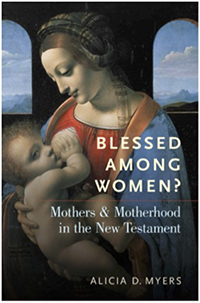

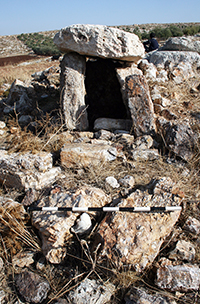
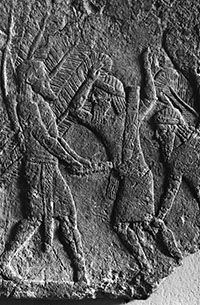
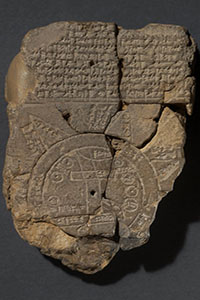
 Richard L. Coffman

 P. E. MacAllister


 Peyton Randolph Helm


 Carolyn Midkiff Strange